
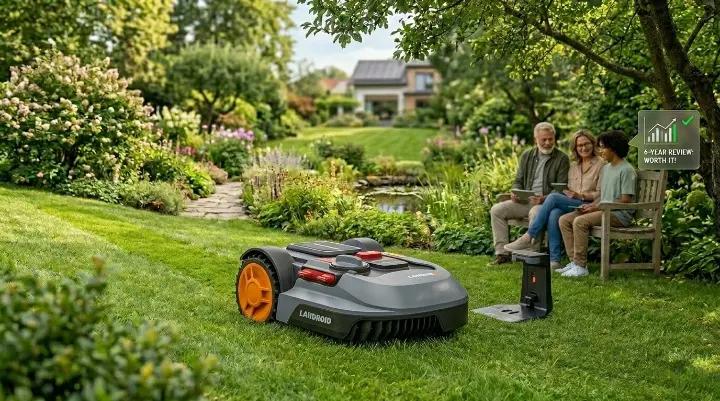
Robot lawn mowers have come a long way in the past few years. Early models often required complicated boundary wire installation, struggled with obstacles, and sometimes left uneven results. Today, many newer models use RTK GPS, cameras, LiDAR, or AI-powered navigation to mow more efficiently and require less setup than older generations.
As a result, more homeowners are considering whether a robot lawn mower is finally worth the investment. While these machines can save time and reduce the effort of lawn care, they are not the right solution for every yard. Factors such as lawn size, terrain, tree coverage, budget, and maintenance expectations all play a role in determining whether a robotic mower makes sense for your situation.
In this guide, we'll look at the real costs, benefits, drawbacks, and experiences reported by robot mower owners. By the end, you'll have a clear idea of whether a robot lawn mower is worth buying in 2026—or if a traditional mower may still be the better choice.
Quick Answer: Are Robot Lawn Mowers Worth Buying?
For many homeowners, yes—robot lawn mowers are worth buying in 2026.
Modern robot mowers can save hours of mowing time throughout the growing season while keeping grass consistently trimmed. Newer wire-free models are easier to install than older boundary-wire systems, and many can automatically navigate around obstacles, return to their charging stations, and follow customized mowing schedules.
However, they are not a perfect fit for every property. Most owners still need to do occasional edge trimming, and some models may struggle in yards with heavy tree cover, steep slopes, or highly complex layouts. The upfront cost can also be significant, with quality models often costing much more than a traditional push mower.
As a general rule:
Robot lawn mowers are usually worth it if you:
- Have a small to medium-sized lawn
- Want to spend less time mowing
- Mow frequently during the growing season
- Prefer convenience over manual lawn care
- Plan to stay in your home for several years
They may not be worth it if you:
- Have a very limited budget
- Rent your property
- Let your grass grow tall between cuts
- Have a highly complex yard with poor GPS coverage
For most suburban homeowners, today's robot lawn mowers are no longer a novelty. They have become practical tools that can maintain a healthy lawn with surprisingly little day-to-day effort.
How Robot Lawn Mowers Have Changed in Recent Years
If you tried a robot lawn mower five or ten years ago, your experience may have been very different from what today's models offer.
Older robotic mowers were often limited by boundary wires, basic navigation systems, and random mowing patterns. While they could keep grass trimmed, setup was time-consuming, and some models struggled with obstacles, narrow passages, or complex yard layouts. Many homeowners also complained about damaged boundary wires and visible wheel marks caused by frequent turning.
In recent years, however, robot mower technology has improved significantly. Manufacturers have focused on solving many of the problems that made earlier models frustrating to own.
Wire-Free Navigation Is Becoming More Common
One of the biggest changes is the move away from perimeter wires.
Traditional robot mowers required homeowners to install a boundary wire around the entire lawn. While effective, installation could take several hours, and repairing broken wires was often frustrating.
Many newer models now use technologies such as RTK GPS, cameras, LiDAR, or a combination of sensors to navigate without buried wires. This allows homeowners to create virtual boundaries through a mobile app and adjust mowing zones without digging up their yard.
For many buyers, this is the improvement that has made robot mowers much more practical than they were a few years ago.
Navigation and Obstacle Avoidance Have Improved
Older robotic mowers often relied on a simple strategy: drive until hitting an object, then change direction.
Modern models are much smarter. Many can recognize common obstacles such as trees, flower beds, garden furniture, toys, and pathways before making contact. Some premium models can even create detailed maps of a property and follow planned mowing routes rather than moving randomly.
This not only improves efficiency but also reduces unnecessary wear on the lawn.
Better Performance on Complex Lawns
Earlier robot mowers worked best on small, simple, and mostly flat lawns.
Today's models are designed to handle more challenging environments. Many can manage multiple mowing zones, navigate narrow passages, and work on moderate slopes. Some heavy-duty models are even designed for larger properties that would have been difficult for robotic mowers to maintain in the past.
That said, no robot mower is perfect. Steep hills, deep ruts, heavy brush, and extremely overgrown grass can still create challenges for many machines.
Smartphone Control Has Become Standard
A few years ago, many robotic mowers offered only basic controls and limited scheduling options.
Today, most mid-range and premium models include mobile apps that allow users to:
- Start or stop mowing remotely
- Adjust cutting schedules
- Create mowing zones
- Set no-go areas
- Track mower location
- Receive maintenance alerts
For many homeowners, the ability to manage lawn care from a smartphone is one of the biggest advantages of owning a robot mower.
Reliability Has Improved, but Setup Still Matters
Modern robot mowers are generally more reliable than earlier generations, but they are not completely maintenance-free.
Many long-term owners report that once the initial setup is complete, their mower can operate with very little attention beyond occasional blade changes, cleaning, and edge trimming. However, proper installation remains important. Poor GPS coverage, inaccurate maps, or difficult yard layouts can still lead to navigation problems.
In other words, robot lawn mowers have become much more capable than they were just a few years ago. While they still have limitations, the technology has matured enough that many homeowners now view them as a realistic alternative to traditional lawn mowing rather than a novelty gadget.
The Real Cost of Owning a Robot Lawn Mower
For many homeowners, cost is the biggest factor when deciding whether a robot lawn mower is worth buying.
While robotic mowers can save time and reduce the effort of lawn care, they require a much larger upfront investment than a traditional push mower. Understanding both the initial purchase price and the ongoing ownership costs can help you decide whether the long-term value makes sense for your yard.
Upfront Cost
Robot lawn mower prices vary widely depending on lawn size, navigation technology, and available features.
Entry-level models designed for small lawns typically start around $600 to $1,000. Mid-range models often fall between $1,000 and $2,500, while premium wire-free mowers with advanced GPS navigation, obstacle avoidance, and multi-zone support can cost $3,000 or more.
At first glance, these prices may seem difficult to justify. After all, many homeowners can buy a traditional gas or battery-powered mower for a fraction of the cost.
However, a robot mower is not simply replacing a lawn mower. For many owners, it is replacing the time spent mowing every week throughout the growing season.
Maintenance Costs
One common misconception is that robot lawn mowers are completely maintenance-free.
In reality, they still require occasional upkeep, although the costs are generally lower than those of many gas-powered mowers.
Typical maintenance expenses include:
- Replacement blades several times per season
- Cleaning grass buildup from wheels and the cutting deck
- Replacing worn wheels or other small parts over time
- Occasional battery replacement after several years of use
Fortunately, routine maintenance is usually simple and can often be completed in just a few minutes.
Many long-term owners report spending far less time maintaining a robotic mower than they previously spent servicing gas engines, changing oil, or dealing with fuel-related issues.
Hidden Costs to Consider
Beyond the purchase price, there are a few additional costs that buyers often overlook.
If you choose a boundary-wire model, installation may require extra wire, connectors, and repair kits. Some homeowners also hire professionals to install the system, which increases the overall cost.
For wire-free models, you may need additional accessories such as RTK antennas, garage shelters, or extra charging stations depending on your property layout.
It's also worth remembering that most robot mowers cannot completely eliminate lawn maintenance. Many owners still use a string trimmer around fences, flower beds, trees, and other areas where the mower cannot reach.
Can a Robot Lawn Mower Save Money?
The answer depends on how you currently maintain your lawn.
If you already mow your own yard and do not mind spending the time, a robot mower may not save much money directly. Its biggest benefit is convenience rather than financial savings.
On the other hand, homeowners who pay for regular lawn care services may see a faster return on investment. In some cases, the cost of a robot mower can be comparable to one or two seasons of professional mowing.
There is also the value of time to consider. Many robot mower owners say the biggest benefit is not the money saved, but the hours they no longer spend behind a mower every week.
Cost vs. Value
When evaluating a robot lawn mower, it helps to think beyond the purchase price alone.
A $2,000 robot mower may seem expensive compared to a traditional mower, but if it consistently maintains your lawn for several years while saving dozens of hours of work each season, the value proposition looks very different.
For homeowners who dislike mowing, have busy schedules, or simply want a consistently maintained lawn with minimal effort, the long-term value often outweighs the initial cost. For those on a tight budget, however, the upfront investment can still be difficult to justify.
The Biggest Benefits According to Real Owners
Product specifications can tell you how a robot lawn mower is supposed to work. But what often matters more is how owners feel after using one for an entire season—or even several years.
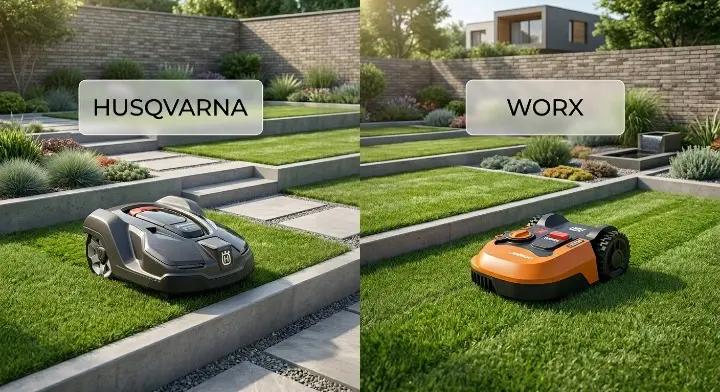
After reviewing discussions from homeowners using popular brands such as Husqvarna, Mammotion, Navimow, Gardena, and others, a few benefits come up again and again. While every yard is different, many owners report that the biggest advantages have less to do with technology and more to do with the time and effort they save.
More Free Time Every Week
The most common benefit is simple: less time spent mowing.
For many homeowners, mowing is not particularly difficult—it is just another task competing for their limited free time. During peak growing season, keeping up with a lawn can require one or more mowing sessions every week.
Robot mower owners often describe the experience as "getting their weekends back." Instead of spending an hour behind a mower, they can focus on family activities, home projects, or simply relaxing.
Several owners with children also mention that the convenience becomes even more valuable when balancing work, sports schedules, and other family responsibilities.
A More Consistently Maintained Lawn
Many people assume a robot mower works less effectively because it cuts a small amount of grass at a time. In reality, this frequent mowing is one of its biggest advantages.
Rather than waiting a week for the grass to become noticeably taller, robotic mowers can cut small amounts every day or every few days. This helps maintain a more consistent lawn height throughout the growing season.
As a result, many owners report that their lawn looks neater and healthier than it did when they mowed manually.
Less Physical Effort
Not everyone enjoys pushing a mower around the yard, especially during hot summer weather.
For older homeowners, people with physical limitations, or anyone who simply dislikes lawn work, robot mowers can significantly reduce the physical effort required to maintain a lawn.
Many owners still perform occasional trimming around edges and obstacles, but the most demanding part of lawn care is largely automated.
Quiet Operation
Noise is another benefit that owners frequently mention.
Gas-powered lawn mowers can be loud enough to disturb conversations, neighbors, or outdoor activities. Most robotic mowers operate much more quietly, allowing them to work early in the morning, during the evening, or even while people are using the yard.
Some owners say they barely notice the mower running unless they actively look for it.
Better for Busy Families
One of the most interesting themes that appears in owner discussions is how well robot mowers fit into busy family life.
Parents often mention that they no longer need to choose between mowing the lawn and spending time with their children. Instead of setting aside a block of time every weekend, the mower quietly handles routine cutting in the background.
For many households, this convenience becomes the biggest reason they would not go back to traditional mowing.
The "Set It and Forget It" Experience
While robot lawn mowers are not completely maintenance-free, many owners describe them as surprisingly hands-off once the initial setup is complete.
After creating maps, setting schedules, and making a few adjustments, the mower can often operate for weeks with very little attention. Owners typically only need to clean the mower occasionally, replace blades when necessary, and perform some edge trimming.
This level of automation is one reason many long-term users say they would never return to mowing their entire lawn manually.
Long-Term Satisfaction Is Surprisingly High
Perhaps the strongest argument in favor of robot lawn mowers comes from long-term owners.
It is common to find homeowners who have used robotic mowers for five, seven, or even ten years and still consider them one of the best outdoor purchases they have made. While they acknowledge the occasional setup challenge or maintenance task, many say the overall convenience far outweighs the drawbacks.
That does not mean robot mowers are perfect. However, when owners explain why they believe the machines are worth the investment, the answer is usually the same: they spend less time mowing and enjoy their lawn more.
The Drawbacks Most Buyers Don't Expect
Robot lawn mowers have improved dramatically in recent years, but they are not perfect. Many first-time buyers focus on the benefits and assume the mower will completely eliminate lawn maintenance.
In reality, most long-term owners are very satisfied with their robotic mowers, but they also acknowledge a few limitations that new buyers often overlook. Understanding these drawbacks before purchasing can help you avoid disappointment and choose the right model for your yard.
Edge Trimming Is Still Necessary
One of the most common surprises is that robot mowers usually cannot cut every blade of grass.
Most models leave a narrow strip of uncut grass along fences, walls, flower beds, and other obstacles. Some manufacturers have improved edge-cutting performance, but very few robotic mowers completely eliminate the need for a string trimmer.
For many owners, this is not a major issue because trimming only takes a few minutes every couple of weeks. However, buyers expecting a completely hands-off lawn care solution may be disappointed.
Setup Takes More Time Than Many People Expect
Modern robot mowers are easier to install than older models, especially wire-free systems. However, setup is still one of the biggest learning curves for new owners.
- Depending on the model, you may need to:
- Install a charging station
- Position an RTK antenna
- Map your lawn
- Create mowing zones
- Define no-go areas
- Adjust schedules and settings
Many owners report that the first few days or weeks involve some trial and error. Once everything is configured properly, the mower usually requires very little attention, but the initial setup process is rarely as simple as taking it out of the box and pressing a button.
GPS and Signal Issues Can Affect Performance
Wire-free navigation has become one of the biggest selling points of modern robot mowers, but it is not flawless.
Some homeowners report excellent results with GPS-based systems, while others experience occasional navigation issues caused by:
- Heavy tree coverage
- Tall buildings
- Poor satellite visibility
- Interference around the property
In these situations, the mower may lose its position, miss sections of the lawn, or struggle to complete certain tasks.
This does not mean wire-free systems are unreliable, but it does mean that yard conditions matter more than many buyers realize.
They Are Not Designed for Neglected Lawns
Robot mowers work best when they mow regularly.
Unlike traditional mowers, which can often tackle several inches of overgrown grass in a single session, robotic mowers are designed to make small, frequent cuts.
If a lawn has been neglected for weeks or has become extremely tall, many robot mowers will struggle to restore it quickly. Some owners still keep a traditional mower available for seasonal cleanup or unusually heavy growth.
Think of a robot mower as a lawn maintenance tool rather than a lawn recovery tool.
They Can Still Get Stuck
Manufacturers have made significant improvements in obstacle avoidance and navigation, but no robotic mower is completely immune to getting stuck.
Common trouble spots include:
- Deep ruts
- Exposed tree roots
- Sharp drop-offs
- Loose landscaping materials
- Tight corners
Many owners report only occasional incidents, but most also admit that they still receive a notification from time to time asking them to rescue the mower.
The good news is that newer models generally handle difficult terrain much better than older generations.
The Upfront Cost Can Be Hard to Justify
Even homeowners who love their robotic mower often admit that the purchase price was difficult to accept initially.
Spending $1,500, $2,000, or even $3,000 on a lawn mower feels expensive compared to a traditional push mower. For some buyers, the convenience easily justifies the investment. For others, especially those with smaller lawns, the financial value may be less obvious.
This is one reason robot mowers tend to appeal most strongly to homeowners who prioritize time savings rather than simply looking for the cheapest way to cut grass.
No Robot Mower Is Completely Maintenance-Free
Marketing materials sometimes make robotic mowers sound fully autonomous.
In practice, owners still need to:
- Replace blades
- Clean the mower
- Update software
- Trim lawn edges
- Store the mower properly during winter
The workload is much lower than traditional mowing, but it is not zero.
The Drawbacks Are Real—But Often Manageable
Interestingly, many long-term owners mention these drawbacks while still saying they would never return to mowing their lawn manually.
That is because most of the disadvantages are occasional inconveniences rather than daily frustrations. The key is having realistic expectations. A robot lawn mower can significantly reduce the amount of work required to maintain a lawn, but it cannot completely eliminate lawn care altogether.
Who Should Buy a Robot Lawn Mower?
One of the biggest mistakes people make is assuming that robot lawn mowers are either worth it for everyone or worth it for no one.
The reality is somewhere in the middle.
Whether a robot mower is a good investment depends largely on your lawn, your budget, and how much you value convenience. For some homeowners, a robot mower can save dozens of hours of work every year. For others, the benefits may not justify the cost.
Here are the types of homeowners who are most likely—and least likely—to benefit from a robotic mower.
Great for Busy Homeowners
If your weekends already feel packed with work, family activities, errands, and home projects, a robot mower can be a huge time saver.
Many owners say the biggest advantage is simply not having to think about mowing anymore. Once the schedule is set, the mower works automatically in the background while you focus on other things.
For busy professionals and parents, this convenience alone can make the investment worthwhile.
Great for Small to Medium-Sized Lawns
Robot mowers tend to deliver the best value on small and medium-sized residential properties.
These lawns are usually easier to map, easier to maintain, and can often be handled by a single mower without requiring multiple charging cycles.
Many modern models can also manage larger properties, but homeowners with typical suburban lawns often see the fastest return on their investment.
Great for People Who Dislike Mowing
Some homeowners genuinely enjoy mowing their lawn. Others see it as a chore they would gladly eliminate.
If you fall into the second group, a robot mower may be one of the most satisfying outdoor tools you can buy.
Many long-term owners say they would never return to weekly mowing because they enjoy having a consistently maintained lawn without the physical effort and time commitment.
Great for Older Homeowners
Robot mowers can also be a good solution for homeowners who want to maintain their lawn but no longer enjoy pushing or riding a mower.
While some occasional maintenance is still required, robotic mowing significantly reduces the physical work involved in lawn care.
For older adults or anyone with mobility concerns, this can be a major advantage.
Great for Homeowners Who Want a Better-Looking Lawn
Because robotic mowers cut grass frequently, many owners notice that their lawn maintains a more consistent appearance throughout the growing season.
Instead of alternating between freshly cut grass and overgrown grass, the lawn stays at a relatively uniform height.
If lawn appearance is important to you, this is one of the strongest arguments in favor of a robot mower.
Maybe Not Ideal for Renters
Most robotic mowers make the most sense for homeowners who expect to stay in their property for several years.
Because the upfront cost can be significant, renters may not have enough time to fully benefit from the investment before moving.
Portable wire-free models make relocation easier than in the past, but the financial equation is still less favorable for short-term living situations.
Maybe Not Ideal for Very Complex Properties
Some lawns are simply more challenging than others.
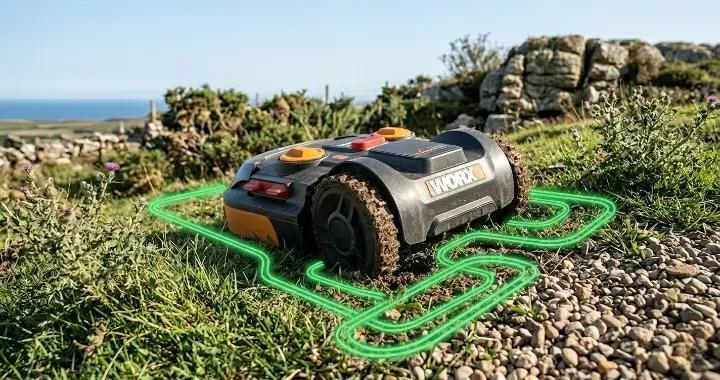
Properties with heavy tree cover, steep slopes, narrow passages, multiple disconnected areas, or complicated landscaping may require a premium model and a more involved setup process.
Modern robot mowers can handle many of these situations, but they may not perform as effortlessly as they do on simpler suburban lawns.
Maybe Not Ideal for Budget-Focused Buyers
If your primary goal is to spend as little money as possible on lawn care, a robot mower may not be the best choice.
Even entry-level models cost significantly more than many traditional mowers. While the long-term convenience can be substantial, buyers looking only at upfront costs may find it difficult to justify the investment.
A Simple Rule of Thumb
A robot lawn mower is most likely worth buying if:
- You own your home
- You mow regularly during the growing season
- You value convenience and time savings
- You have a small to medium-sized lawn
- You plan to stay in your home for several years
On the other hand, you may want to think twice if:
- You are renting
- You rarely mow your lawn
- Your budget is extremely limited
- Your yard has unusually difficult terrain or poor GPS visibility
For the average suburban homeowner, however, today's robot lawn mowers are often much more practical than many people expect. The technology has improved enough that the biggest question is no longer whether they work—it is whether the time savings are worth the cost for your specific situation.
Robot Lawn Mower vs Traditional Mower
For many homeowners, the decision ultimately comes down to a simple question:
Is a robot lawn mower actually better than a traditional mower?
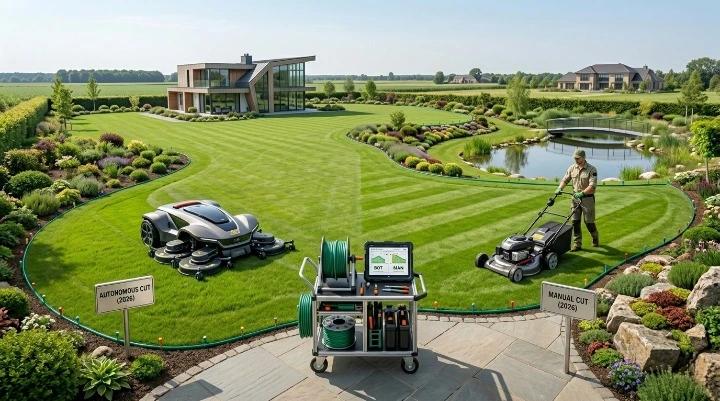
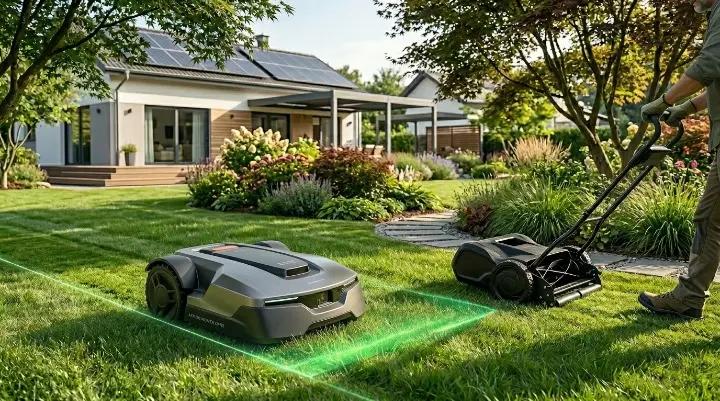
The answer depends on what you value most. If your goal is to spend as little money as possible, a traditional mower is usually the better choice. If your goal is to reduce the time and effort required to maintain your lawn, a robot mower often has the advantage.
Here's a side-by-side comparison of the two approaches.
| Feature | Robot Lawn Mower | Traditional Mower |
|---|---|---|
| Upfront Cost | Higher | Lower |
| Time Required | Very low after setup | Regular weekly mowing |
| Physical Effort | Minimal | Moderate to high |
| Lawn Appearance | Consistently maintained | Depends on mowing frequency |
| Noise Level | Very quiet | Usually much louder |
| Fuel Required | No (electric) | Often yes for gas models |
| Edge Trimming Needed | Usually yes | Usually yes |
| Maintenance | Blade replacement and cleaning | Engine maintenance, oil changes, fuel, blades |
| Handling Overgrown Grass | Limited | Better |
| Initial Setup | Moderate | Minimal |
Where Robot Mowers Win
The biggest advantage of a robot mower is convenience.
Instead of setting aside time every week to mow, the mower works automatically according to a schedule. Many owners say they stop thinking about lawn maintenance entirely except for occasional trimming and basic upkeep.
Robot mowers also tend to keep lawns looking more consistent because they cut small amounts of grass frequently rather than waiting for weekly mowing sessions.
Other advantages include:
- Quiet operation
- Lower physical effort
- No gasoline or oil
- Automatic scheduling
- Better consistency during peak growing season
For homeowners with busy schedules, these benefits are often what justify the higher purchase price.
Where Traditional Mowers Still Win
Despite the rapid growth of robotic mowing technology, traditional mowers still have several advantages.
The most obvious is cost. A quality push mower or battery-powered mower is usually far less expensive than a robotic mower.
Traditional mowers also handle difficult conditions more effectively, including:
- Tall grass
- Heavy weeds
- Neglected lawns
- Large seasonal cleanups
- Leaf mulching
If your lawn frequently becomes overgrown, a traditional mower is often the more practical tool.
The Hidden Difference: Consistency
One of the biggest differences between the two approaches is how they maintain the lawn.
A traditional mower typically cuts the lawn once every week or two. The grass grows taller between mowing sessions, then gets cut back all at once.
A robot mower works differently. It trims a small amount of grass regularly, often every day or every few days. This creates a more consistent appearance and reduces the dramatic cycle of growth and cutting.
Many owners report that their lawn actually looks healthier after switching to robotic mowing because the grass is never allowed to become excessively tall.
Which Option Is Better for Most Homeowners?
If you enjoy mowing, have a limited budget, or only need to maintain a small lawn occasionally, a traditional mower is still a perfectly reasonable choice.
However, if you view mowing as a chore and want to reduce the amount of time spent on lawn maintenance, a robot mower is often the better long-term solution.
In many ways, the comparison is similar to robot vacuum cleaners versus traditional vacuuming. A robot mower does not completely eliminate lawn care, but it can dramatically reduce how much work you personally need to do.
For many homeowners who have made the switch, the biggest benefit is not that the lawn looks dramatically different—it's that they no longer spend their weekends pushing a mower around the yard.
What Real Owners Say After 1–10 Years of Use
Marketing materials often focus on features, specifications, and new technology. But one of the best ways to judge whether a robot lawn mower is truly worth buying is to look at what owners say after months—or even years—of real-world use.
While experiences vary depending on the model and property, several themes appear consistently across owner discussions. Interestingly, many long-term users acknowledge the flaws of robotic mowers while still saying they would never go back to traditional mowing.
Most Owners Say the Time Savings Are Worth It
The benefit mentioned most often is simple: getting time back.
Many homeowners initially buy a robot mower because they dislike mowing or have busy schedules. After using one for a season, they often realize that the biggest advantage isn't just avoiding the physical work—it's eliminating the need to plan their weekends around lawn care.
Owners frequently describe robot mowers as one of those purchases that feels expensive at first but becomes easier to justify over time because of how often it is used.
For families with children, demanding jobs, or multiple responsibilities, the convenience often becomes the primary reason they remain satisfied with the purchase.
Lawn Quality Often Improves Over Time
A common concern among first-time buyers is whether a robot mower can produce results comparable to traditional mowing.
Many long-term owners report that their lawns actually look better after switching.
Because robotic mowers cut frequently, grass height stays more consistent throughout the season. Instead of cutting large amounts of growth once a week, the mower continuously trims small amounts.
Several owners mention that neighbors often assume they spend more time maintaining their lawn when, in reality, they spend less.
The First Few Weeks Are Usually the Hardest
One pattern appears again and again in owner feedback:
The first month tends to be the most frustrating.
New owners often need time to:
- Adjust maps
- Fine-tune mowing zones
- Improve obstacle placement
- Optimize schedules
- Learn how the mower behaves
After these initial adjustments, many users report that the mower requires very little attention.
This learning curve is one reason some people have a negative first impression, while long-term owners tend to be much more satisfied.
Most Owners Still Do Some Trimming
Even after years of ownership, very few people claim their robot mower completely replaces all lawn work.
Edge trimming remains one of the most common maintenance tasks.
Grass along fences, flower beds, walls, and landscaping features often requires occasional touch-ups with a string trimmer.
Fortunately, most owners describe this as a minor task compared to mowing the entire lawn manually.
Reliability Has Improved Significantly
Owners who have used robotic mowers for many years often point out how much the technology has improved.
Older models relied heavily on boundary wires and random navigation patterns. Newer systems use RTK GPS, cameras, LiDAR, and advanced mapping software to navigate more efficiently.
Many users who were disappointed by early-generation robot mowers report much better experiences with modern wire-free models.
That said, long-term owners also emphasize that no robot mower is perfect. Occasional software bugs, navigation errors, and setup challenges still happen.
Long-Term Owners Rarely Want to Go Back
Perhaps the most telling pattern is what owners say when asked whether they would return to traditional mowing.
The answer is usually no.
Even homeowners who mention occasional frustrations often say the overall convenience far outweighs the drawbacks. Many compare robotic mowers to robot vacuum cleaners—once they become part of a routine, it is difficult to imagine going back to doing everything manually.
Some owners who have used robotic mowers for seven, eight, or even ten years describe them as one of the best outdoor investments they have made.
The Most Honest Answer From Long-Term Users
If there is one lesson that appears consistently across owner experiences, it is this:
Robot lawn mowers are not perfect, but they are often much better than people expect.
They still require setup, occasional maintenance, and some edge trimming. They can get stuck from time to time, and not every yard is an ideal fit.
However, for homeowners with suitable lawns and realistic expectations, the combination of convenience, time savings, and consistent lawn care is often enough to make robotic mowing feel like a worthwhile long-term investment.
So, Are Robot Lawn Mowers Worth It in 2026?
For most homeowners, the answer is yes—but with some important conditions.
Robot lawn mowers in 2026 are no longer experimental devices. They have become reliable tools that can handle routine lawn maintenance with very little day-to-day effort. Thanks to improvements like RTK GPS navigation, camera-based obstacle detection, and wire-free setup, they are far more practical than earlier generations.
For homeowners with small to medium-sized lawns, a robot mower can significantly reduce the time spent on lawn care. Instead of planning weekly mowing sessions, the mower quietly maintains the grass in the background, keeping it consistently trimmed throughout the season.
However, they are not a perfect replacement for traditional mowing in every situation. Most owners still need to do occasional edge trimming, and properties with complex layouts, heavy tree coverage, or very rough terrain may not get the full benefit. The upfront cost can also be a barrier for some buyers, especially if the main goal is simply to reduce spending rather than save time.
In simple terms:
- If you value time, convenience, and a consistently maintained lawn, a robot mower is often worth it.
- If your main priority is minimizing cost or you only mow occasionally, a traditional mower may still make more sense.
For many suburban homeowners, robot lawn mowers have moved from a “nice-to-have gadget” to a genuinely practical home tool in 2026.