
Robot mowers are becoming a popular choice for small gardens in the US, especially for homeowners who want a low-maintenance way to keep their lawn clean without weekly mowing.
But choosing the right model for a small yard is not as simple as it looks. Many machines are designed for larger lawns, while smaller spaces bring different challenges like tight corners, narrow paths, and limited storage space.
On top of that, newer technologies like wire-free systems, RTK navigation, and camera-based mowing can make the decision even more confusing.
This guide breaks down what actually matters for small gardens, how different technologies compare in real use, and which types of robot mowers are worth considering in 2026.
Quick Answer
For most small gardens in the US, the best robot mower in 2026 is one that balances simple setup with reliable navigation.
Wire-free models are easier to install, but RTK or hybrid systems are usually more stable in real-world conditions.
If your yard is flat and simple, a compact vision-based mower can be enough for daily maintenance.
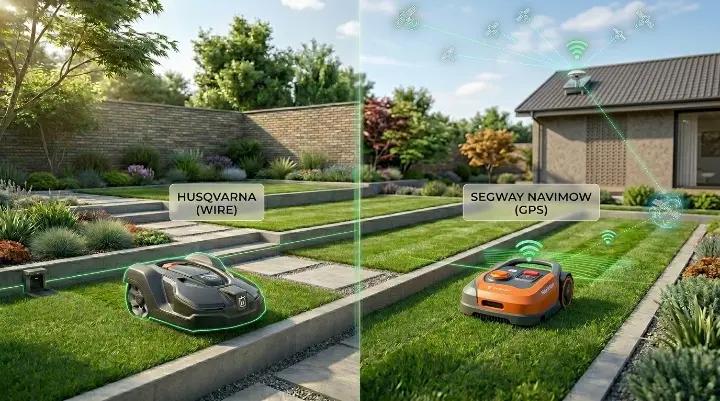
For small lawns with slopes or obstacles, RTK-based systems like Segway Navimow or compact proven models like Husqvarna are generally more reliable choices.
The best option depends less on brand and more on how complex your yard actually is.
What “Small Garden” Actually Means for Robot Mowers
In the US, a “small garden” is usually not defined by appearance, but by lawn size. Most small residential lawns fall somewhere between 1,000 and 5,000 square feet, which is roughly 0.02 to 0.12 acres.
This size range matters because it changes what kind of robot mower is practical. Large commercial-style mowers are often unnecessary here, while ultra-basic models may struggle if the layout is more complex than it looks.
Typical yard sizes in the US
Most small suburban yards in the US fall into a few common ranges:
- Under 1,500 sq ft (very small urban lawns)
- 1,500–3,000 sq ft (typical small backyard)
- 3,000–5,000 sq ft (upper range of “small” residential lawns)
These differences matter because mowing capacity, battery size, and navigation range are all designed around square footage, not just lawn shape.
Why small yards are harder than they look
Small gardens often look simple at first, but they usually contain more mowing challenges per square foot than larger lawns.
- Tight corners and narrow edges that are hard for round robot mowers to reach
- Flower beds, patios, or garden furniture breaking up open space
- Fences and walls that require precise edge handling
Because of this, small lawns are less about coverage and more about navigation accuracy. A mower that works well in an open field may still struggle in a compact residential yard with obstacles and sharp turns.
The 4 Factors That Actually Matter
Most small garden robot mower decisions come down to just a few key factors.
You do not need to compare every feature on the market. What matters is how the mower fits your yard layout and how much setup effort you are willing to handle.
Yard size compatibility
Robot mowers are designed for specific working ranges, and this is often the first mistake people make.
A mower that is too powerful for a small yard is not just unnecessary. It can also lead to inefficient mowing patterns and wasted energy on navigation.
For most small US gardens, especially under 5,000 sq ft, compact residential models are usually more suitable than large multi-zone systems.
There is a simple way to think about it:
- Small, simple lawn → compact residential mower
- Small but complex layout → smart navigation mower
- Near upper size limit → check rated coverage carefully
Navigation system (RTK vs Vision vs Hybrid)
Navigation is the biggest difference between modern robot mowers.
Each system handles your yard in a different way, and this directly affects reliability.
- RTK systems → use satellite positioning for accurate mapping
- Vision systems → rely on cameras and AI to detect boundaries
- Hybrid systems → combine both for more stable navigation
RTK-based models are often more stable in real-world use, especially when the yard has clear open sky.
Vision-based systems are easier to install, but they may be less consistent in shaded areas or around complex edges.
Hybrid systems try to balance both approaches and are often used in newer residential models.
Slope handling
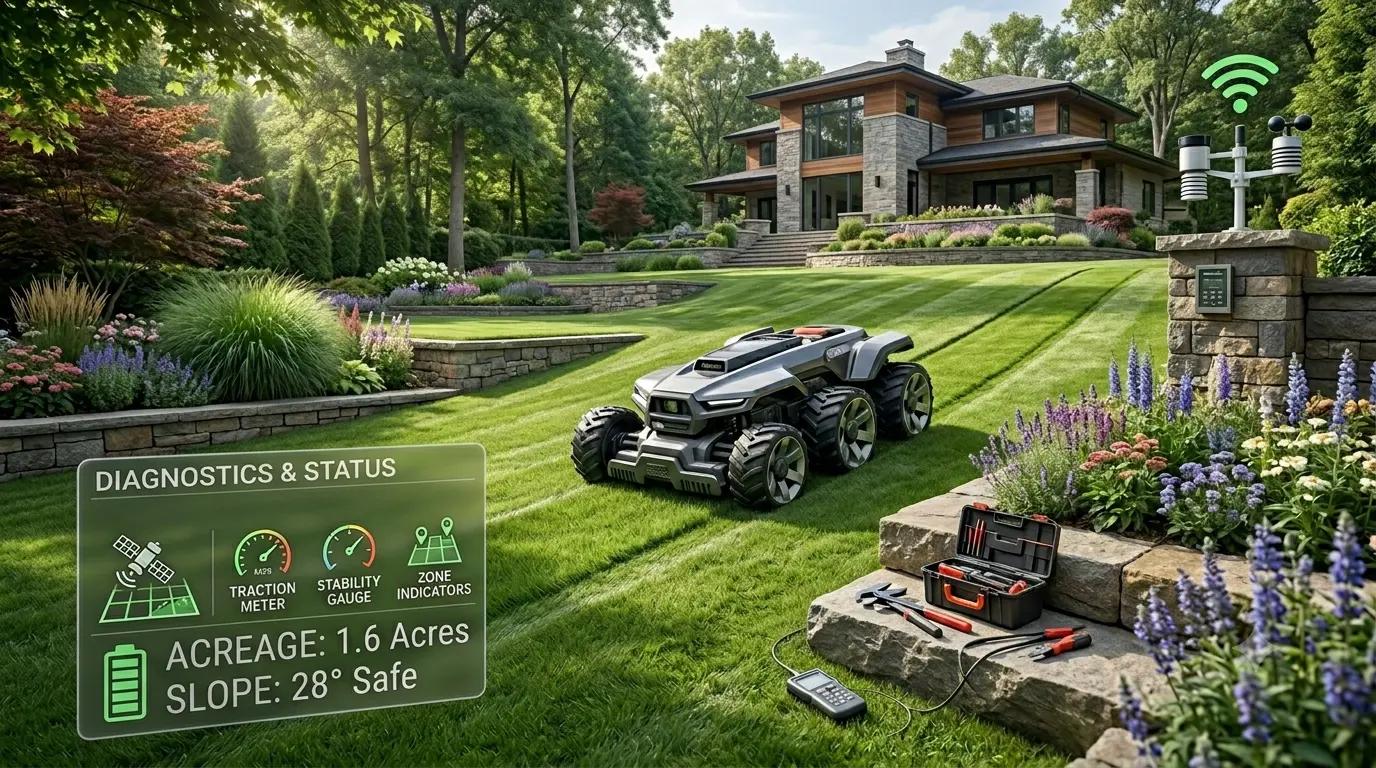
Even small slopes can change how a robot mower behaves in a small garden.
The issue is not just cutting power. It is traction and path stability.
A mower that performs well on flat ground may struggle in corners or uneven patches if the wheels cannot maintain grip.
For small yards with any slope, it is important to check real slope ratings instead of marketing terms like “all-terrain.”
- Flat yard → most models will work
- Mild slope → check traction design
- Steeper areas → look for AWD or enhanced wheel grip
Installation complexity
Installation is often overlooked, but it is one of the biggest real-world differences between models.
Some systems require physical setup, while others rely on digital mapping.
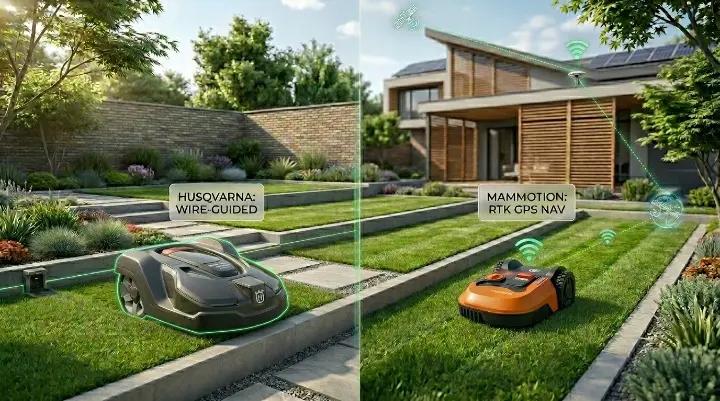
- ✔Wire-free systems → quick setup, no cables
- ✔Boundary wire systems → more stable, but require installation
For small gardens, wire-free models are becoming more popular because they reduce setup time and make relocation easier.
However, boundary wire systems are still preferred in situations where maximum stability is more important than convenience.
Real-World Small Garden Problems
On paper, small gardens look simple, but real homeowner experiences show that most of the challenges come from layout and unpredictability rather than lawn size itself. This is where many expectations about robot mowers start to break.
Small yards with slopes and uneven corners
Some homeowners with small lawns mention that even a slight slope can change how reliable a robot mower feels in daily use.
In a typical discussion, users with around 3,000 sq ft yards often point out that navigation is usually fine on flat areas, but corners with even mild incline can affect consistency.
Looking for a roboticmower for a small yard. Any thoughts?
View DiscussionThis is why many people end up prioritizing traction and navigation stability over cutting power when choosing a model.
Wire-free convenience vs real-world reliability
Another common concern is the gap between wire-free convenience and actual mowing stability.
In one Reddit discussion, a user looking for a compact wire-free mower for a small yard mentioned that larger systems like Luba or Navimow felt like “overkill” for a simple lawn, but they were unsure whether smaller camera-based models would be reliable enough in practice.
Looking for a roboticmower for a small yard. Any thoughts?
View DiscussionThis reflects a common trade-off: easy setup is attractive, but some users still worry about long-term consistency, especially around edges and obstacles.
Best Robot Mowers for Small Gardens (2026 Picks)
This section focuses on real-world options that fit small US gardens in 2026. The goal is not to list every model on the market, but to highlight a few representative choices that match different yard types and user needs.
Each model below fits a different balance of setup effort, navigation reliability, and yard complexity.
Husqvarna Automower 115H (Best for simple and stable mowing)
Husqvarna Automower 115H
The Husqvarna 115H is one of the most established choices for small residential lawns that prioritize reliability over advanced features.
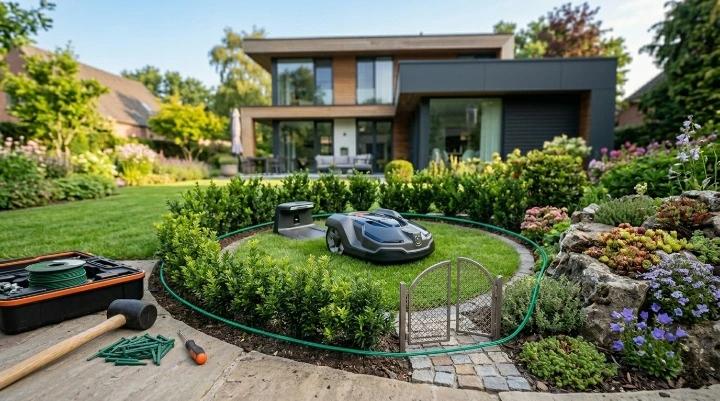
It uses a boundary wire system, which requires installation, but it also makes the mowing process very stable once set up.
- ✔Best for: simple small yards with clear boundaries
- ✔Strength: consistent performance over time
- ✔Limitation: requires physical wire installation
This model is often chosen by homeowners who prefer a “set it and forget it” approach rather than experimenting with newer navigation technologies.
Lymow compact robot mower (Best for wire-free simplicity)
Lymow Robot Mower
Lymow represents a newer generation of compact wire-free robot mowers designed for smaller gardens that want minimal setup effort.
It focuses on reducing installation steps and making setup closer to “out of the box” use compared to traditional boundary wire systems.
- ✔Best for: small, simple lawns where convenience matters most
- ✔Strength: no boundary wire required
- ✔Limitation: less proven long-term performance compared to established brands
This type of mower appeals to users who want to avoid installation work, especially in small urban or suburban yards.
Segway Navimow i Series (Best balance of smart navigation and stability)
Segway Navimow i Series Robot Mower
The Segway Navimow i series is designed for homeowners who want wire-free operation without sacrificing navigation stability.
It combines RTK-based positioning with smart mapping features, making it suitable for small gardens that include slopes or obstacles.
- ✔Best for: small yards with mixed terrain or obstacles
- ✔Strength: stable navigation with modern mapping system
- ✔Limitation: higher complexity during initial setup
This model is often preferred by users who want a more “hands-off” experience after setup is complete, especially in yards that are not perfectly simple or flat.
Wire vs Wire-Free for Small Gardens
For small gardens, the choice between boundary wire and wire-free systems often matters more than the brand itself. Both approaches can work well, but they solve the problem in very different ways.
Wire systems (more stable, more setup effort)
Boundary wire systems define the mowing area using a physical cable installed around the lawn edges. Once installed correctly, the mower follows a very predictable working area.
- ✔Best for: simple lawns that need long-term stability
- ✔Strength: very reliable boundary control
- ✔Trade-off: installation takes time and planning
This option is often preferred by homeowners who want consistent performance and do not mind doing the initial setup work.
Wire-free systems (easier setup, more tech dependency)
Wire-free robot mowers use RTK, vision, or hybrid navigation systems to understand the lawn without physical cables. This makes setup much faster and cleaner.
- ✔Best for: users who want easy installation
- ✔Strength: no physical boundary installation required
- ✔Trade-off: performance can depend more on signal quality and environment
Wire-free systems are especially attractive for small gardens where users want to avoid digging or laying cables, but they require more trust in software and sensors instead.
Common Mistakes When Choosing a Robot Mower
Many robot mower problems do not come from the machine itself, but from choosing a model that does not match the yard. This is especially common in small gardens, where differences in layout and expectations are easy to underestimate.
Buying a mower that is too large for the yard
One of the most common mistakes is choosing a model designed for medium or large lawns.
In small gardens, oversized mowers can feel unnecessary and harder to manage in tight spaces. They may also spend more time adjusting or turning than actually improving mowing efficiency.
Ignoring slope and terrain conditions
Another frequent issue is focusing only on lawn size while ignoring slope or uneven ground.
Even a slight incline or corner slope can affect traction and navigation stability. This becomes more noticeable in compact yards where the mower has less open space to correct its path.
Choosing the wrong navigation type for the layout
Some homeowners choose a system based on convenience alone, without considering yard complexity.
For example, vision-only systems may work well in simple open lawns, but they can be less consistent in shaded areas or yards with many obstacles. On the other hand, RTK-based systems may be more stable but require more setup effort.
Matching navigation type to yard layout is often more important than choosing a specific brand.
Final Verdict
Choosing a robot mower for a small garden is less about finding the most advanced model and more about matching the machine to the real conditions of your yard.
If your lawn is simple and flat, a basic boundary wire model can provide stable and predictable performance. If you prefer easier setup and cleaner installation, wire-free systems are a strong alternative, especially for small urban or suburban yards.
For gardens with slopes, obstacles, or irregular shapes, RTK or hybrid navigation systems tend to offer more consistent long-term results, even if they require a more careful setup process at the beginning.
In the end, the best choice depends on balance: setup effort, yard complexity, and how much day-to-day reliability you expect from the mower.