
A robot lawn mower can save hours of yard work every week. Once it is set up, it quietly cuts the grass and keeps your lawn looking neat with very little effort.
However, "low maintenance" does not mean "no maintenance." Grass clippings, dirt, mud, and leaves can slowly build up on the underside of the mower. Over time, this buildup can affect cutting performance and put extra strain on moving parts.
The good news is that cleaning a robot mower is usually quick and easy. In most cases, a few minutes of regular cleaning can help prevent bigger problems later.
In this guide, you'll learn how to clean a robot lawn mower safely, how often it should be cleaned, and which common mistakes to avoid. Whether you own a wired model or a newer RTK mower, these simple steps can help keep your machine running at its best.
Why Cleaning Your Robot Lawn Mower Matters
Many homeowners only think about cleaning their robot mower when it starts looking dirty. In reality, regular cleaning is about much more than appearance.
A clean mower cuts grass more efficiently. When wet grass and debris collect around the blade disc, the blades may not swing freely. This can lead to uneven cutting and a less attractive lawn.
Dirt buildup can also affect traction. Grass clippings often collect around the wheels, especially during rainy periods. If enough material builds up, the mower may struggle on slopes or leave tracks on the lawn.
Sensors are another area that should not be ignored. Most robot mowers rely on sensors to navigate, detect obstacles, and dock correctly. Dirty sensors may not work as accurately as intended.
Charging performance can also be affected. Grass, dust, and corrosion can build up on the charging contacts over time. A quick wipe now and then helps maintain a reliable connection between the mower and its charging station.
Regular cleaning may also help you spot small problems before they become expensive repairs. While cleaning, you can check for worn blades, damaged wheels, loose parts, or signs of excessive wear.
For many owners, cleaning takes less than ten minutes. That small amount of maintenance can help improve cutting quality, reduce unnecessary wear, and keep the mower operating smoothly throughout the mowing season.
Can You Wash a Robot Lawn Mower With Water?
This is one of the most common questions robot mower owners ask.
The short answer is: sometimes, but it depends on the mower.
Many modern robot mowers are designed to handle rain and outdoor conditions. Some manufacturers even allow users to rinse certain parts of the mower with a garden hose. However, that does not mean every robot mower should be washed the same way.
Before using water, always check the owner's manual for your specific model. What is safe for one mower may not be safe for another.
One thing almost every manufacturer agrees on is that pressure washers should never be used. High-pressure water can force moisture past seals and into sensitive electronic components. Even if no damage appears right away, repeated exposure can increase the risk of problems over time.
The debate around using a garden hose is less clear. Some owners regularly rinse their mowers and report no issues. Others prefer to avoid water completely and use brushes, microfiber cloths, or a leaf blower instead.
In online robot mower communities, many users in wet climates say they occasionally rinse the underside of their mower to remove mud and grass buildup. At the same time, other owners point out that seals can wear over the years, making older machines more vulnerable to water damage.
Because of this, the safest approach is usually a gentle cleaning method first. A soft brush, cloth, or leaf blower can remove most grass clippings and dirt without exposing the mower to unnecessary moisture.
If your manufacturer specifically allows rinsing with a hose, use only a gentle stream of water. Avoid spraying directly at charging contacts, sensors, vents, or electrical connections.
After cleaning, allow the mower to dry completely before returning it to service or placing it back on the charging station.
For most homeowners, regular dry cleaning is enough. Water should be treated as an occasional cleaning aid rather than the primary way to maintain a robot lawn mower.
How to Clean a Robot Lawn Mower Step by Step
Cleaning a robot lawn mower does not take much time, but doing it correctly can help prevent unnecessary wear and keep the mower performing at its best.
Follow these simple steps to clean your mower safely.
Turn Off the Mower Before Cleaning
Before touching any part of the mower, make sure it is completely powered off.
This is especially important when working near the blades. Even though robot mower blades are small, they are still sharp enough to cause injury.
If your model has a removable battery, follow the manufacturer's instructions and disconnect it before performing deeper cleaning or maintenance.
Once the mower is turned off, place it on a stable surface where you can safely access the underside.
Remove Grass and Debris From the Underside
The underside of the mower is where most dirt and grass buildup occurs.
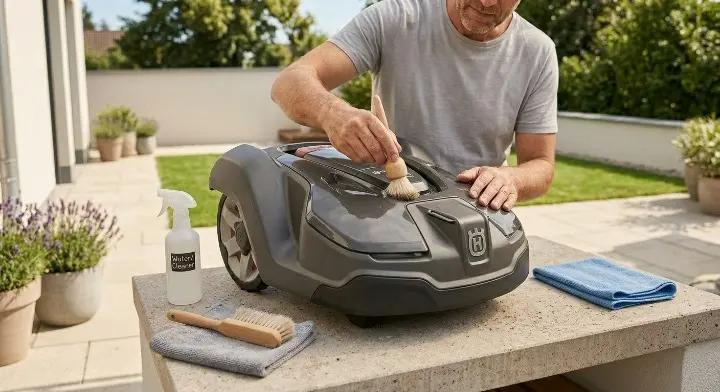
Turn the mower over carefully and inspect the cutting deck. Use a soft brush, plastic scraper, or cloth to remove any grass clippings, leaves, or dried mud stuck around the blade disc and deck area.
Pay extra attention to areas where debris tends to collect. Thick layers of dried grass can reduce airflow and interfere with cutting performance.
If the buildup is stubborn, avoid using metal tools that could damage plastic parts or protective coatings.
Clean the Blades Carefully
The blades are responsible for making clean, healthy cuts, so keeping them free of debris is important.
Use a brush or cloth to remove grass wrapped around the blade disc and around each blade.
While cleaning, inspect the blades for signs of wear, bending, or damage. Dull blades can tear grass instead of cutting it cleanly, which may leave your lawn looking uneven or brown at the tips.
If the blades appear worn, replace them according to the manufacturer's recommendations rather than continuing to use them.
Brush the Wheels and Sensors
Next, check the drive wheels and front caster wheels.
Grass, dirt, and small twigs can become trapped around the wheels over time. This buildup may reduce traction, especially on slopes or wet lawns.
Use a brush to remove debris from the wheel treads and wheel housings.
Afterward, wipe the mower's sensors with a clean, dry cloth. Keeping sensors clean helps the mower navigate accurately and dock properly when charging.
Clean the Charging Contacts and Docking Station
Charging contacts are easy to overlook, but they play an important role in reliable operation.
Inspect both the contacts on the mower and those on the charging station. If you notice dirt, grass residue, or discoloration, gently wipe the contacts with a dry microfiber cloth.
A clean connection helps ensure the mower charges properly and follows its mowing schedule without interruptions.
While you're there, remove any leaves, grass, or debris that may have collected around the charging station.
Let the Mower Dry Completely
Before turning the mower back on, make sure all cleaned areas are completely dry.
Even if you only used a damp cloth, trapped moisture can attract dirt and may eventually affect sensitive components.
Once everything is dry, return the mower to its charging station and perform a quick visual check to confirm that the blades, wheels, and sensors are clear of debris.
At this point, your robot mower is ready for its next mowing session.
How Often Should You Clean a Robot Mower?
There is no single cleaning schedule that works for every robot mower owner.
How often you need to clean your mower depends on several factors, including grass growth, weather conditions, lawn size, and how frequently the mower operates.
As a general rule, a quick inspection once a week is enough for most homeowners. If you notice grass buildup around the blade disc, wheels, or charging contacts, it's a good time to clean the mower.
| Lawn Conditions | Recommended Cleaning Frequency |
|---|---|
| Dry weather and slow grass growth | Every 2 weeks |
| Normal mowing conditions | Once a week |
| Rainy weather or wet grass | Once a week or as needed |
| Heavy growth during spring | Once a week |
| Before winter storage | Deep clean |
Weather often has the biggest impact on cleaning needs.
In online mower communities, owners in rainy regions frequently report that wet grass sticks to the underside of the mower much faster than dry grass. Mud and damp clippings can build up around the cutting deck within a few days, especially during periods of rapid grass growth.
By contrast, many users in hot and dry climates find that most debris dries quickly and can be removed with a brush or leaf blower every couple of weeks.
It's also worth paying attention to your lawn itself. Properties with lots of trees often collect leaves, seed pods, and small twigs that can become trapped around the wheels or blade disc. If your mower regularly works in these conditions, it may benefit from more frequent cleaning.
Rather than following a strict calendar, many experienced owners simply check the mower during blade changes or while inspecting the lawn. A quick five-minute inspection can often reveal whether cleaning is needed.
At minimum, every robot mower should receive a thorough cleaning before being stored for winter. Removing dirt, grass residue, and moisture before storage can help prevent corrosion and make spring startup much easier.
The good news is that robot mowers usually tell you when they need attention. If you start noticing uneven cutting, reduced traction, docking problems, or excessive grass buildup underneath, it's probably time for a cleaning.
Common Cleaning Mistakes to Avoid
Cleaning a robot lawn mower is fairly simple, but a few common mistakes can shorten its lifespan or even cause unnecessary damage.
Here are the mistakes robot mower owners should avoid.
Using a Pressure Washer
A pressure washer may seem like the fastest way to remove dirt and grass buildup, but it is one of the worst tools you can use on a robot mower.
High-pressure water can force its way past seals and into areas that are designed to stay dry. This can potentially damage sensors, bearings, electrical connections, and other sensitive components.
Even if the mower appears fine afterward, repeated exposure to high-pressure water may increase wear over time.
A soft brush, microfiber cloth, or gentle stream of water—if approved by the manufacturer—is a much safer option.
Cleaning While the Mower Is Powered On
Some owners try to quickly remove grass from the mower while it is paused or sitting in the charging station.
This is never a good idea.
Before cleaning, always turn the mower off completely. If your model allows battery removal, disconnect the battery before performing more detailed maintenance.
Taking a few extra seconds to power down the mower is far safer than working around moving parts and sharp blades.
Ignoring Grass Buildup Around the Blade Disc
Many people focus on cleaning the top of the mower because that is the part they can see.
The real problem is usually underneath.
Over time, layers of grass can accumulate around the blade disc and cutting deck. This buildup may restrict blade movement and reduce cutting efficiency.
If your lawn starts looking uneven, the problem may not be worn blades at all—it could simply be a dirty cutting deck.
A quick inspection of the underside often prevents bigger performance issues later.
Storing the Mower While Wet
After cleaning, some homeowners place the mower directly back on its charging station or into winter storage before it has fully dried.
Moisture trapped around the wheels, blade disc, or charging contacts can attract dirt and contribute to corrosion over time.
Allow the mower to air dry completely before putting it back into service. This is especially important before long-term winter storage.
A little patience can help protect important components and reduce maintenance problems in the future.
Forgetting the Charging Contacts
Charging contacts are small, which makes them easy to overlook.
However, dirty contacts can create charging issues that look like much larger problems. If dirt, grass residue, or corrosion builds up on the contacts, the mower may charge slowly, charge inconsistently, or fail to dock properly.
Fortunately, this is one of the easiest maintenance tasks to perform.
A quick wipe with a dry microfiber cloth every week or two is usually enough to keep the connection clean and reliable.
Robot Mower Cleaning Before Winter Storage
At the end of the mowing season, your robot mower deserves a little extra attention before it is put away for winter.
Unlike routine cleaning during the summer, winter preparation is meant to protect the mower during several months of inactivity. Any dirt, moisture, or grass residue left on the machine can become harder to remove later and may contribute to corrosion over time.
Start by giving the mower a thorough cleaning. Remove all grass clippings, dirt, leaves, and debris from the cutting deck, wheels, and body. Pay special attention to areas around the blade disc, where damp grass often collects.
Next, inspect the blades. If they are heavily worn, consider replacing them now or make a note to replace them before the next mowing season. Many homeowners prefer to start spring with fresh blades rather than discovering cutting problems after the mower is back in service.
Once the mower is clean, wipe the charging contacts and make sure all surfaces are completely dry.
Battery care is also important during winter storage. Follow the manufacturer's recommendations for battery charge level and storage conditions. Most robot mowers should be stored indoors in a dry location where temperatures remain above freezing.
The charging station may also need attention. Depending on the model, some manufacturers recommend bringing the charging station indoors, while others allow it to remain outside with proper protection. Always check your owner's manual for model-specific guidance.
Taking an extra 20 minutes before winter storage can help extend the life of your mower and make spring startup much easier.
What Cleaning Tools Work Best?
You don't need special equipment to keep a robot lawn mower clean.
In fact, some of the best cleaning tools are simple items that many homeowners already have in their garage.
| Tool | Recommended? | Best Use |
|---|---|---|
| Soft brush | Yes | Removing dried grass and dirt |
| Microfiber cloth | Yes | Cleaning the body, sensors, and contacts |
| Plastic scraper | Yes | Loosening stubborn grass buildup |
| Leaf blower | Yes | Removing loose debris and dust |
| Compressed air | Yes | Cleaning hard-to-reach areas |
| Garden hose | Sometimes | Light rinsing if approved by the manufacturer |
| Pressure washer | No | Can damage seals and electronics |
*Always check your mower's manual before using water.
For most cleaning jobs, a soft brush and microfiber cloth are all you need. These tools are gentle on plastic surfaces and can remove the majority of grass buildup without damaging components.
Many experienced robot mower owners also use a leaf blower to clear away dry clippings. This method is fast, requires no water, and works especially well in dry climates where debris does not stick to the mower.
A plastic scraper can be helpful when dried grass becomes packed around the cutting deck. Unlike metal tools, plastic scrapers are less likely to scratch protective surfaces or damage components.
No matter which tools you choose, the goal is simple: remove debris without exposing the mower to unnecessary force, moisture, or abrasion.
Gentle and consistent cleaning is usually more effective than aggressive cleaning performed only a few times each year.
Robot Mowers That Are Easy to Maintain
While regular cleaning is important for any robot mower, some models are easier to maintain than others. Features such as accessible cutting decks, durable wheels, and easy-to-clean designs can save time throughout the mowing season.
Lymow
Lymow robot mowers are designed with large open spaces around the cutting system, making it easier to remove grass clippings and debris during routine maintenance.
The mower's powerful drive system is also built to handle challenging terrain, which can reduce the amount of grass and mud buildup that often occurs when wheels lose traction.
For homeowners with larger properties or rougher lawns, a design that allows easy access for cleaning can make regular maintenance less time-consuming.
Husqvarna
Husqvarna has been building robotic lawn mowers for many years and has developed a strong reputation for reliability and ease of maintenance.
Many Husqvarna Automower models feature durable construction, accessible cutting components, and a large support network for replacement blades and parts.
Routine tasks such as blade replacement, wheel cleaning, and charging contact maintenance are generally straightforward, which is one reason many homeowners continue to choose Husqvarna for long-term ownership.
Conclusion
Cleaning a robot lawn mower is one of the simplest ways to improve performance and extend the life of your machine.
A few minutes of maintenance each week can help prevent grass buildup, improve cutting quality, maintain traction, and keep charging systems working properly.
The most important thing is to clean the mower regularly and avoid common mistakes such as using a pressure washer or storing the machine while it is still wet.
Whether you own a wired model or an RTK mower, consistent cleaning helps your robot work more efficiently and reduces the chances of unexpected problems during the mowing season.