
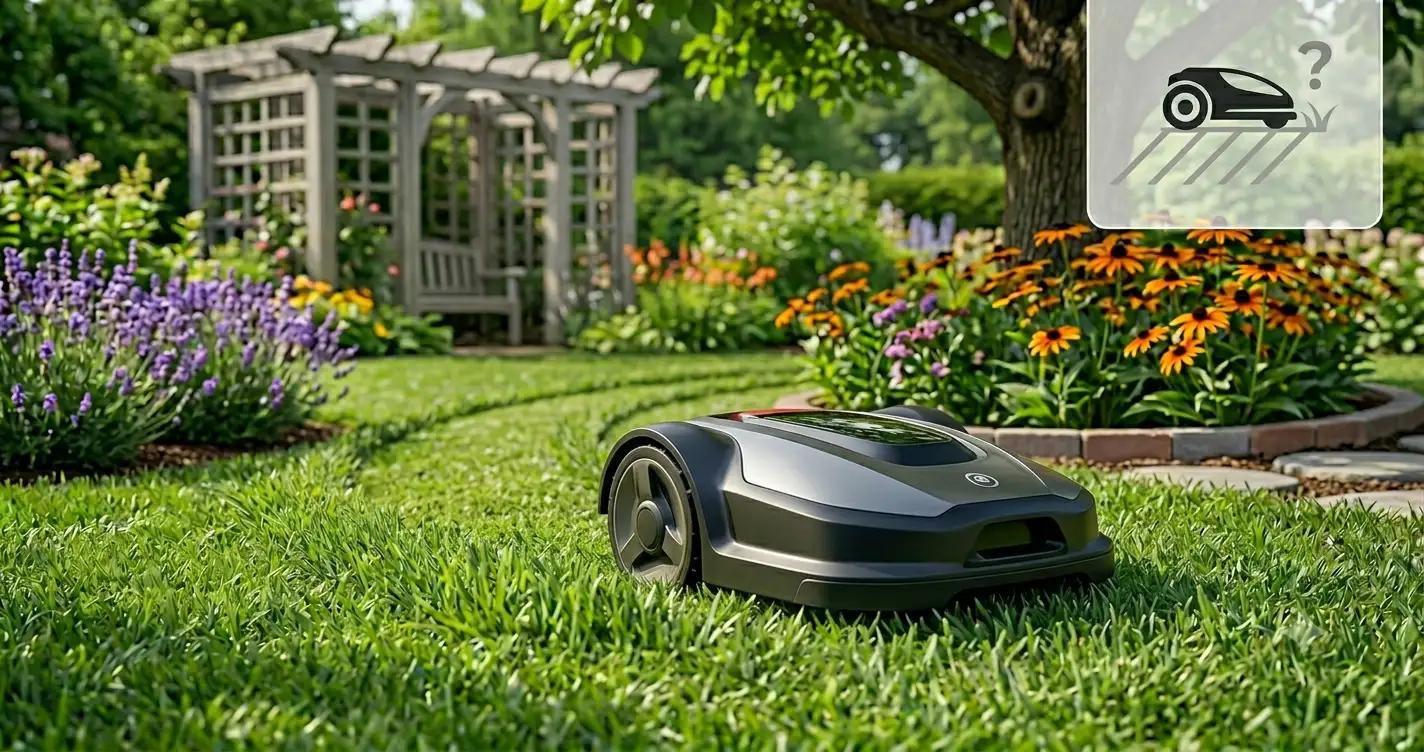
Seeing strips of uncut grass after your robot mower finishes can be frustrating. In some lawns, the mower may leave thin lines, random patches, or uneven areas that make the yard look unfinished. Some homeowners also notice dead grass clippings, missed edges, or the same spots being skipped over and over again.
The good news is that most of these problems are fixable. In many cases, the issue is not a serious hardware failure. Things like tall grass, dull blades, wet conditions, poor traction, or mower settings can all affect cutting performance.
Robot mowers also work differently from traditional lawn mowers. They are designed to maintain a lawn with frequent light cuts, not cut down heavily overgrown grass in a single pass. Because of this, certain mowing patterns and temporary strips can sometimes appear, especially during fast spring growth or after rainy weather.
In this guide, you’ll learn the most common reasons why robot mowers leave strips or miss patches of grass. We’ll also explain how to identify different strip patterns, how to fix each problem, and what you can do to prevent uneven cutting in the future.
Different Types of Robot Mower Strip Patterns and What They Mean
Not all strip patterns are caused by the same problem. The way the uncut grass looks can often help you figure out what is going wrong with your robot mower.
Some strip patterns point to blade problems, while others are caused by navigation settings, wet grass, traction issues, or obstacle detection. Before changing settings or replacing parts, it helps to identify what type of mowing pattern you are seeing.
Thin Straight Strips
Thin straight strips are one of the most common robot mower problems. These narrow lines of taller grass usually appear in the mower’s driving path.
This type of striping is often caused by:
- dull or damaged blades
- grass bending instead of standing upright
- low overlap between mowing paths
- wheels slipping on wet grass
In some cases, the mower may pass over the same area multiple times without fully cutting the grass. This happens more often when the lawn is damp or growing quickly.
Random Missed Patches
Random patches of uncut grass usually appear in different parts of the lawn without a clear pattern.
Common causes include:
- not enough mowing time
- temporary navigation gaps
- tall grass blocking the mower
- obstacle avoidance behavior
Many robot mowers use random navigation patterns instead of perfectly straight lines. Because of this, some areas may look unfinished for a short time before the mower eventually covers them during later mowing cycles.
If the same patch is missed every day, the issue may be related to sensors, mapping, or obstacles near that area.
Edge Strips Along Sidewalks or Borders
Some homeowners notice strips of grass left behind near sidewalks, fences, flower beds, or lawn edges.
This can happen when:
- the boundary wire is too far from the edge
- the mower avoids riding close to borders
- grass gets pushed sideways instead of cut
- vision sensors mistake tall edge grass for obstacles
Over time, edge grass can become thicker and taller than the rest of the lawn. Some users also notice that the mower repeatedly pushes grass outward near pavement, causing the strip to slowly get wider.
Robot mowers often improve edge cutting with proper mapping and border settings, but most models still need occasional manual trimming for perfect edges.
Dead Grass Clippings or Torn Grass
If you see rows of dead grass clippings or rough-looking grass tips, the mower may be tearing the grass instead of cutting it cleanly.
This is usually caused by:
- dull blades
- mowing wet grass
- grass being too tall before mowing
- heavy clipping buildup under the deck
Healthy robot mower clippings should normally be small and difficult to notice. Large clumps or visible rows of dead grass are often signs that the mower is struggling with current lawn conditions.
Robot Mowers Are Designed to Maintain, Not Recover, a Lawn
One of the biggest misunderstandings about robot mowers is how they are supposed to cut grass. Many homeowners expect them to work like traditional gas or riding mowers that can handle tall, thick grass in a single session.
But robot mowers are designed differently.
Most robot mowers are maintenance mowers. They work best when cutting small amounts of grass frequently, sometimes every day. Instead of removing large sections of grass at once, they trim tiny amounts continuously to keep the lawn at a consistent height.
Because of this, robot mowers can struggle when the lawn becomes too tall before mowing begins.
If the grass grows too high, several problems can happen:
- the mower may bend grass instead of cutting it
- thick grass can block blade movement
- wheels may flatten grass into strips
- the mower may avoid dense areas completely
- large clippings can build up on the lawn
This is why many users notice striping problems after vacations, rainy weeks, or fast spring growth. The mower may still be running normally, but it is no longer working under ideal conditions.
In many cases, the fastest solution is to manually mow the lawn once before letting the robot mower return to regular maintenance cutting. After the grass height becomes manageable again, the striping problem often improves over the next few mowing cycles.
Frequent mowing is usually more important than aggressive cutting height. A robot mower that cuts a little every day will normally produce cleaner and more even results than one trying to recover an overgrown lawn all at once.
Grass That Is Too Tall Before Mowing
Tall grass is one of the most common reasons a robot mower leaves strips or missed patches behind.
Unlike traditional lawn mowers with large blades and powerful engines, robot mowers use smaller cutting systems designed for light, frequent trimming. When grass becomes too tall, thick, or dense, the mower may no longer cut evenly.
In many cases, the mower simply pushes the grass down instead of cutting it. This is especially common near edges, along fences, or in areas where grass grows faster than the rest of the lawn.
Some homeowners notice that the same strips keep getting worse over time. This can happen because flattened grass later stands back up after the mower passes. In other situations, taller grass may start triggering obstacle sensors or vision systems, causing the mower to avoid those spots completely.
Fast-growing spring grass can also create problems even if the mower normally works well. A few days of rain and warm weather can quickly overwhelm the mower’s regular cutting schedule.
Signs the Grass Is Too Tall
You may notice:
- strips of taller grass after mowing
- bent grass that later stands back up
- clumps of dead grass clippings
- the mower slowing down in thick areas
- repeated missed spots in the same location
These symptoms often appear after:
- vacations
- heavy rain
- delayed mowing schedules
- starting the mower for the first time in the season
How to Fix It
The fastest solution is usually to manually cut the lawn first using a traditional mower. Lower the grass gradually instead of removing too much height at once.
After that, let the robot mower return to its normal maintenance schedule. Many striping problems improve naturally after several mowing cycles once the lawn height becomes more manageable.
You can also help prevent future issues by:
- increasing mowing frequency
- avoiding long gaps between mowing sessions
- raising cutting height during fast growth periods
- trimming difficult edge areas manually when needed
Keeping the lawn consistently short is usually much easier for a robot mower than trying to recover heavily overgrown grass.
Dull Blades and Poor Cutting Performance
Dull or worn blades are one of the most overlooked reasons robot mowers leave strips or uneven grass. Even if the mower is running on schedule, the cutting quality can slowly get worse over time without obvious warning signs.
Robot mower blades are very small and designed to stay sharp for frequent light cutting. But when they become dull, they stop slicing the grass cleanly. Instead, they start to tear or bend the grass. This can make parts of the lawn look uneven, patchy, or slightly “missed” after each mowing session.
This issue often builds up gradually. Many users do not notice it at first because the mower still appears to be working normally. However, the lawn starts to look less clean, especially in areas where grass is thicker or grows faster.
Signs of Dull Blades
You may notice:
- grass tips look frayed or torn instead of cleanly cut
- thin strips of taller grass remain after mowing
- the lawn looks slightly brown or dry at the edges of cut grass
- the mower seems to pass over areas without improving them
- cutting quality gets worse even though settings have not changed
These symptoms often become more obvious in fast-growing seasons or after the mower has been used for several weeks without blade replacement.
Why Dull Blades Cause Striping
When blades lose sharpness, they cannot cut grass evenly across the full width of the cutting disc. Some grass gets cut while other parts are only bent or pushed down. When the grass stands back up later, it creates visible strips or uneven patterns across the lawn.
This effect is even stronger when grass is slightly wet or growing quickly, because the mower has to work harder to cut through thicker material.
How to Fix It
The simplest solution is to replace the blades regularly. In most cases, new blades immediately improve cutting quality and reduce striping.
To maintain better performance:
- check blades every few weeks during peak mowing season
- replace blades when they show visible wear or dull edges
- avoid mowing extremely wet or thick grass when possible
- ensure blades are installed correctly and securely
Keeping sharp blades is one of the easiest and most effective ways to maintain a clean, even lawn with a robot mower.
Wet Grass and Clipping Build-Up
Wet grass is one of the most common but least obvious reasons robot mowers leave strips, clumps, or uneven areas behind. Even when the mower is working correctly, moisture in the lawn can change how the grass behaves and how well it gets cut.
When grass is wet, it becomes heavier and more flexible. Instead of standing upright, it tends to bend or stick together. This makes it harder for the mower blades to cut evenly, especially in areas where the grass is already thick or growing quickly.
At the same time, wet clippings do not spread evenly across the lawn. They often stick to the cutting deck or clump together in small piles. Over time, this buildup can block airflow under the mower and reduce cutting performance.
What Wet Grass Problems Look Like
You may notice:
- visible clumps of grass left behind after mowing
- thin, uneven strips across the lawn
- grass that looks “pulled” instead of cleanly cut
- repeated buildup in the same areas
- darker or matted patches after the mower passes
These signs are often more noticeable in the morning, after rain, or during humid weather when the lawn stays damp for long periods.
Why Clipping Build-Up Causes Striping
When clippings start to collect under the mower deck, they can interfere with the blade’s ability to cut evenly. Instead of clean, consistent trimming, the mower may start pushing or dragging grass in certain directions.
This can create strip patterns where some areas are cut properly, while others are only partially trimmed or flattened. In severe cases, the mower may also leave behind visible rows of clumped clippings.
How to Fix It
The most effective solution is to avoid mowing when the grass is wet whenever possible. Letting the lawn dry before mowing usually improves cutting performance immediately.
You can also reduce problems by:
- increasing mowing frequency so less grass is cut each time
- cleaning the underside of the mower deck regularly
- raising the cutting height during wet or fast-growing periods
- avoiding mowing right after rain or heavy dew
Keeping the mower clean and the lawn dry helps ensure the blades can cut smoothly and evenly, which greatly reduces striping and clumping issues.
Why Edge Grass Problems Often Get Worse Over Time
Edge grass issues are different from many other robot mower problems because they tend to slowly build up instead of appearing all at once. What starts as a small missed strip along a sidewalk or fence can gradually turn into a larger and more noticeable problem.
One common reason is that the mower naturally pushes grass outward when it travels near borders. Over time, this pushed grass can grow slightly taller or thicker than the rest of the lawn. Once this happens, the mower may begin to treat that area differently from the main lawn.
Another issue is that edge areas often grow in more difficult conditions. Grass near pavement, fences, or flower beds may receive different amounts of sunlight, water, or airflow. These small differences can cause uneven growth, which makes it harder for the mower to cut cleanly in a single pass.
In some cases, the mower’s sensors can also make the problem worse. If the grass becomes too dense or uneven along the edge, the mower may start avoiding those spots or cutting more cautiously. This can lead to a repeating cycle where the edge keeps getting slightly worse each time.
How Small Edge Issues Become Bigger Strips
What often happens is a slow cycle:
- the mower slightly misses the edge
- the grass in that area grows a bit taller
- the mower pushes it outward instead of cutting it cleanly
- the tall grass is treated as an obstacle or ignored
- the strip becomes more visible over time
This is why many homeowners feel like the problem “keeps coming back” even after they think it has been fixed.
Why This Is Normal in Many Cases
In many situations, edge striping does not mean the mower is broken. It is often a natural result of how robot mowers operate near boundaries and how grass grows in those areas.
Robot mowers are designed to maintain a lawn, but edges often require extra attention. This is why occasional manual trimming or edge touch-ups are still common even with high-end models.
Understanding this pattern helps you fix the root cause instead of only treating the visible strip on the surface.
Vision Sensors and Obstacle Detection Can Cause Missed Areas
Some newer robot mowers use cameras or vision sensors to detect obstacles on the lawn. These systems are designed to improve safety by helping the mower avoid objects like toys, pets, trees, or garden decorations.
However, in real-world conditions, these sensors can sometimes cause unexpected striping or missed areas.
One common issue is that the mower may mistake certain parts of the lawn for obstacles. For example, tall grass, shadows, uneven lighting, or dense patches of grass can sometimes look like something the mower should avoid. When this happens, the mower may slow down, change direction, or skip that area entirely.
This can lead to uneven cutting patterns, especially in areas with changing light conditions throughout the day.
Common Situations That Trigger Missed Areas
You may notice problems more often in situations like:
- grass growing taller in shaded areas
- strong shadows from trees or buildings
- uneven lighting during early morning or late afternoon
- bushes or plants hanging slightly over the lawn
- small objects repeatedly appearing in the same spot
In these cases, the mower may treat part of the lawn as an obstacle even when it is actually safe to cut.
Why This Creates Striping Patterns
When obstacle detection is triggered repeatedly in the same area, the mower may consistently avoid or partially skip that section of the lawn. Over time, this creates visible strips or patches where the grass is slightly longer than the surrounding areas.
In some cases, the mower will eventually return and cut the missed area during later cycles. But if the same conditions keep triggering the sensors, the striping can continue to appear.
How to Reduce This Problem
There are a few ways to improve performance in these situations:
- trim bushes or plants that hang low over the lawn
- remove small objects or decorations from problem areas
- improve lighting conditions if possible in shaded zones
- adjust or disable certain vision-based obstacle settings if your model allows it
- remap or exclude small problematic zones if needed
In many cases, small adjustments to the environment can significantly reduce missed areas caused by vision sensors, without needing any hardware changes.
Random Navigation vs Systematic Navigation
Not all robot mowers cut grass in the same way. The way a mower moves across your lawn can have a big impact on whether you see strips, missed patches, or uneven areas.
Most robot mowers use one of two main navigation styles: random navigation or systematic (planned) navigation. Understanding the difference can help explain why some striping patterns appear even when the mower is working normally.
Random Navigation
Random navigation means the mower does not follow a fixed mowing path. Instead, it moves in changing directions, bouncing or turning as it goes. Over time, it slowly covers the entire lawn.
This type of system is designed to ensure full coverage through repetition rather than precision.
Because of this, it is normal to see temporary striping or missed spots, especially after a single mowing session.
Common characteristics include:
- irregular mowing paths
- temporary missed areas
- full coverage achieved over time
- visible patterns that change each day
In many cases, what looks like a strip today may disappear after several mowing cycles as the mower naturally returns to that area.
Systematic Navigation
Systematic navigation follows a more structured pattern. The mower moves in planned lines, often similar to how a traditional lawn mower is used.
This method usually creates more visually consistent cutting patterns, but it can also introduce its own type of striping if settings are not optimized.
Common characteristics include:
- straight or parallel mowing lines
- more predictable coverage
- visible lane patterns on the lawn
- dependency on correct spacing and setup
If the spacing between paths is too wide, systematic mowers may leave thin strips of uncut grass between lanes.
Why This Matters for Striping Problems
Understanding navigation style is important because not all striping means something is wrong.
With random navigation, striping can be temporary and resolve naturally over time. With systematic navigation, striping is more often related to setup, such as path spacing, overlap settings, or boundary configuration.
In both cases, what looks like an incomplete cut may actually be a normal part of how the mower is designed to achieve full lawn coverage.
Boundary Wire, Edge Riding, and Mapping Problems
Problems along lawn edges are one of the most common reasons robot mowers leave visible strips or uneven borders. These issues are often related to boundary wire setup, edge riding behavior, or mapping accuracy, rather than the mower’s cutting ability itself.
Even small setup differences near borders can lead to consistent missed strips in the same locations.
Boundary Wire Placement Issues
If your mower uses a boundary wire, its position plays a major role in edge cutting performance. When the wire is placed too far from the actual edge of the lawn, the mower will naturally stop short of the grass near sidewalks, fences, or flower beds.
This creates a thin strip of uncut grass that appears in the same place after every mowing cycle.
Common causes include:
- wire installed too far from the edge
- uneven wire depth or positioning
- incorrect offset settings in the mower system
- changes in lawn shape after installation
Even a few inches of offset error can result in a clearly visible edge strip.
Edge Riding Behavior
Some robot mowers are designed to “ride along” the boundary to improve edge cutting. In theory, this helps the mower get closer to borders and reduce uncut grass.
However, in real use, edge riding can sometimes cause new issues.
For example:
- wheels may push grass sideways along pavement
- repeated passes can flatten edge grass
- dense grass near borders may be avoided by sensors
- the mower may alternate between cutting and avoiding the edge
Over time, this can make edge strips more noticeable instead of reducing them.
Mapping and Edge Recognition Problems
For mowers that use GPS or vision-based mapping, edge accuracy depends on how well the lawn boundaries are recorded and interpreted.
If mapping is slightly off, the mower may consistently miss the same areas. This is especially common in:
- narrow passages
- curved edges
- complex garden layouts
- areas with trees, fences, or obstacles near the boundary
In some cases, the mower may think it has already covered the edge area, even if a small strip of grass remains.
Why Edge Problems Tend to Repeat
Edge-related striping often becomes a repeating pattern because the mower follows the same boundary logic every time it operates. If the underlying setup issue is not corrected, the mower will continue to miss the same strip in each mowing cycle.
This is why edge problems usually do not improve on their own and often require either:
- boundary adjustments
- remapping
- or occasional manual edge trimming
Once the edge configuration is corrected, most of these striping issues become significantly less noticeable over time.
Wheel Slippage on Slopes or Soft Ground
Wheel slippage is another common but often overlooked reason robot mowers leave strips or uneven areas. When the mower’s wheels lose grip on the ground, it cannot move in a perfectly straight or consistent path. This can directly affect cutting coverage and create visible missed lines in the lawn.
Slippage is more likely to happen in certain lawn conditions, especially where the ground is not firm or evenly dry.
Where Wheel Slippage Usually Happens
You are more likely to see this issue in:
- sloped or uneven areas of the lawn
- soft soil after rain or irrigation
- areas with loose or sandy ground
- shaded zones where moisture stays longer
- grass growing on slightly muddy surfaces
In these conditions, the wheels may spin slightly or lose traction without the mower fully correcting its position.
How Slippage Creates Striping
When the mower slips, even by a small amount, its movement path becomes less accurate. Instead of following a clean, consistent line, the mower may drift slightly off course or repeat small sections unevenly.
Over time, this can lead to:
- narrow strips of uncut grass
- repeated missed areas on slopes
- uneven overlap between mowing paths
- visible “track-like” patterns on the lawn
In some cases, the mower may also slow down or adjust its direction repeatedly, which further reduces cutting consistency in that area.
Traction Control and Automatic Adjustments
Many modern robot mowers include traction control or automatic wheel adjustment systems. These features are designed to help the mower recover from slipping conditions.
However, in soft or steep areas, these systems may still struggle. The mower might reduce speed, change direction more often, or avoid certain sections of the lawn entirely if traction becomes too poor.
This can unintentionally increase the chance of striping or missed patches in the same location.
How to Reduce Wheel Slippage
There are several practical ways to improve traction and reduce striping caused by wheel slippage:
- avoid mowing immediately after heavy rain or watering
- improve drainage in low or soggy areas of the lawn
- reduce mowing frequency in problem zones during wet seasons
- lightly level uneven ground if possible
- increase traction by keeping wheels clean and free of grass buildup
In more persistent cases, some users also adjust mowing schedules so that sloped or soft areas are cut only when the ground is dry and firm.
By improving ground conditions and reducing slippage, the mower can maintain a more stable path, which helps significantly reduce striping and uneven cutting patterns.
When Uneven Cutting Is Actually Normal
Not every strip or uneven patch of grass means your robot mower has a problem. In many cases, what looks like poor cutting is actually a normal part of how robot mowers work, especially during certain lawn conditions or early usage stages.
Understanding this can help you avoid unnecessary adjustments or part replacements when the mower is already functioning as expected.
First Few Mowing Cycles
It is very common to see uneven cutting when a robot mower is first used on a lawn or after a long pause in mowing. During this time, the mower is still learning or adapting to the lawn conditions, and the grass itself may not be at an ideal maintenance height.
In these situations, you may notice:
- light striping patterns that change each day
- small missed patches that slowly disappear over time
- uneven areas that improve after repeated mowing cycles
This is usually temporary and improves as the mower continues regular operation.
After Rapid Grass Growth
Uneven cutting is also normal after periods of fast grass growth, such as during spring or after heavy rain. When grass grows quickly, the mower may not be able to fully process the entire lawn evenly in a single cycle.
As a result, the lawn may look slightly uneven for a short period, even though the mower is operating correctly.
Temporary Visual Striping
Some striping patterns are only visual and not actual missed cuts. For example, grass that is bent by the mower wheels or airflow may appear as a strip right after mowing, but it often stands back up within a few hours or days.
This can make the lawn look uneven even when the mower has already cut those areas properly.
Random Coverage Over Time
For mowers that use random navigation, full coverage is achieved over multiple sessions rather than in a single pass. This means that at any given moment, some areas may look less cut than others, even though the mower will eventually reach them.
Because of this design, short-term unevenness is expected and does not always indicate a malfunction.
When You Should Be Concerned
While some uneven cutting is normal, consistent and permanent striping in the same location may indicate a real issue. In those cases, it is worth checking factors like blade condition, edge settings, navigation accuracy, or lawn conditions.
The key difference is timing:
- normal issues improve over time or across cycles
- real problems stay in the same pattern repeatedly
Understanding this difference helps you decide when to adjust settings and when to simply let the mower continue its normal operation.
How to Prevent Robot Mower Strip Problems in the Future
Most robot mower striping problems can be reduced or even avoided with a few simple habits. The goal is not to make the mower perfect in a single pass, but to keep the lawn in a stable condition where the mower can work consistently over time.
Good prevention is mainly about grass maintenance, mower setup, and regular small adjustments.
Keep a Consistent Mowing Schedule
One of the most effective ways to prevent striping is to avoid letting the grass grow too long between mowing sessions. Robot mowers are designed for frequent, light trimming rather than heavy cutting.
To keep results consistent:
- run the mower regularly, especially during fast growth seasons
- avoid long gaps between mowing cycles
- increase mowing frequency during spring and rainy periods
A stable schedule helps prevent tall grass, which is one of the main causes of striping.
Maintain Sharp Blades
Blade condition has a direct impact on cutting quality. Dull blades do not cut evenly and can create torn grass, visible lines, or uneven patches.
To maintain performance:
- inspect blades regularly during the mowing season
- replace blades when they show wear or dull edges
- avoid running the mower with heavily damaged blades
Sharp blades ensure clean cuts, which reduces the chance of striping.
Avoid Mowing in Poor Conditions
Lawn conditions play a big role in cutting quality. Wet or overly soft grass can easily lead to clumping, slippage, and uneven results.
Try to:
- avoid mowing immediately after rain or heavy dew
- wait for grass to dry before starting a mowing cycle
- reduce mowing in muddy or saturated areas
Dry conditions help the mower cut more cleanly and maintain better traction.
Improve Edge and Boundary Setup
Many striping problems come from edge areas, so proper setup is important.
You can reduce issues by:
- checking boundary wire placement if your model uses one
- adjusting edge or border settings if available
- trimming difficult edge areas manually when needed
- remapping complex or narrow zones for better accuracy
Good edge setup helps prevent repeated missed strips along borders.
Keep the Lawn in a “Maintenance State”
The most important long-term habit is to keep the lawn in a stable maintenance condition. Robot mowers perform best when they are maintaining an already even lawn, not trying to recover an overgrown or uneven one.
When the lawn stays consistently short and healthy, striping problems naturally become much less frequent and easier to manage.
Recommended Accessories and Replacement Parts
Keeping a robot mower in good cutting condition is one of the easiest ways to prevent striping and uneven mowing problems. In many cases, small accessories and routine replacement parts can make a noticeable difference in performance, especially during peak growing seasons.
These items are not about upgrading the mower itself, but about maintaining consistent cutting quality over time.
Replacement Blades
Blades are the most important consumable part of any robot mower. Even slightly dull blades can lead to torn grass, uneven cutting, and visible striping.
To maintain good performance:
- replace blades regularly during the mowing season
- increase replacement frequency during fast grass growth periods
- avoid using blades that show visible wear or damage
Sharp blades help ensure clean, even cuts and reduce stress on the mower.
Cleaning Tools and Maintenance Brushes
Grass buildup under the mower deck can affect airflow and cutting efficiency. Over time, this can contribute to clumping and uneven performance.
Helpful tools include:
- soft cleaning brushes for removing dried grass
- plastic scrapers for safe deck cleaning
- compressed air or gentle water cleaning (if manufacturer allows)
Regular cleaning helps maintain consistent cutting and reduces the chance of clumping-related striping.
Boundary Wire Accessories (For Wire-Based Models)
For mowers that use boundary wire systems, setup quality is critical for edge performance.
Useful accessories include:
- wire repair kits for fixing broken or weak connections
- stakes or pegs for securing loose wire sections
- connectors for extending or adjusting boundary layouts
A stable boundary system helps reduce edge strips and missed border areas.
Traction and Wheel Maintenance Accessories
Wheel grip plays an important role in preventing striping on slopes or soft ground. Poor traction can cause small path errors that lead to uneven cutting patterns.
Helpful items include:
- wheel cleaning tools to remove grass buildup
- replacement wheels for worn traction surfaces
- lawn improvement tools for soft or uneven areas
Better traction helps the mower maintain a stable path and improves overall coverage.
Storage and Protection Accessories
While not directly related to cutting, protecting the mower helps maintain long-term performance. A well-maintained machine is less likely to develop inconsistent cutting behavior.
Consider:
- mower garages or covers for outdoor storage
- weather protection shelters
- charging station covers
Protecting the mower from rain, heat, and debris helps keep sensors, blades, and wheels working properly over time.
Final Note on Maintenance
Most striping problems are not caused by a single major failure. Instead, they are usually the result of small issues building up over time—dull blades, grass conditions, edge setup, or traction changes.
Regular maintenance and simple replacement parts are often enough to keep the mower cutting evenly and reduce striping significantly
Final Thoughts
Robot mower striping problems can look worrying at first, but in most cases they are caused by a mix of simple and fixable factors. Issues like dull blades, tall grass, wet conditions, edge behavior, or navigation patterns are usually behind the uneven results that many homeowners notice.
It is also important to remember that robot mowers are designed for long-term lawn maintenance, not instant perfection. Small variations in cutting, temporary strips, or slightly uneven areas are often part of how these machines work, especially during fast grass growth or changing weather conditions.
The key to getting the best results is consistency. Regular mowing, sharp blades, and a well-prepared lawn make a much bigger difference than any single setting change. Over time, the mower gradually keeps the lawn in a stable condition where striping becomes much less noticeable.
In the end, most striping issues are not permanent problems. With the right maintenance habits and a basic understanding of how robot mowers operate, you can usually achieve a clean, even-looking lawn with minimal effort.