
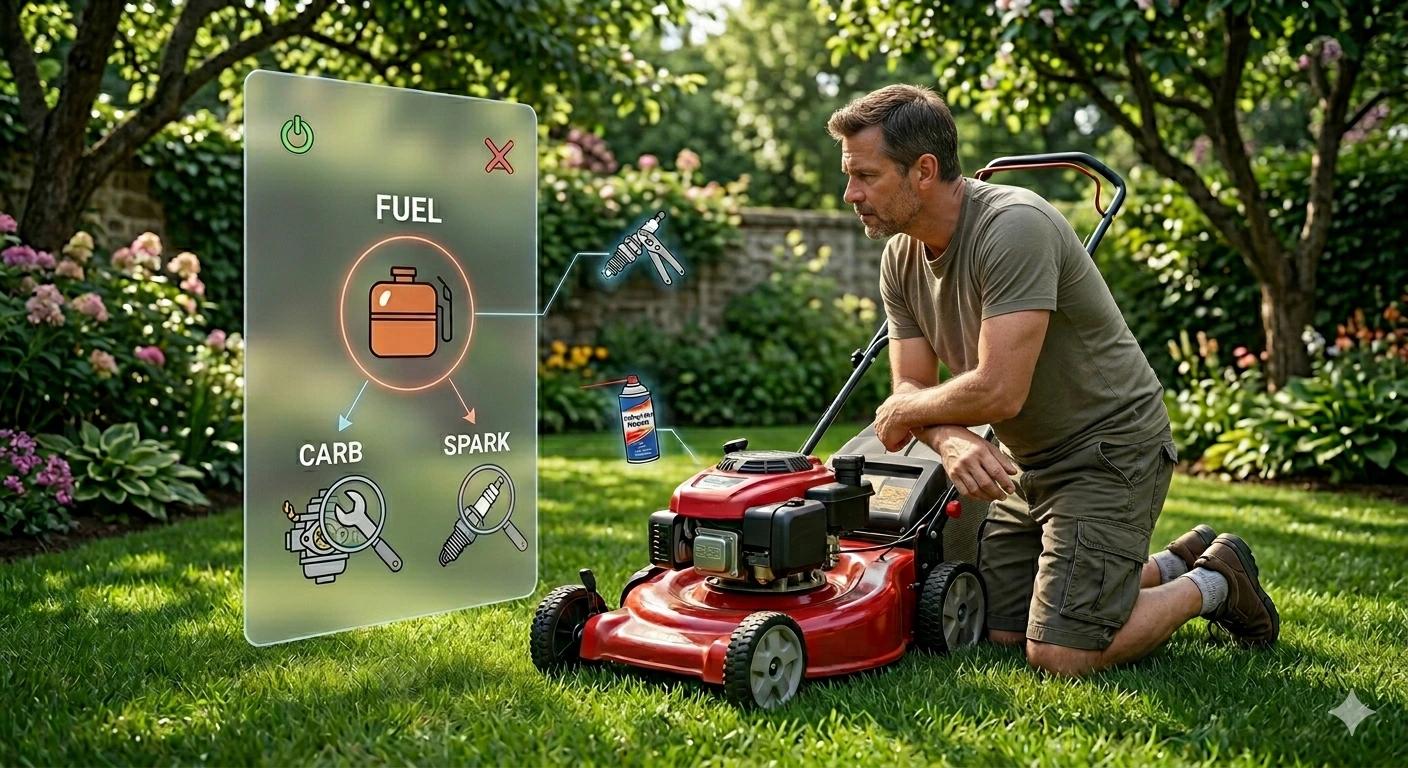
Nothing is more frustrating than starting your lawn mower only to have it die after a few seconds. This problem can happen to any gas or robotic mower, and it’s usually caused by simple issues that you can fix yourself.
In this guide, we’ll walk you through the most common reasons a lawn mower starts then dies, step-by-step troubleshooting tips, and preventive measures to keep your mower running smoothly all season. Even if you’ve never fixed a mower before, these instructions are easy to follow, with short paragraphs and clear steps.
By the end of this article, you’ll know how to diagnose the problem quickly, decide whether to repair or replace parts, and prevent the same issue from happening again.
Quick Checklist: What to Check First
Before diving into detailed troubleshooting, start with a quick checklist. These are the easiest things to check and often solve the problem in minutes:
- Fuel Level and Quality - Make sure your tank is full and the fuel is fresh. Old or stale gasoline can make a mower die right after starting.
- Battery Charge (for electric or robotic mowers) - Check that the battery is fully charged and properly connected. A low battery can cause the mower to start and immediately stop.
- Air Filter - A dirty or clogged air filter can choke the engine. Take a quick look and clean it if needed.
- Spark Plug - Inspect the spark plug for dirt, corrosion, or damage. A faulty spark plug can make the engine stall.
- Cutting Deck / Blades - Ensure there’s no grass buildup or debris under the deck. A clogged deck can cause the engine to stop shortly after starting.
- Fuel Cap Vent - Make sure the fuel cap is vented properly. A blocked vent can prevent fuel flow and make the engine die.
✅ Tip: Start with these steps first—they take less than 10 minutes and often get your mower running again.
Common Reasons a Lawn Mower Starts Then Dies
Understanding why your mower starts and then dies is the first step to fixing it. Most problems are simple and can be resolved with a few tools or cleaning steps.
Old or Stale Fuel
One of the most common reasons a mower dies immediately is old or stale gasoline. Gasoline can break down over time, especially if it’s been sitting in the tank for more than 30 days.
What to do:
- Empty the old fuel from your tank.
- Refill with fresh gasoline.
- If you live in a humid area, consider adding a fuel stabilizer to keep the gas fresh longer.
Tip: Always store fuel in a sealed, labeled container and avoid buying more than you’ll use in a month.
Dirty or Clogged Carburetor
The carburetor mixes air and fuel for the engine. Over time, dirt, debris, or old fuel residues can block its small passages, causing the engine to start but stall immediately.
What to do:
- Remove the carburetor if you are comfortable, or use a carburetor cleaner spray.
- Clean any visible dirt or buildup.
- Reassemble and test the mower.
Tip: If you don’t want to remove it, at least spray cleaner into the carburetor throat while the engine is off.
Faulty Spark Plug
The spark plug ignites the fuel-air mixture in the engine. A dirty, corroded, or worn spark plug can prevent the engine from running smoothly.
What to do:
- Remove the spark plug and inspect it. Look for black soot, corrosion, or cracks.
- Clean it with a wire brush, or replace it if damaged.
- Check that the spark plug is tightly screwed in and the wire is secure.
Tip: Keep a spare spark plug in your toolbox—replacing a bad plug is fast and inexpensive.
Blocked Fuel Cap Vent
Many gas mowers have a vent in the fuel cap that allows air to flow into the tank. If this vent gets blocked, a vacuum forms, preventing fuel from reaching the engine, which makes your mower start and then die.
What to do:
- Remove the fuel cap and inspect the vent.
- Clear any debris, dirt, or wax buildup with a small pin or needle.
- Replace the fuel cap if the vent is broken.
Tip: Always make sure the cap is tight but not overly tight after cleaning.
H3: Dirty Air Filter
A dirty air filter chokes the engine, reducing airflow needed for proper combustion. This can cause your mower to start briefly and then stall.
What to do:
- Remove the air filter and inspect it.
- Wash foam filters with warm, soapy water and let dry completely.
- Replace paper filters if they are too dirty or torn.
Tip: Check the air filter every 25 hours of mowing or at least once a season.
Clogged Cutting Deck / Blades
Grass, leaves, and debris can accumulate under the mower deck, causing the engine to stall after starting. A clogged deck or jammed blades puts extra load on the engine.
What to do:
- Disconnect the spark plug before cleaning.
- Tilt the mower safely and remove any stuck grass or debris.
- Inspect the blades for damage and sharpen or replace if needed.
Tip: Regularly clean the deck after each mowing session to prevent buildup.
Moisture or Blockage in Fuel Line
Water or debris in the fuel line can interrupt the fuel flow, causing the mower to start and die immediately.
What to do:
- Inspect the fuel line for cracks, kinks, or water droplets.
- Disconnect the line and blow air through it, or replace it if clogged.
- Make sure the line is properly connected to the carburetor and tank.
Tip: Always use a fuel line rated for gas mowers and replace it every few seasons for safety.
How to Troubleshoot a Lawn Mower That Dies After Starting
When your mower starts and then dies, following a step-by-step troubleshooting process can save time and prevent unnecessary repairs. Start with the easiest checks and move to more detailed inspections.
Step 1: Check and Change the Fuel
Fuel issues are the most common cause of a mower that starts and then dies. Old, stale, or contaminated gasoline can prevent the engine from running smoothly.
How to fix it:
- Empty the old fuel from the tank.
- Refill with fresh gasoline (use fuel with up to 10% ethanol for best results).
- Consider adding a fuel stabilizer if you don’t use the mower frequently.
Tip: Always store fuel in a cool, dry place, away from sunlight, and use within 30 days.
Step 2: Clean or Replace the Air Filter
A clogged air filter limits airflow to the engine, which can cause it to start but stall almost immediately.
How to fix it:
- Remove the air filter from the housing.
- For foam filters: wash with warm, soapy water, then let dry completely.
- For paper filters: replace if it’s dirty, torn, or compressed.
- Reinstall the filter, making sure it fits snugly.
Tip: Check the air filter every 25 hours of mowing or at least once per season.
H3: Step 3: Inspect the Spark Plug
The spark plug ignites the fuel-air mixture. A worn, dirty, or loose spark plug can cause the engine to stall after starting.
How to fix it:
- Remove the spark plug and inspect it for soot, corrosion, cracks, or damage.
- Clean the plug with a wire brush if it’s dirty.
- Replace the plug if it’s damaged or excessively worn.
- Make sure the spark plug is tightly reinstalled and the ignition wire is secure.
Tip: Keep a spare spark plug in your toolbox—replacing a bad plug is quick and inexpensive.
Step 4: Clean the Carburetor
The carburetor mixes air and fuel for the engine. Dirt or old fuel residue can block its passages, causing the engine to stall shortly after starting.
How to fix it:
- Remove the carburetor if you’re comfortable doing so, or spray carburetor cleaner into the throat while the engine is off.
- Wipe away dirt and old fuel deposits.
- Reassemble and test the mower.
Tip: If cleaning doesn’t fix the problem, consider replacing the carburetor—it’s often faster than troubleshooting a badly clogged one.
Step 5: Loosen the Fuel Cap / Check Vent
A blocked fuel cap vent can create a vacuum in the tank, stopping fuel from reaching the engine. This is an easy fix that’s often overlooked.
How to fix it:
- Remove the fuel cap and inspect the vent for dirt or debris.
- Clear the vent with a small pin or needle.
- Replace the fuel cap if the vent is broken or damaged.
Tip: Always make sure the fuel cap is tight but not over-tightened after cleaning.
Step 6: Clear the Cutting Deck
Grass clippings, leaves, and debris under the mower deck can cause the engine to stall when the blades are blocked or jammed.
How to fix it:
- Disconnect the spark plug for safety.
- Tilt the mower and remove any stuck grass, leaves, or dirt.
- Inspect the blades for damage and sharpen or replace if needed.
Tip: Cleaning the deck after each mowing session prevents buildup and keeps the engine running smoothly.
Step 7: Check Fuel Line and Engine Connections
Moisture, kinks, or dirt in the fuel line can interrupt fuel flow, causing the mower to start and immediately die. Loose engine connections can also prevent proper operation.
How to fix it:
- Inspect the fuel line for cracks, blockages, or water. Replace if needed.
- Make sure the fuel line is securely connected to the tank and carburetor.
- Check any visible engine connections for tightness.
Tip: Use a fuel line rated for your mower and replace it every few seasons for safety.
The Mower Starts But Dies From App / Timer Settings
Sometimes the problem is not the engine, fuel, or hardware. Instead, your lawn mower may start and then stop because of app settings, timer schedules, or smart control issues. This is especially common with modern robotic mowers and Bluetooth/Wi-Fi controlled models.
If your mower works manually but fails on scheduled or app control, the issue is usually software-related, not mechanical.
Common Causes
1. Incorrect Schedule Settings
A corrupted or incorrect schedule can prevent the mower from running properly.
- The mowing schedule may have been reset after an update
- Time zones may be incorrect
- Overlapping or conflicting schedules may cancel the start command
2. Eco Mode or Safety Mode Is Enabled
Some mowers include energy-saving or safety modes that override normal operation.
- Eco mode may delay or block startup
- Safety mode may stop the mower if conditions are not ideal
- Night or quiet modes may restrict working hours
3. App Connection Issues
If the mower cannot properly receive commands, it may start and immediately stop.
- Weak Bluetooth or Wi-Fi signal
- App not synced with mower firmware
- Phone switching networks during command execution
4. Firmware or Software Glitches
After updates, some mowers may behave unpredictably.
- App update not matching mower firmware version
- Temporary system bugs after reboot
- Failed or incomplete update installation
How to Fix It
Step 1: Reset the Schedule
- Delete the current mowing schedule in the app
- Create a new simple schedule
- Avoid overlapping time blocks
Step 2: Check Time and Date
- Make sure the mower and app show the correct time
- Confirm the correct time zone (very important for US users)
Step 3: Restart App and Mower
- Close the app completely
- ·Turn the mower off and back on
- Reconnect and test again
Step 4: Re-Pair the Device
If the issue continues:
- Unpair the mower from the app
- Reconnect it as a new device
- Test manual and scheduled start separately
Step 5: Update Firmware
- Check for the latest firmware version
- Update both app and mower system
- Restart after updating
Real-World Insight
Some users report that their mower starts manually but refuses to run on schedule, even though everything looks correct in the app. In many cases, simply resetting the schedule or re-pairing the device fixes the issue.
Others found that after a firmware update, their mower needed a full restart before timer functions worked again.
Tip
If your mower only fails when using the app or timer, but works manually, do not assume it is a hardware problem. In most cases, it is a configuration or communication issue that can be fixed in a few minutes.
When to Repair vs Replace Your Lawn Mower
Sometimes, no matter how many troubleshooting steps you follow, your mower may still die after starting. Knowing when to repair and when to replace can save time, money, and frustration.
Repair Your Mower If…
Your mower may be worth repairing if the problem is mechanical or simple maintenance-related. Common repairable issues include:
- Old or stale fuel – just refill with fresh gas
- Dirty air filter – clean or replace
- Clogged cutting deck or blades – remove debris and sharpen blades
- Faulty spark plug – replace easily with a new one
- Blocked fuel cap vent – clean the vent
Tip: These repairs usually take less than an hour and cost $10–$30 in parts, making it much cheaper than buying a new mower.
Replace Your Mower If…
You should consider replacing the mower if it has major mechanical or electrical problems that are expensive or unsafe to fix:
- Severe engine damage – engine won't run even after fuel, spark, and carburetor checks
- Cracked or rusted deck – unsafe to operate
- Frequent fuel line or carburetor failures – recurring problems indicate age
- Battery issues on electric/robotic mowers – replacement costs close to a new unit
- Mower older than 10 years – technology and safety improvements make a new mower more efficient
Tip: If repair costs exceed 50–60% of a new mower’s price, it’s usually smarter to replace it.
Quick Decision Checklist
- Can the mower start and run after basic fixes? → Repair it.
- Does it fail repeatedly even after troubleshooting? → Consider replacement.
- Is it old, worn, or unsafe? → Replace.
- Are replacement parts easy to find and affordable? → Repair if yes; replace if no.
Recommended Parts for Common Startup Problems
If your lawn mower starts then dies, the issue is often caused by a few basic wear-and-tear parts. Replacing these components is usually inexpensive and can quickly restore normal performance.
Below are the most commonly replaced parts that solve startup and stalling problems.
1. Spark Plug
A worn or dirty spark plug is one of the easiest fixes for a mower that starts and then dies.
Why it matters:
- Controls ignition inside the engine
- Weak spark = engine stalls quickly
When to replace:
- Every 1 season or 25–50 hours of use
- If you see black carbon buildup or corrosion
Tip: Spark plugs usually cost only a few dollars and are one of the fastest ways to fix startup issues.
2. Air Filter
A clogged air filter restricts airflow and causes poor combustion.
Why it matters:
- Engine needs clean air to run properly
- Dirty filter = engine starts but cannot sustain power
When to replace:
- Once per season (or more often in dusty areas)
- If foam is torn or paper is heavily dirty
Tip: A clean air filter can immediately improve engine stability and prevent stalling.
3. Carburetor (or Carburetor Repair Kit)
The carburetor is one of the most common causes of “starts then dies” problems.
Why it matters:
- Mixes air and fuel
- Old fuel can clog internal passages
When to replace or rebuild:
- Engine runs only for a few seconds
- Cleaning does not solve the problem
- Fuel has been sitting for a long time
Tip: In many cases, replacing the carburetor is faster and more reliable than deep cleaning.
4. Fuel Cap / Fuel Vent
A blocked fuel cap vent can stop fuel flow and cause stalling.
Why it matters:
- Air must enter the tank for fuel to flow out
- No airflow = vacuum effect = engine dies
When to replace:
- If cleaning the vent does not fix the issue
- If cap is cracked or damaged
5. Fuel Line
Old or cracked fuel lines can cause inconsistent fuel delivery.
Why it matters:
- Fuel must flow smoothly to the carburetor
- Cracks or blockages interrupt engine operation
When to replace:
- Visible cracks or stiffness in the hose
- Fuel leaks or air bubbles in line
Tip: Fuel lines are cheap and easy to replace, making them a good preventive maintenance part.
Quick Parts Priority List
If your mower starts then dies, check parts in this order:
- Spark Plug
- Air Filter
- Fuel Quality
- Fuel Cap Vent
- Carburetor
- Fuel Line
Tip for Maintenance
Keeping a few basic spare parts on hand can save time during mowing season:
- 1–2 spark plugs
- 1 air filter
- Basic carburetor cleaner spray
- Small fuel line section
This makes quick fixes possible without waiting for parts delivery.
How to Prevent Future Startup Problems
Preventing problems is always better than fixing them. Regular maintenance and smart habits can help your lawn mower start reliably every time and extend its lifespan.
1. Use Fresh Fuel and Add a Stabilizer
Old or stale gas is the most common cause of a mower that starts and then dies.
Prevention tips:
- Always use fresh gasoline and avoid storing fuel for more than 30 days.
- Add a fuel stabilizer to prevent breakdown, especially if you store your mower over winter.
Tip: Store fuel in a cool, dry place, away from sunlight and moisture.
2. Clean or Replace the Air Filter Regularly
A clean air filter keeps the engine breathing properly.
Prevention tips:
- Inspect the filter every 25 hours of mowing or at least once per season.
- Foam filters can be washed; paper filters should be replaced when dirty.
Tip: A clogged filter reduces engine efficiency and can lead to stalling.
3. Check and Replace Spark Plugs
A well-functioning spark plug ensures proper ignition.
Prevention tips:
- Inspect spark plugs once per season.
- Replace worn or dirty plugs immediately.
Tip: Keeping a spare plug in your toolbox allows for quick fixes.
4. Keep the Deck Clean
Grass, leaves, and debris under the mower deck can create extra load, making the engine stall.
Prevention tips:
- Remove debris after every mowing session.
- Sharpen blades regularly to maintain cutting efficiency.
Tip: Tilt the mower safely and always disconnect the spark plug before cleaning.
5. Store Your Mower Properly
Proper storage prevents mechanical and fuel problems.
Prevention tips:
- Store the mower in a dry, covered location during winter.
- Drain the fuel or use a stabilizer for long-term storage.
- Disconnect the battery if it’s electric or robotic.
6. Consider Scheduled Maintenance
Regular maintenance prevents most startup problems.
Prevention tips:
- Follow the manufacturer’s recommended service schedule.
- Replace worn parts before they fail.
- Keep records of oil changes, spark plug replacements, and air filter checks.
Tip: Even a quick check before mowing season can prevent frustrating breakdowns.
Conclusion
A lawn mower that starts then dies is a common problem, but in most cases, it is caused by simple issues like old fuel, a dirty air filter, or a clogged carburetor. The good news is that most of these problems can be fixed at home without special tools or professional help.
By following the step-by-step troubleshooting guide in this article, you can quickly identify the cause and get your mower running again. Regular maintenance—such as using fresh fuel, cleaning the air filter, and checking the spark plug—can prevent most of these issues from happening in the first place.
If your mower still won’t stay running after trying all the fixes, it may be time to repair or replace certain parts, or consider upgrading to a newer model.
Frequently Asked Questions
Why does my lawn mower start then die after a few seconds?▼
This usually happens because of fuel, air, or spark issues. The most common causes are old gasoline, a clogged carburetor, or a dirty air filter.
Can bad gas cause a lawn mower to start then die?▼
Yes. Bad or stale gas is one of the top reasons a mower starts but won’t keep running. Gas that sits for more than 30 days can break down and block the fuel system.
How do I fix a lawn mower that won’t stay running?▼
Start with the basics:
- Replace old fuel
- Clean or replace the air filter
- Check the spark plug
- Clean the carburetor
Most cases are fixed with these simple steps.
How often should I clean or replace the air filter?▼
You should check the air filter every 25 hours of use or at least once per mowing season. Replace it if it is dirty, damaged, or clogged.
How do I know if the carburetor is causing the problem?▼
If your mower starts but dies immediately, especially after sitting unused, the carburetor is often the issue. Signs include rough running, fuel not flowing properly, or failure after cleaning other parts.
Is it worth repairing an old lawn mower?▼
It depends on the condition. If the repair cost is less than 50–60% of a new mower and the engine is still in good shape, repairing is usually worth it. Otherwise, replacement may be more cost-effective.