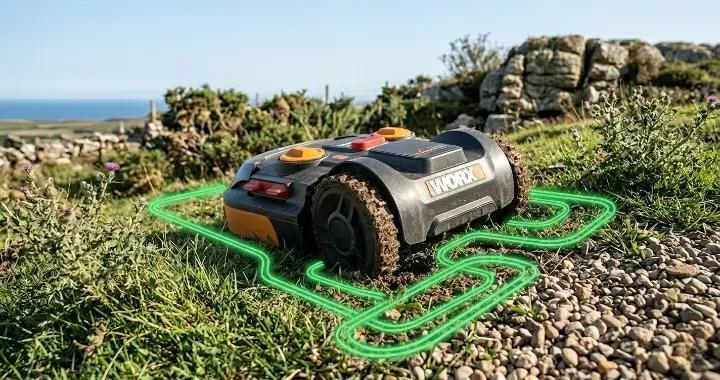

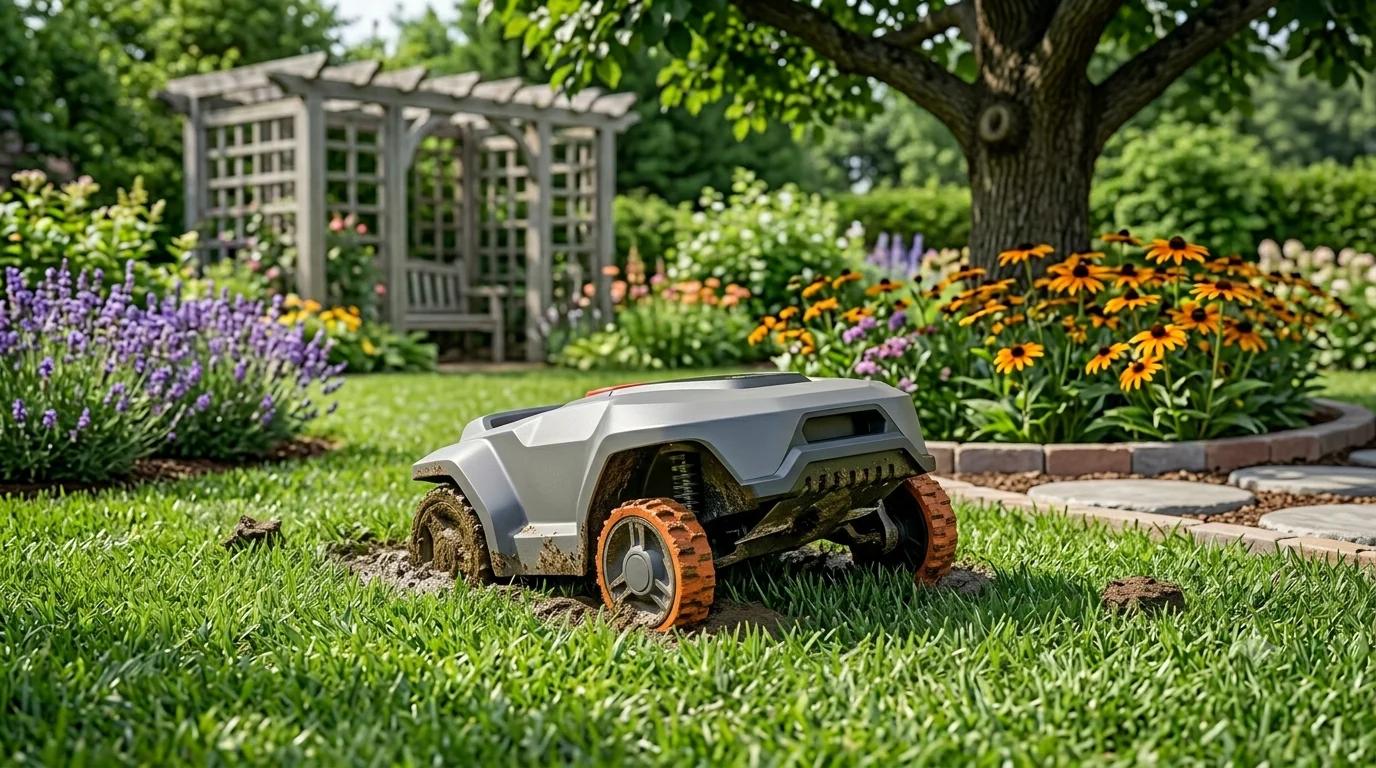
Robot mowers are supposed to save time, not create more work. But many owners run into the same frustrating problem: the mower gets stuck in the lawn and stops mowing completely.
Sometimes the wheels keep spinning in wet grass. Other times, the mower gets trapped near edges, tree roots, slopes, or narrow passages. Some robot mowers even get stuck in the exact same spot over and over again.
The good news is that most of these problems are fixable. In many cases, the issue is not just the mower itself. Uneven ground, poor traction, bad boundary wire placement, weak GPS or RTK signals, and overgrown areas can all cause navigation problems.
In this guide, we’ll explain the most common reasons why robot mowers get stuck, how to fix the problem step by step, and what you can do to prevent it from happening again. Whether you own a basic boundary-wire mower or a modern RTK robot mower, these tips can help improve reliability and reduce frustration.
Why Robot Mowers Get Stuck So Often
Robot mowers may look smart, but they still have limits. Unlike a person pushing a mower, a robot mower cannot fully understand the lawn around it. It relies on wheels, sensors, maps, boundary wires, cameras, or GPS signals to move safely through the yard.
That works well on clean, flat lawns. But real lawns are rarely perfect.
Many robot mowers start having problems when they deal with wet grass, uneven ground, slopes, exposed roots, narrow passages, or soft soil. Even small changes in the lawn can affect traction and navigation. A bump that seems harmless to a person may be enough to stop a robot mower completely.
Traction is one of the biggest reasons robot mowers get stuck. When the wheels lose grip, the mower may keep spinning in place instead of moving forward. This often happens after rain, on muddy areas, or on slopes with thin grass coverage. Some owners notice the mower slowly digging itself deeper into the ground while trying to escape.
Navigation problems are also common. RTK and GPS robot mowers can struggle near walls, roofs, trees, or areas with weak satellite signals. Boundary-wire models may get confused by narrow passages, tight corners, or incorrectly placed wires. In some cases, the mower may stop near the charging station or fail to return home properly.
The condition of the lawn matters more than many people expect. Lawns with holes, tree roots, thick weeds, moss, or poor drainage create difficult terrain for any robot mower. Even high-end models can struggle if the yard is not prepared well.
Another thing many owners discover is that robot mowers often get stuck in the same areas repeatedly. Usually, this means there is a hidden problem in that part of the lawn, such as a low spot, slippery soil, poor grass coverage, or a navigation dead zone.
The good news is that most stuck problems are predictable and preventable. Once you understand what is causing the issue, it becomes much easier to improve the mower’s reliability and reduce how often it needs rescue.
Common Signs Your Robot Mower Has a Traction or Navigation Problem
Robot mower problems do not always look the same. Some mowers stop completely, while others keep moving but fail to finish the job properly. Learning the warning signs can help you find the real cause before the problem gets worse.
In many cases, traction and navigation issues start small. The mower may recover on its own at first, but over time the same problems happen more often.
Wheels Spinning Without Moving
One of the most common signs of a traction problem is spinning wheels. The mower tries to move forward, but the wheels keep slipping in place.
This usually happens on:
- wet grass
- muddy ground
- steep slopes
- patchy lawns
- areas with poor grass coverage
Some owners notice the mower digging deeper into the soil while trying to escape. Thin or worn tires can make the problem even worse.
Getting Stuck in the Same Spot Repeatedly
If your robot mower keeps getting stuck in the exact same area, the lawn itself is often the problem.
Common causes include:
- exposed tree roots
- hidden holes
- uneven ground
- slippery moss
- narrow passages
- poor drainage
Many long-term robot mower owners say that repeated stuck points usually become easier to manage once those specific areas are repaired or adjusted.
Stopping After Rain or Morning Dew
A mower that works well in dry weather but struggles after rain often has a traction issue.
Even light moisture can reduce grip, especially on slopes or compacted soil. Some robot mowers may slide downhill, spin their wheels, or trigger lift and collision errors when the ground becomes soft.
Wet grass can also stick to the wheels and underside of the mower, making movement more difficult.
Failing to Return to the Charging Station
Navigation problems often appear when the mower tries to return home.
The mower may:
- miss the charging dock
- stop near the station
- drive past the charger
- claim the task is complete too early
- lose its route near the base station
This is especially common with RTK and GPS robot mowers if the charging station is placed near walls, roofs, fences, or covered areas that block satellite signals.
Random Lifted or Obstacle Alerts
Some robot mowers suddenly stop and report obstacle, collision, or lifted errors even when nothing is blocking them.
This can happen because of:
- uneven terrain
- roots
- thick weeds
- dirty sensors
- wheel motor strain
- outdated firmware
In some cases, the mower slightly lifts while crossing rough ground, causing the sensors to think it has been picked up.
Getting Trapped Near Edges or Narrow Passages
Robot mowers often struggle near:
- fence lines
- flower beds
- tight corners
- garden paths
- steep lawn edges
Boundary-wire models may bounce back and forth without escaping, while GPS and RTK models can become confused in tight spaces with weak signal coverage.
If your mower regularly gets trapped in these areas, adjusting the layout of the lawn or creating no-go zones may help prevent future problems.
How Often Should a Robot Mower Get Stuck?
Many new robot mower owners ask the same question: is it normal for a robot mower to get stuck?
The honest answer is yes — sometimes. Even good robot mowers can get trapped by wet ground, tree roots, holes, toys, or difficult slopes. No robot mower is perfect, especially on complex lawns.
However, there is a big difference between an occasional problem and a mower that gets stuck constantly.
A Few Times Per Season Is Fairly Normal
On a well-maintained lawn, many robot mower owners only deal with a few stuck situations each season.
These problems are often caused by temporary issues, such as:
- heavy rain
- soft mud
- fallen branches
- toys left in the yard
- freshly dug holes
- overgrown grass
Even high-end robot mowers can struggle in these situations. Most owners consider occasional stuck problems acceptable if the mower works reliably most of the time.
Getting Stuck Every Day Usually Means Something Is Wrong
If your robot mower gets stuck daily or several times a week, there is usually an underlying problem.
Common causes include:
- uneven lawn grading
- exposed roots
- poor traction
- bad drainage
- incorrect boundary wire placement
- weak RTK or GPS signal
- overly difficult terrain
Some owners also report more problems after firmware updates or changes to navigation settings. In these cases, the mower may suddenly behave differently even though the lawn has not changed.
A mower that constantly needs rescue defeats the purpose of automation. As many robot mower owners say, it starts to feel more like babysitting than time-saving.
Most Mowers Get Stuck in the Same Areas
One important pattern appears again and again: robot mowers usually get stuck in the same spots.
These repeated problem areas often include:
- tree bases
- steep edges
- muddy slopes
- narrow passages
- exposed roots
- low grass coverage areas
This is actually good news because predictable problems are usually fixable. Small changes such as moving a boundary wire, adding soil, improving drainage, trimming roots, or blocking off difficult areas can make a huge difference.
Many long-term owners say their robot mowers became much more reliable after they slowly fixed problem areas over time.
Lawn Preparation Matters More Than Many People Expect
A robot mower works best on a lawn that is prepared for automation.
Unlike a person using a push mower, a robot mower cannot easily adapt to sudden terrain changes. Small bumps, soft spots, and hidden obstacles can confuse navigation systems or reduce wheel traction.
That is why many experienced owners spend time:
- leveling rough ground
- improving grass coverage
- wiring out difficult obstacles
- trimming lawn edges
- adjusting no-go zones
Once these problem areas are fixed, the mower often becomes much more dependable.
The Goal Is Reliability, Not Perfection
Most robot mower owners never achieve a completely hands-free lawn. But the goal is not perfection — it is reducing how often the mower needs attention.
If your mower only gets stuck once in a while, especially during difficult weather conditions, that is usually considered normal. But if you constantly need to rescue it from the same places, it is a sign that the lawn setup or mower configuration still needs improvement.
Before You Blame the Robot Mower, Check the Lawn
When a robot mower gets stuck, the first reaction is often to think something is wrong with the machine. But in many real cases, the mower is actually doing its best in a difficult environment.
The truth is simple: most robot mower problems are caused by the lawn, not the robot itself.
Before assuming there is a defect or software issue, it is worth taking a closer look at the ground conditions where the mower is struggling.
Uneven Ground Can Confuse Any Robot Mower
Small bumps, dips, or soft spots in the lawn can cause big problems for robot mowers.
Even if the surface looks fine from a distance, issues like these can affect movement:
- hidden holes under grass
- sunken soil from rain or irrigation
- uneven grading near trees or fences
When a wheel drops into a low spot or hits a raised edge, the mower may lose traction or change direction unexpectedly.
Wet Soil and Poor Drainage Reduce Traction
Water is one of the most common reasons robot mowers get stuck.
After rain or heavy watering, the soil can become soft and slippery. In these conditions, the wheels may spin without moving the mower forward.
This is especially common in:
- shaded areas that stay wet longer
- clay-heavy soil
- low spots where water collects
- lawns with poor drainage
Even a powerful mower can struggle when the ground becomes unstable.
Tree Roots and Hidden Obstacles Create Trouble Spots
Many repeat “stuck zones” in lawns are caused by hidden objects under the grass.
Common examples include:
- tree roots rising to the surface
- rocks buried just below soil
- irrigation heads
- uneven edging near garden beds
When the mower hits these obstacles, it may lift slightly, lose balance, or get trapped in the same area repeatedly.
Overgrown or Weak Grass Coverage Makes Things Worse
Robot mowers rely on consistent ground contact. When grass is too thin, patchy, or overgrown, traction becomes unpredictable.
Problem areas often include:
- bare soil patches
- moss-covered ground
- thick weeds or tangled grass
- edges that grow unevenly
In these spots, wheels may sink slightly or slip, especially when turning.
Charging Station Placement Can Affect Navigation
Not all stuck problems happen in the middle of the lawn. Some start right at the charging station.
If the base is placed near:
- walls or fences
- roof overhangs
- narrow corners
- areas with weak GPS or RTK signal
the mower may struggle to align properly, enter the task area incorrectly, or fail to return home.
This is one reason why some users report strange behavior like the mower moving only a short distance and then stopping or resetting the task.
Small Lawn Fixes Often Solve Big Problems
The good news is that many robot mower issues can be improved without changing the mower itself.
Simple adjustments like leveling problem areas, improving drainage, trimming roots, or moving boundary wires slightly can make a noticeable difference in performance.
In many cases, once the lawn is better prepared, the same robot mower becomes much more reliable and gets stuck far less often.
Most Common Causes of a Robot Mower Getting Stuck
Robot mowers usually do not get stuck for random reasons. In most cases, the problem comes from a small group of common issues that repeat across different lawns and mower brands.
Understanding these causes can help you quickly identify what is going wrong and fix it before it becomes a daily problem.
Wet Grass and Slippery Lawn Conditions
Wet grass is one of the most frequent reasons robot mowers lose traction.
After rain, morning dew, or heavy watering, the lawn surface becomes soft and slippery. The wheels may spin without moving the mower forward, especially on slopes or compact soil.
This problem is more common in:
- shaded areas that dry slowly
- clay-heavy soil
- low spots where water collects
- lawns with poor drainage
Even a well-designed mower can struggle when the ground turns unstable.
Uneven Ground, Holes, and Sunken Areas
Small changes in ground height can create big navigation problems.
Robot mowers are sensitive to:
- hidden holes under grass
- uneven patches near trees or fences
- sunken areas caused by rain or foot traffic
When a wheel drops into a hole or hits a raised edge, the mower may lose balance or stop completely. These are also common “repeat stuck” locations.
Steep Slopes Beyond the Mower’s Capability
Most robot mowers have a maximum slope rating, and going beyond that limit often leads to slipping or repeated stops.
On steep or uneven slopes, the mower may:
- slide downhill
- spin wheels without traction
- struggle to turn safely
- repeatedly fail in the same direction
This is especially true for wet or mossy slopes, where grip is even weaker.
Worn Wheels or Dirt Buildup Reducing Traction
Over time, wheels collect dirt, grass, and debris. This reduces grip and makes it harder for the mower to move properly.
In some cases, the problem is simple:
- mud stuck inside wheel treads
- grass wrapped around axles
- worn-out rubber losing texture
This can lead to slow slipping, especially on slight slopes or damp grass.
Boundary Wire Placement Problems
For boundary-wire robot mowers, incorrect wire placement can confuse navigation.
Common issues include:
- wire placed too close to edges
- sharp turns near obstacles
- narrow corridors without enough space
- inconsistent loop shape
When the mower cannot interpret the boundary correctly, it may bounce, stop, or get trapped in a small area.
Narrow Passages and Tight Corners
Robot mowers often struggle in tight spaces such as:
- narrow garden paths
- fence gaps
- corners between flower beds
- tree-heavy areas
In these places, the mower may lose orientation or repeatedly try the same movement pattern, leading to a stuck situation.
Long Grass, Thick Weeds, or Overgrown Edges
If the grass is too tall or dense, the mower may not be able to cut and move efficiently at the same time.
This can cause:
- wheel resistance from thick grass
- reduced traction
- blade overload
- slower movement or repeated stops
Edges and neglected areas are especially common problem spots.
Charging Station Placement Issues
The charging base plays a bigger role than many people expect.
If it is placed in a poor location, such as:
- under a roof or overhang
- near walls or fences
- in weak signal areas (for RTK/GPS models)
the mower may have trouble docking, leaving the station, or properly starting a task.
Navigation, GPS, or RTK Signal Problems
Modern robot mowers rely heavily on positioning systems.
If the signal is weak or unstable, the mower may:
- lose its map position
- drift off course
- fail to recognize boundaries
- stop unexpectedly
This is especially common near tall buildings, dense trees, or areas with signal interference.
Outdated Firmware or Mapping Errors
Software also plays a role in mower behavior.
Outdated firmware or corrupted maps can cause:
- incorrect path planning
- repeated stuck behavior in certain zones
- poor obstacle detection
- inconsistent navigation performance
In some cases, a simple update or remapping of the lawn can significantly improve reliability.
Why Your Robot Mower Keeps Getting Stuck in the Same Spot
One of the most frustrating problems for robot mower owners is when the mower keeps getting stuck in the exact same place. You fix it, restart it, and it runs again — only to fail in the same spot later.
This is actually a very common pattern, and it usually means there is a specific issue in that area of the lawn or with how the mower is navigating it.
Hidden Low Spots or Uneven Ground
In many cases, the problem is not visible at first glance.
A “same spot” failure often happens because of:
- a small dip in the ground
- soil that slowly sinks after rain
- uneven grading near trees or edges
When the mower passes over this area, one wheel may drop slightly lower than the other. Over time, this repeated stress causes it to lose traction in exactly the same location.
Weak Traction Caused by Soil or Grass Conditions
Some parts of the lawn naturally have worse grip than others.
This can happen due to:
- compacted soil that becomes slippery when wet
- moss or algae buildup
- thin or patchy grass coverage
- overwatered areas that stay soft longer
Even if the mower works fine everywhere else, these “soft zones” can trap it again and again.
Tree Roots and Underground Obstacles
Tree roots are one of the most common reasons for repeated stuck spots.
They often cause problems because:
- they are hidden just below the surface
- they create uneven wheel contact
- they force the mower to tilt slightly during movement
When the mower hits a root in a specific way, it may consistently fail in that exact position.
Boundary Wire or Mapping Edge Conflicts
For boundary-wire models, a repeated stuck point can mean the wire layout is too tight or poorly shaped in that area.
For RTK or GPS-based mowers, the issue may come from:
- signal reflection near walls or structures
- inaccurate mapping in narrow zones
- inconsistent positioning near the edge of the lawn
In both cases, the mower keeps repeating the same navigation behavior, which leads to repeated failure.
Drainage Problems That Never Fully Dry
Some areas of the lawn hold moisture longer than others.
These spots often include:
- shaded corners
- low-lying sections of the yard
- areas near downspouts or irrigation runoff
Even when the rest of the lawn is dry, these zones stay soft. That makes them a permanent weak point for traction.
Repeated Navigation Behavior or Path Loops
Robot mowers often follow similar movement patterns each time they mow.
If a certain path leads to a difficult terrain feature, the mower may:
- approach it from the same angle every time
- try the same escape pattern repeatedly
- fail in a consistent loop
This creates the illusion that the mower is “stuck for no reason,” when it is actually repeating a predictable navigation decision.
Why Fixing One Small Area Often Solves the Problem
The good news is that repeated stuck spots are usually fixable.
Once you identify the exact area, small adjustments can make a big difference, such as:
- leveling the ground slightly
- adding soil or grass coverage
- improving drainage
- trimming roots or obstacles
- adjusting boundary wire position
Many experienced users find that solving just one or two problem zones dramatically improves the overall reliability of the mower.
Some Robot Mowers Handle Difficult Lawns Better Than Others
Not all robot mowers are built the same. While many models work well on flat, simple lawns, some are designed to handle more complex and difficult terrain. This difference becomes very clear when you have slopes, uneven ground, or rough patches in your yard.
If your robot mower gets stuck often, it does not always mean something is broken. In some cases, it simply means the mower is not designed for your type of lawn.
Wheel Design and Traction Make a Big Difference
One of the biggest differences between robot mowers is how they handle traction.
Some models use basic rear-wheel drive with small, hard wheels. These can work well on flat grass but often struggle when the ground becomes wet, uneven, or steep.
Other models are designed with:
- larger treaded wheels
- softer rubber materials
- improved grip patterns
- all-wheel drive systems
These features help the mower maintain contact with the ground and reduce slipping, especially on slopes or soft soil.
Why Some Mowers Struggle on Slopes and Uneven Ground
Slopes are one of the hardest challenges for any robot mower.
On difficult terrain, lower-end models may:
- lose traction when turning
- slide downhill when grass is wet
- struggle to climb back up small inclines
- repeatedly get stuck in the same slope zones
Higher-end models are usually better at adjusting motor power and wheel speed to maintain balance, but even they have limits depending on the surface condition.
RTK and GPS Navigation Still Have Real Limitations
Modern robot mowers that use RTK or GPS navigation are much more advanced than older boundary-wire systems, but they are not perfect.
They can still struggle in areas such as:
- under trees with dense canopy
- near buildings or metal structures
- narrow passages with weak signal reflection
- charging stations placed in covered or shaded areas
When the signal becomes unstable, the mower may slow down, pause, or take inefficient routes that increase the chance of getting stuck.
Why Lawn Type Matters More Than Brand
A common mistake is assuming that a more expensive robot mower will automatically solve all problems. In reality, lawn conditions matter just as much as hardware quality.
Even high-end mowers can struggle if the yard has:
- poor drainage
- exposed roots
- uneven grading
- overgrown edges
- soft or muddy soil
On the other hand, even a basic mower can perform very well on a flat, well-maintained lawn.
The Key Idea: Matching the Mower to the Environment
The best results come when the mower and the lawn are a good match.
If your yard is simple and flat, most robot mowers will perform reliably. But if your lawn has slopes, rough terrain, or complex navigation paths, you may need a model designed for more demanding conditions.
Understanding this difference can help you reduce frustration and choose better solutions in the future—whether that means upgrading the mower or improving the lawn itself.
How to Fix a Stuck Robot Mower (Step-by-Step)
When a robot mower gets stuck, it can feel random at first. But in most cases, there is a clear reason behind it. The key is to stay calm and follow a simple step-by-step process instead of guessing.
Below is a practical way to troubleshoot and get your mower working again safely.
Step 1: Check the Immediate Area Around the Mower
Start by looking at where the mower is stuck.
Check for:
- wet or muddy ground
- holes or uneven soil
- thick grass or weeds
- tree roots or hidden objects
In many cases, the mower is not “broken” — it is just physically blocked or losing traction in that exact spot.
Step 2: Inspect the Wheels and Underside
Next, look at the wheels and bottom of the mower.
Common issues include:
- grass wrapped around the wheels
- mud buildup reducing grip
- debris stuck under the chassis
- worn or slippery wheel treads
Cleaning these areas can immediately restore normal movement, especially if the issue is caused by traction loss.
Step 3: Help the Mower Return to a Safe Position
If the mower is completely stuck, gently move it to a flat and stable area nearby.
Make sure:
- the ground is firm
- there are no slopes or holes
- wheels can rotate freely
Then try restarting or sending it back to the charging station.
Step 4: Check Boundary Wire or Map Position (If Applicable)
For boundary-wire models, look for areas where the mower may be confused:
- tight wire turns
- narrow passages
- edge zones with uneven grass
For RTK or GPS models, consider whether the mower is near:
- trees or heavy cover
- buildings or fences
- areas with weak signal coverage
Sometimes the problem is not traction, but navigation misjudgment.
Step 5: Restart the Mower or Reset the Task
Many temporary issues can be fixed by simply restarting the mower.
Try:
- stopping the current task
- returning it to the charging station
- starting a new mowing cycle
This helps clear temporary navigation errors or stuck task states.
Step 6: Observe the Pattern for Future Fixes
After the mower is back to normal, take a moment to observe where and why it got stuck.
Ask yourself:
- Did it happen after rain?
- Was it always the same location?
- Was the grass too long or wet?
- Is the terrain uneven in that area?
This step is important because it helps you identify repeat problem zones and fix the root cause, not just the symptom.
Step 7: Make Small Adjustments to Prevent It Happening Again
Once you understand the cause, even small changes can improve performance:
- level uneven ground
- improve drainage
- trim problem edges
- clean wheel buildup regularly
- adjust boundary wire or no-go zones
Most robot mower issues are not permanent failures. With small adjustments, many stuck problems can be significantly reduced over time.
How to Prevent Your Robot Mower From Getting Stuck Again
Fixing a stuck robot mower is one thing. Making sure it does not happen again is where most of the long-term improvement comes from. The good news is that small changes to your lawn setup and maintenance routine can make a big difference in reliability.
In many cases, prevention is more effective than troubleshooting.
Keep the Lawn Surface More Even
Uneven ground is one of the most common reasons robot mowers get stuck.
To reduce problems over time, try to:
- fill small holes with soil or sand
- level low spots after heavy rain
- smooth transitions near trees and edges
- avoid leaving soft patches untreated
Even small improvements can help the mower move more consistently without losing traction.
Improve Drainage in Problem Areas
Water is another major factor that causes repeated stuck issues.
To improve drainage:
- identify areas where water collects after rain
- add soil to raise low spots
- aerate compacted ground if needed
- avoid overwatering shaded zones
Dryer soil means better traction and fewer wheel-slipping problems.
Trim and Clean Difficult Zones Regularly
Overgrown or messy areas often become trouble spots for robot mowers.
Pay special attention to:
- edges near fences and walls
- areas around trees and roots
- narrow passages between garden sections
- thick or fast-growing grass zones
Keeping these areas clean reduces resistance and helps the mower navigate more smoothly.
Reduce Risky Navigation Areas
Some parts of the lawn are naturally harder for robot mowers to handle.
You can improve reliability by:
- creating no-go zones around difficult terrain
- widening narrow passages where possible
- adjusting boundary wire placement (for wire-based models)
- simplifying tight corners or sharp turns
This helps the mower follow more predictable and stable paths.
Keep Wheels and Underside Clean
Traction loss often builds up slowly over time.
A simple maintenance routine helps:
- remove grass stuck in wheel treads
- clean mud after wet mowing sessions
- check for debris under the chassis
- inspect wheel wear regularly
Clean wheels maintain grip and reduce slipping on slopes or wet grass.
Update Software and Check Mapping Settings
Modern robot mowers rely heavily on software for navigation.
To avoid errors:
- keep firmware updated
- check for map or zone corrections
- recalibrate RTK or GPS systems if needed
- review mowing patterns after updates
Sometimes, small software improvements can fix unexpected stuck behavior.
Adjust Mowing Schedule Based on Weather
Weather conditions have a big impact on performance.
For better results:
- avoid mowing right after heavy rain
- delay mowing when the ground is too soft
- choose drier times of the day when possible
- reduce frequency in high-moisture seasons
This helps prevent traction problems before they start.
The Goal Is a “Low-Intervention” Lawn
The ideal situation is not a completely perfect lawn, but one where the robot mower can operate with minimal interruptions.
Once the terrain is improved and problem areas are reduced, most robot mowers become much more reliable and require far less supervision.
Recommended Accessories and Replacement Parts
If your robot mower gets stuck often, the issue is not always the mower itself. In many cases, the right accessories or small upgrades can significantly improve traction, navigation, and overall reliability on difficult lawns.
Here are some of the most useful accessories and replacement parts that can help reduce stuck problems.
High-Traction or Off-Road Wheels
Wheels are one of the most important parts of a robot mower. If the mower loses grip easily, upgrading the wheels can make a big difference.
Better wheel options usually offer:
- deeper tread patterns for better grip
- softer rubber for improved traction on wet grass
- wider surface contact to reduce sinking in soft soil
These upgrades are especially useful for lawns with slopes, muddy areas, or uneven ground.
Replacement Boundary Wire and Repair Kits
For boundary-wire robot mowers, the wire system is essential for navigation. Damaged or poorly placed wire can lead to repeated stuck issues.
Common accessories include:
- boundary wire rolls for full replacement
- wire repair kits for fixing broken sections
- connectors for extending or adjusting layouts
- fixing pegs for securing wire to the ground
A properly installed boundary system helps the mower move more predictably and avoid confusing zones.
Charging Station Covers and Protective Garages
The charging station plays a key role in daily operation. If it is exposed to harsh weather or poor placement conditions, it can affect how the mower enters and exits tasks.
A protective garage helps by:
- shielding the mower from rain and UV exposure
- keeping the docking area more stable
- reducing dirt buildup around the station
This can improve docking accuracy and reduce navigation errors near the base.
RTK Antenna Mounts and Signal Accessories
For RTK or GPS-based robot mowers, signal quality is critical. Weak or unstable positioning is a common cause of stuck behavior near charging stations or shaded areas.
Useful upgrades include:
- wall-mounted RTK antenna kits
- signal extension cables
- elevated mounting brackets
These help improve satellite visibility and reduce positioning drift in difficult areas.
Cleaning and Maintenance Kits
Dirt buildup is a silent cause of many traction problems. Over time, grass and mud can affect wheel performance and sensor accuracy.
Maintenance kits often include:
- cleaning brushes
- wheel scrapers
- blade cleaning tools
- underside maintenance tools
Regular cleaning helps maintain consistent movement and reduces unexpected wheel slipping.
Replacement Blades
While blades do not directly affect stuck issues, dull blades can indirectly contribute to problems.
When blades are worn:
- grass cutting becomes uneven
- mower may slow down in thick areas
- resistance increases in dense grass
Replacing blades regularly helps the mower move more smoothly through the lawn.
Final Thoughts
Robot mowers are designed to make lawn care easier, but they still depend heavily on the conditions of your yard. When a mower gets stuck, it is usually not a random failure. In most cases, it is a sign that something in the environment is making the job more difficult than expected.
Wet grass, uneven ground, slopes, tree roots, narrow passages, and weak navigation signals are some of the most common reasons behind stuck problems. Once you understand these factors, it becomes much easier to see why the mower behaves the way it does.
The important thing to remember is that most stuck issues are not permanent. Small improvements to the lawn, better placement of the charging station, regular cleaning, and simple maintenance can all make a noticeable difference. Over time, these adjustments help the mower work more smoothly and with fewer interruptions.
In many cases, the goal is not to achieve a perfect, problem-free lawn, but to reduce how often you need to intervene. With the right setup and a bit of optimization, a robot mower can become a reliable tool that handles most of the routine work on its own, while you only step in occasionally when needed.