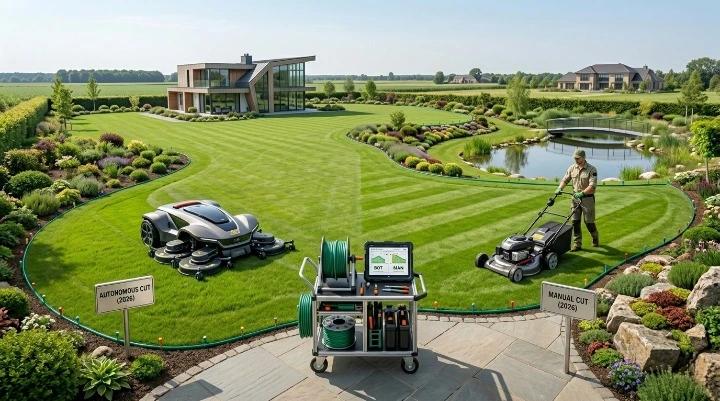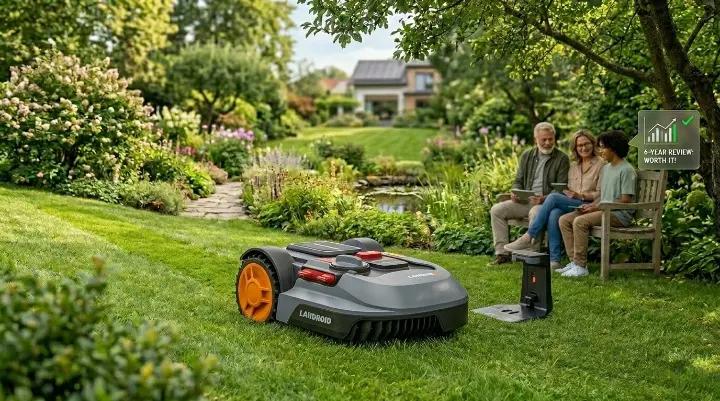

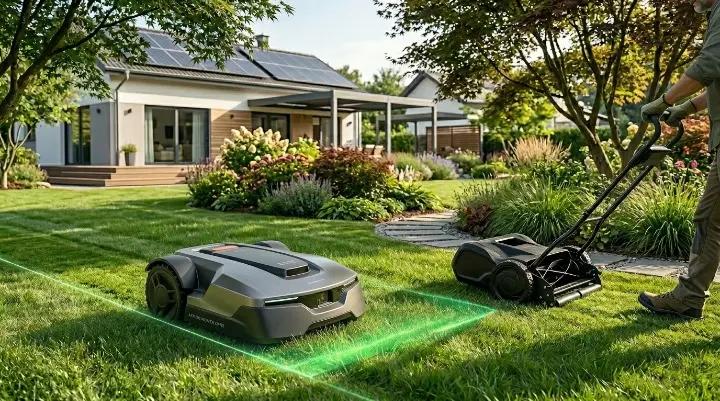
For many homeowners, mowing the lawn is one of those chores that quietly takes up more time and energy than expected. What used to be a simple weekend task can easily turn into a recurring commitment, especially during peak growing seasons when grass seems to grow faster than you can keep up with it.
In recent years, robot lawn mowers have started to enter the mainstream conversation as a potential alternative to traditional mowing. Instead of pushing a mower every week or paying for a lawn service, these devices promise automatic, scheduled mowing with minimal effort from the homeowner. At the same time, traditional mowing—whether done with a push mower, riding mower, or zero-turn—remains the most familiar and widely used approach.
This raises a practical question for most homeowners: is a robot lawn mower actually cheaper and better than manual mowing over time, or is it just a convenience upgrade with a high upfront cost?
To answer that, we need to look beyond marketing claims and break things down into real-world factors like total cost, time investment, maintenance, and long-term value.
Quick Answer: Which Is Cheaper and Better Overall?
Short answer: It depends on what you value more—money, time, or convenience.
�� Which is cheaper?
- Short term (0–2 years): Manual mowing is almost always cheaper.
You likely already own a mower, and ongoing costs (fuel, maintenance) are relatively low. - Long term (3–10 years): A robot lawn mower can become cost-competitive or even cheaper in some cases.
This happens when you factor in:- Lawn service costs (if you hire help)
- Fuel and maintenance for gas mowers
- Time spent mowing every week
�� However, robot mowers still require a higher upfront investment ($800–$3,000+ depending on model and yard size), so payback is not immediate.
⏱️ Which is better overall?
- Robot lawn mower is better for:
- People who value time more than money
- Homeowners who hate weekly mowing
- Small to medium, relatively flat yards
- Consistent “always trimmed” lawn appearance
- Manual mowing is better for:
- Budget-focused homeowners
- Large or complex yards (slopes, obstacles)
- People who prefer full control over cut quality
- Occasional or flexible mowing schedules
�� Bottom line
If you are optimizing for lowest upfront cost, manual mowing wins easily.
If you are optimizing for long-term convenience and time savings, robot lawn mowers start to make more sense—especially as the technology improves and prices continue to drop.
In the rest of this article, we’ll break down the real cost differences, time trade-offs, and practical scenarios so you can decide which option actually fits your lawn and lifestyle.
Robot Mower vs Manual Mowing: Full Cost Breakdown
When comparing robot mowing and manual mowing, the biggest mistake most homeowners make is only looking at the sticker price. In reality, the true cost comes from a combination of upfront investment, ongoing maintenance, time, and long-term replacement cycles.
To make this comparison clear, we’ll break the costs into four categories that actually matter over a 5–10 year period.
�� Upfront Equipment Cost
Manual mowing:
- Push mower: ~$150–$500
- Self-propelled mower: ~$300–$900
- Riding mower: ~$1,200–$3,500+
- Zero-turn mower: ~$2,500–$7,000+
Most homeowners already own at least one of these, which makes manual mowing feel “free” in practice.
Robot mower:
- Entry-level models: ~$800–$1,500
- Mid-range models: ~$1,500–$3,000
- Premium wire-free models: $3,000–$5,000+
�� Key point: Robot mowers have a much higher upfront cost, especially if you’re starting from zero.
�� Maintenance and Operating Costs
Manual mowing ongoing costs:
- Gas (for gas mowers): ~$5–$20 per month depending on yard size
- Oil changes, spark plugs, belts, blades: ~$50–$200 per year
- Occasional repairs (engine, transmission, wheels): variable, often $100–$500+
Robot mower ongoing costs:
- Electricity: usually under $5–$10 per month
- Blade replacements: ~$20–$60 per year
- Battery replacement (every 3–7 years): ~$100–$500+ depending on model
- Occasional sensor/software or wheel maintenance
�� Key insight: Robot mowers are cheaper to run day-to-day, but battery replacement is a major long-term cost factor.
⏱️ Time Cost (The Hidden Expense)
This is where the comparison changes dramatically.
Manual mowing:
- Average yard (0.25–0.5 acre): 1–2 hours per week in peak season
- Annual time: ~40–100+ hours per year
- Includes mowing, trimming, cleanup, fueling, maintenance
Robot mower:
- Setup time: 2–6 hours (initial installation and mapping)
- Weekly involvement: 0–10 minutes (mostly checking or occasional cleanup)
- Annual time: often under 5–10 hours total
�� Over 5 years, this difference can easily equal hundreds of hours saved.
�� Long-Term Cost (5–10 Year View)
When you combine everything:
Manual mowing (typical homeowner):
- Low upfront cost (if already owned equipment)
- Moderate ongoing fuel + maintenance
- High accumulated time cost
Robot mower:
- High upfront cost
- Low operating cost
- Occasional battery replacement
- Very low time commitment
�� In simple terms:
- Manual mowing = cheaper money, expensive time
- Robot mower = expensive money, cheap time
�� Key Takeaway
There is no universal “cheaper” option here—only a trade-off:
- If you prioritize lowest cash spending, manual mowing wins.
- If you assign value to your time (even modestly), robot mowers start closing the gap much faster than most people expect.
In the next section, we’ll break down what manual lawn care actually costs in real-world scenarios, including the hidden expenses many homeowners overlook.
How Much Does Manual Lawn Mowing Really Cost?
At first glance, manual lawn mowing seems almost free—especially if you already own a mower. But when you break it down properly, the real cost of keeping a lawn maintained includes far more than just fuel or equipment ownership.
To understand the true cost, it helps to separate it into three layers: equipment depreciation, ongoing operating costs, and your time.
�� Equipment Cost (Depreciation Over Time)
Even if you bought your mower years ago, it still has a cost per year of use.
Typical ranges:
- Basic push mower: ~$150–$500 (3–7 year lifespan)
- Self-propelled mower: ~$300–$900 (5–8 year lifespan)
- Riding mower: ~$1,200–$3,500+ (7–15 year lifespan)
- Zero-turn mower: ~$2,500–$7,000+ (10–15+ year lifespan with maintenance)
�� When you spread these costs over their lifespan, you’re often looking at:
- ~$50 to $400 per year in “equipment cost”
Even if you don’t feel it day-to-day, this is still part of the true cost of manual mowing.
⛽ Fuel, Electricity, and Maintenance
This is the most visible ongoing cost for most homeowners.
Gas-powered mowers:
- Fuel: ~$5–$25 per month during mowing season
- Oil changes: ~$10–$30 per year
- Spark plugs, filters, belts: ~$20–$100 per year
- Occasional repairs: $100–$500+ (depending on age)
Electric mowers:
- Electricity: usually very low (~$2–$10/month equivalent)
- Battery replacement (if cordless): ~$100–$300 every few years
�� Realistic annual operating cost:
- Low end: ~$50–$150/year (light use, electric)
- Typical homeowner: ~$150–$400/year
- Older equipment: can exceed $500/year with repairs
⏱️ The Biggest Hidden Cost: Your Time
This is where manual mowing becomes significantly more expensive than most people realize.
For a typical suburban lawn (0.25–0.5 acre):
- Mowing time: 45–90 minutes per week (peak season)
- Trimming + cleanup: 15–30 minutes
- Occasional maintenance/fueling: extra time
�� Total:
- ~1–2 hours per mowing session
- ~40–100 hours per year depending on lawn size and growth rate
Now multiply that by 5–10 years:
- 200 to 1,000+ hours spent mowing
Even if you value your time conservatively at $10–$20/hour, that becomes a very large hidden cost.
�� Real-World Annual Cost Summary
For most homeowners, manual mowing typically looks like this:
- Equipment depreciation: $50–$400/year
- Fuel & maintenance: $100–$400/year
- Time cost (optional but real): 40–100 hours/year
�� Financial-only cost: ~$150 to $800 per year
�� True cost including time: significantly higher depending on how you value time
�� Key Insight
Manual mowing is not expensive in cash terms, but it becomes costly in time and effort over the long run.
This is exactly why many homeowners start looking at robot mowers—not because they hate spending money, but because they want to reduce the recurring weekly commitment.
Next, we’ll look at the other side of the equation: what a robot lawn mower actually costs over time, including hidden long-term expenses most buyers overlook.
How Much Does a Robot Lawn Mower Cost Over Time?
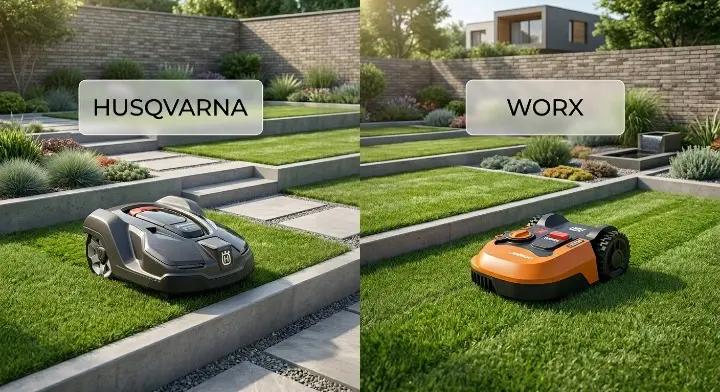
At first glance, a robot lawn mower looks expensive compared to a traditional push mower or even a basic riding mower. Most models from brands like Husqvarna, Worx (Worx Landroid), Segway Navimow, and Mammotion typically cost anywhere from $800 to $3,500+ depending on lawn size, navigation system, and smart features.
But the real question for SEO intent like “robot mower vs manual mowing cost” is not the upfront price—it’s the total cost over 5–10 years.
1. Upfront Purchase Cost (Year 0)
A typical breakdown looks like this:
- Entry-level robot mowers: $800–$1,200 (small lawns, basic navigation)
- Mid-range models: $1,200–$2,500 (smart mapping, better terrain handling)
- Premium systems: $2,500–$4,000+ (wire-free RTK, lidar, large yards)
Unlike manual mowing, there is no “budget under $300” equivalent that performs the same function. The entry point is significantly higher.
2. Installation and Setup Costs
This is often overlooked in comparisons:
- Boundary wire models: minimal DIY cost, but time-intensive installation
- Wire-free systems (RTK/LiDAR): may require base station setup and occasional calibration
- Optional professional installation: ~$200–$1,000 depending on yard complexity
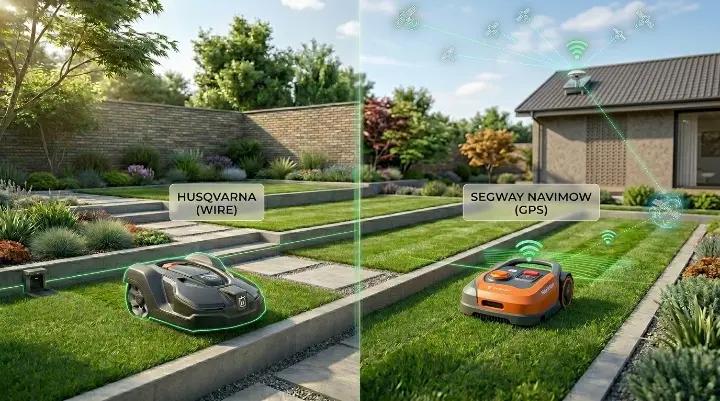
Older systems from brands like Husqvarna often required more setup effort, while newer models like Segway Navimow and Mammotion reduce this burden with wire-free mapping.
3. Ongoing Annual Costs (Yearly Ownership)
Robot mowers are relatively low-maintenance, but not zero-cost:
- Blade replacements: $20–$60/year
- Electricity: usually $10–$40/year (much lower than gas)
- Occasional servicing or repairs: $0–$200/year (varies widely)
- Software updates / optional accessories: sometimes extra
Compared to gas mowers, there’s no fuel, oil changes, spark plugs, or carburetor maintenance.
4. Battery Degradation (Hidden Long-Term Cost)
This is one of the most important long-term factors.
Most robot mowers use lithium-ion batteries that typically last:
- 3–6 years under normal residential use
- Replacement battery cost: roughly $100–$500 depending on model
So over a 10-year period, you may replace the battery 1–2 times.
This is similar in concept to replacing batteries in other outdoor electric tools, but it is a real cost that should be included in ROI calculations.
5. 5–10 Year Total Cost Estimate
A simplified long-term comparison looks like this:
- Initial mower cost: $1,500–$3,000
- Batteries (10 years): $200–$1,000
- Maintenance + blades + electricity: $200–$600
��Estimated 10-year total: ~$1,900 to $4,600
This means that over time, robot mowers start to compete directly with:
- Hiring a lawn service ($60–$120 per visit)
- Owning and maintaining a riding mower
- Repeated fuel and repair costs for gas equipment
Key Insight
A robot mower is not “cheap,” but it shifts spending from labor + fuel + time into a predictable long-term ownership cost. For many homeowners, the value is less about saving money and more about eliminating weekly mowing entirely.
If your goal is pure cost minimization, manual mowing (especially DIY) can still win. But if you factor in time and consistency, robot mowers start to look significantly more competitive over a 5–10 year horizon.
Robot Mower vs Manual Mowing: Time and Effort Comparison
When people compare a robot mower vs manual mowing, the biggest difference usually isn’t price—it’s time, effort, and lifestyle impact. This is where the decision becomes very personal.
1. Manual Mowing: Time + Physical Effort
With a traditional push mower or riding mower, lawn care is a fixed weekly (or bi-weekly) task that you personally have to show up for.
For a typical suburban lawn (0.2–1 acre), real-world effort usually looks like:
- Push mower: 45–120 minutes per session
- Riding mower: 30–90 minutes per session
- Plus extra time for trimming, cleanup, and fuel prep
And that’s only the mowing itself. The real “hidden time cost” includes:
- Pulling out and maintaining equipment
- Gas filling / battery charging
- Trimming edges afterward
- Cleaning the mower deck
- Seasonal maintenance (oil, spark plugs, storage prep)
Over a mowing season (20–30 cuts), manual mowing can easily add up to 20–60+ hours per year of direct labor.
And importantly, that time is scheduled around you—weekends, hot afternoons, or after work.
2. Robot Mowing: Time Eliminated, Not Just Reduced
Robot mowers completely flip the model.
Instead of mowing being a “task,” it becomes a background process.
Once installed and set up, a robot mower from brands like Segway Navimow or Mammotion typically runs:
- 3–7 times per week automatically
- In small, quiet cycles (not long mowing sessions)
- Without human supervision
Your ongoing time investment becomes:
- Occasional blade change (5–10 minutes)
- Occasional boundary/map adjustment
- Occasional rescue (if it gets stuck in unusual terrain)
Most owners report 1–3 hours per month max of actual attention.
So instead of “mowing time,” your role becomes more like “system maintenance.”
3. Effort Comparison: Active Work vs Passive System
The key difference is not just hours—it’s type of effort:
| Factor | Manual Mowing | Robot Mowing |
|---|---|---|
| Physical labor | High | Very low |
| Scheduling | Required weekly | None |
| Heat exposure | Common | None |
| Weekend time impact | High | Minimal |
| Maintenance effort | Moderate | Low |
Even if total cost is similar over time, the effort distribution is fundamentally different.
4. The Psychological Difference (Often Overlooked)
From real-world user feedback (including discussions on Reddit and owner reviews), the biggest shift is psychological:
- Manual mowing = “another chore I need to finish”
- Robot mowing = “grass is always maintained”
Instead of letting grass grow and then cutting it down, robot mowers keep it in a constant “maintenance state.” That reduces both workload and visual stress.
5. Real-World Tradeoff Summary
If your goal is:
- Save maximum money → manual mowing still wins
- Get control + exercise → manual mowing is better
- Save time long-term → robot mower wins clearly
- Reduce mental load → robot mower is a major upgrade
In practice, most homeowners don’t switch because mowing is impossible—they switch because they’re tired of the repetition, scheduling, and time fragmentation that comes with it.
That’s why in modern comparisons like robot mower vs manual mowing, time and effort often become the deciding factor—not cost alone.
Real User Experience: What Owners Actually Say
On paper, robot mowers look efficient. Manual mowing looks simple and proven. But what actually matters in a comparison like robot mower vs manual mowing is how people feel after living with the decision for months or years.
Across long-term owners, forum discussions (including Reddit threads), and product reviews, a few consistent patterns show up.
1. Most Owners Don’t Go Back
One of the strongest signals in real-world feedback is simple: regret is rare in robot mower ownership.
Common sentiment:
- “I hope I never go back to manual mowing.”
- “One of the best home upgrades I’ve made.”
- “I don’t even think about mowing anymore.”
This is especially common among owners of newer wire-free systems like Segway Navimow and Mammotion, where setup friction is lower and automation is more reliable.
Even users who acknowledge imperfections still emphasize the same tradeoff: less effort outweighs occasional issues.
2. The Biggest Surprise: It’s Not “Set and Forget”
A recurring reality check from owners is that robot mowers are not magic.
Typical comments include:
- “It still needs occasional babysitting.”
- “You’ll rescue it once in a while.”
- “Setup took longer than expected.”
Even premium systems like those from Husqvarna or Worx can require tuning, boundary adjustments, or dealing with edge cases (narrow paths, steep slopes, garden obstacles).
In other words: automation reduces effort massively, but doesn’t eliminate ownership responsibility entirely.
3. Lawn Quality: “Good Enough” vs “Perfect Striping”
Another major difference in expectations is lawn appearance.
Manual mowing (especially with zero-turn mowers) is often associated with:
- clean stripes
- sharp edges
- highly controlled cut patterns
Robot mowers tend to produce:
- more random mowing patterns
- very consistent grass height
- fewer dramatic visual stripes
Some users describe it as:
- “Not golf-course perfect, but always neat.”
- “No stress about overgrowth.”
- “Looks better overall because it’s always maintained.”
This tradeoff matters a lot for perfectionists—but less for homeowners prioritizing convenience.
4. Time Savings Are Real—but Feel Gradual
Interestingly, many owners don’t “feel” the time savings immediately. Instead, it accumulates:
- No weekend mowing sessions
- No rushing before rain or heat
- No seasonal backlog after vacations
One common realization is:
“I didn’t notice how much mental space mowing took until I stopped doing it.”
This psychological relief shows up repeatedly across owner discussions and is often cited as more valuable than direct financial savings.
5. The Most Common Complaints
Despite generally positive sentiment, there are consistent drawbacks:
- Struggles with very complex yards or tight corners
- Occasional stuck events (garden hoses, toys, uneven terrain)
- Higher upfront cost than expected
- Learning curve during setup
These issues appear across all major ecosystems, whether it’s entry-level models or premium units from brands like Husqvarna or newer AI-based systems.
6. Long-Term Ownership Reality
After 1–3 seasons, most users settle into a stable pattern:
- Robot mower handles 90–95% of work
- Manual tools are still used occasionally for edges or cleanup
- Yard maintenance becomes more predictable and less time-sensitive
This hybrid reality is often the most realistic outcome—not full elimination of manual work, but a dramatic reduction in mowing burden.
Bottom Line from Real Users
Across experiences, one theme is consistent:
- Manual mowing = control + effort
- Robot mowing = convenience + “good enough” consistency
And most owners who switch tend to prioritize time and convenience over perfection.
Pros and Cons of Robot Lawn Mowers
Robot lawn mowers sit in a very different category from traditional mowing equipment. They’re not just a “new mower type”—they change how lawn care is managed entirely. Below is a balanced breakdown based on real-world usage patterns, not just marketing claims.
Pros of Robot Lawn Mowers
1. Major Time Savings Over the Long Run
The biggest advantage is still the same across all models—from entry systems to premium units by Husqvarna, Worx, Segway Navimow, and Mammotion:
You stop “mowing the lawn” and start simply maintaining the system.
Instead of blocking out hours every week, the mower runs automatically in the background. Over a season, this can save dozens of hours of active labor.
2. Consistently Maintained Lawn
Because robot mowers cut frequently (often multiple times per week), the grass never gets overgrown.
This creates:
- More even grass height
- Less visible mowing peaks and valleys
- Healthier turf in many climates (due to light, frequent trimming)
Even if the cut pattern is less visually “perfect,” the lawn stays consistently tidy.
3. Low Physical Effort
There is no pushing, riding, lifting, or hauling gas.
For users with:
- Back or shoulder issues
- Limited time
- Large or awkward schedules
This is often the deciding factor. Once installed, physical effort drops close to zero.
4. Quiet and Eco-Friendly Operation
Most robot mowers are significantly quieter than gas mowers and produce no direct emissions during operation.
This makes it possible to run them:
- Early morning
- During weekdays
- In noise-sensitive neighborhoods
without disturbing anyone.
5. Smart Automation Features
Modern systems from brands like Segway Navimow and Mammotion include:
- App control
- Scheduled mowing
- Zone management
- Auto-return to charging dock
These features reduce human involvement even further compared to older boundary-wire systems like early Husqvarna models.
Cons of Robot Lawn Mowers
1. High Upfront Cost
Even basic models cost significantly more than a traditional push mower.
Entry-level systems start around a few hundred dollars, but most reliable models for suburban lawns quickly move into the $1,000–$3,000+ range.
This makes the initial decision harder, especially for smaller yards.
2. Setup Can Be Time-Consuming
Depending on the model:
- Boundary wire installation (older systems) can be tedious
- Wire-free systems require mapping and calibration
- Complex yards take longer to optimize
Even “easy setup” systems still require initial learning and adjustment.
3. Not Ideal for All Yard Types
Robot mowers struggle more with:
- Very steep slopes
- Highly fragmented lawns
- Narrow passages or obstacles
- Uneven or rough terrain
In these cases, performance can drop significantly compared to manual mowing or zero-turn mowers.
4. Occasional Intervention Required
Despite automation, users still report:
- Getting stuck on objects
- Boundary or navigation errors
- Seasonal adjustments
It’s not constant supervision, but it’s not zero maintenance either.
5. Lawn Appearance May Not Suit Everyone
Some homeowners prefer:
- Sharp mowing stripes
- Crisp edge definition
- Highly controlled patterns
Robot mowers prioritize consistency over aesthetics, which can feel less “polished” compared to a well-operated riding or zero-turn mower.
Bottom Line
Robot lawn mowers are best understood as a lifestyle upgrade, not just a tool replacement.
They excel at reducing time, effort, and repetition—but they trade away some control, upfront cost flexibility, and in some cases, visual precision.
For homeowners comparing robot mower vs manual mowing, the decision usually comes down to this:
- If you want maximum control and lowest cost → manual mowing still wins
- If you want minimal effort and consistent maintenance → robot mowers are increasingly hard to beat in 2026
Who Should Choose Robot Mower vs Manual Mowing?
At this point in a robot mower vs manual mowing comparison, the answer is rarely “one is strictly better.” It depends heavily on yard type, budget, and how you value time versus control.
Here’s a practical breakdown of who each option actually fits in real life.
Choose a Robot Lawn Mower If You…
1. Value Time More Than Hands-On Control
If mowing feels like a repetitive chore rather than a hobby, a robot mower makes sense.
This is especially true if you:
- Don’t want to spend weekends mowing
- Travel often or are away from home frequently
- Prefer automation over manual routines
Owners of systems like Segway Navimow and Mammotion often describe the biggest benefit as simply “not thinking about mowing anymore.”
2. Have a Relatively Simple Lawn Layout
Robot mowers work best when the lawn is:
- Mostly flat or gently sloped
- Not heavily fragmented
- Free of constant obstacles (toys, clutter, tight bottlenecks)
In these conditions, automation is smooth and reliable, and intervention is minimal.
3. Want a “Always Maintained” Lawn
If your goal is a yard that always looks neat without weekly effort, robot mowing is ideal.
Instead of cycles of “grow → mow → repeat,” you get:
- Constant low-level trimming
- No overgrown periods
- More consistent visual appearance
This is a key reason many homeowners switch permanently.
4. Are Comfortable With Some Tech Setup
Even modern wire-free systems still require:
- App setup
- Initial mapping
- Occasional troubleshooting
If you’re comfortable with smart home devices, robot mowers feel natural. If you prefer purely mechanical tools, manual mowing may feel simpler.
Choose Manual Mowing If You…
1. Want Maximum Control Over Lawn Appearance
Manual mowing still wins when it comes to precision.
You can control:
- Striping patterns
- Cut direction
- Height adjustments in real time
- Edge finishing quality
For homeowners who care deeply about aesthetics, a zero-turn or riding mower still delivers better visual results.
2. Have a Complex or Difficult Yard
Manual mowing is more flexible if your yard includes:
- Steep slopes
- Tight spaces and narrow paths
- Irregular shapes
- Multiple separated lawn zones
Even advanced robot mowers from brands like Husqvarna can struggle in these environments compared to human-operated equipment.
3. Want Lower Upfront Cost
If budget is the primary concern, manual mowing is still far cheaper to start:
- Push mower: low entry cost
- Riding mower: moderate one-time cost
- Robot mower: high initial investment
Even factoring fuel and maintenance, manual options still win on upfront affordability.
4. Actually Enjoy Lawn Work (or Don’t Mind It)
Some homeowners genuinely like mowing as:
- Physical activity
- Outdoor time
- A sense of routine accomplishment
If that describes you, automation may remove something you don’t want to lose.
The Reality: Many Homeowners End Up in a Hybrid Setup
In practice, the choice is often not fully either/or.
A common real-world setup looks like:
- Robot mower handles regular maintenance cuts
- Manual tools handle edges, cleanup, or seasonal trimming
This hybrid approach is especially common among users transitioning from traditional mowers to systems like Worx or Segway Navimow.
Bottom Line
If you strip everything down, the decision comes to this:
- Manual mowing = lower cost + higher control + more effort
- Robot mowing = higher cost + less effort + consistent results
Neither is objectively “better”—but one is clearly better depending on whether you optimize for money, time, or control.
Robot Mower vs Zero Turn vs Push Mower
Choosing between a robot mower, a zero turn mower, and a traditional push mower depends mainly on your yard size, budget, and how much time you want to spend maintaining your lawn.
Each option represents a completely different approach to lawn care: automation, speed, or low-cost manual work.
Robot Lawn Mower: Best for Automation and Time Saving
Robot lawn mowers are designed for full automation. Once set up, they handle mowing on a schedule with little human input.
They are ideal for homeowners who:
- Want to eliminate weekly mowing completely
- Have small to medium, relatively flat lawns
- Prefer consistent lawn maintenance over “big weekend mowing sessions”
- Value time more than upfront cost
However, they usually require:
- Higher upfront investment
- Initial setup (boundary wire or mapping system)
- Occasional monitoring or adjustments
Over time, they significantly reduce physical effort and routine time commitment.
Zero Turn Mower: Best for Speed and Performance
Zero turn mowers are built for efficiency and cutting speed. They are commonly used for larger residential properties or semi-professional lawn care.
They are ideal for homeowners who:
- Have medium to large lawns (0.5–3+ acres)
- Want fast mowing times (often 2–3x faster than traditional riding mowers)
- Prefer full control over mowing patterns and finish quality
- Don’t mind doing the mowing themselves
They require:
- Fuel or battery maintenance
- Storage space
- Regular servicing (oil, blades, belts depending on model)
In terms of cut quality and speed, zero turn mowers usually outperform both push mowers and robot mowers.
Push Mower: Best for Lowest Cost and Simplicity
Push mowers remain the simplest and cheapest option. They are still widely used for small lawns and budget-conscious homeowners.
They are ideal for people who:
- Have small yards (typically under 0.25–0.5 acres)
- Want the lowest upfront cost possible
- Don’t mind physical effort or see mowing as exercise
- Need a simple, low-maintenance tool
However, push mowing requires:
- The most physical effort
- The most weekly time commitment
- Consistent manual labor during peak growing seasons
Quick Comparison Summary
- Robot mower = lowest effort, highest automation, higher upfront cost
- Zero turn mower = fastest manual mowing, best performance for large yards
- Push mower = cheapest, but most time and effort required
Bottom Line
If your priority is saving time long-term, robot mowers win.
If your priority is speed and lawn control, zero turn mowers win.
If your priority is cost and simplicity, push mowers still make sense.
Final Verdict: Is a Robot Lawn Mower Worth It in 2026?
Robot lawn mowers in 2026 are no longer experimental or niche gadgets. For many homeowners, they’ve become a practical alternative to traditional mowing—especially as wireless mapping, better batteries, and smarter navigation systems have matured.
In terms of pure cost, robot mowers are still more expensive upfront than push mowers and often comparable to or slightly cheaper than high-end zero turn setups over a short window. However, the real value is not the purchase price—it’s the long-term tradeoff between money, time, and effort.
If you look at ownership over 3–7 years, the economics start to make more sense. A robot mower can eliminate hundreds of hours of manual mowing time, reduce ongoing labor, and keep the lawn consistently maintained without weekly effort. For many users, that “time recovered” is the real return.
That said, robot mowers are not the best choice for everyone. They work best when the yard is relatively simple, the grass type is compatible with frequent cutting, and the owner is comfortable with some level of tech setup and occasional troubleshooting.
Zero turn mowers still win for maximum cutting speed and control on large or complex properties. Push mowers remain the most cost-effective option for small lawns where mowing time is already minimal.
Bottom line:
A robot lawn mower is worth it in 2026 if your priority is saving time and reducing physical effort. If your priority is lowest cost or maximum cutting power, traditional options still make more sense.