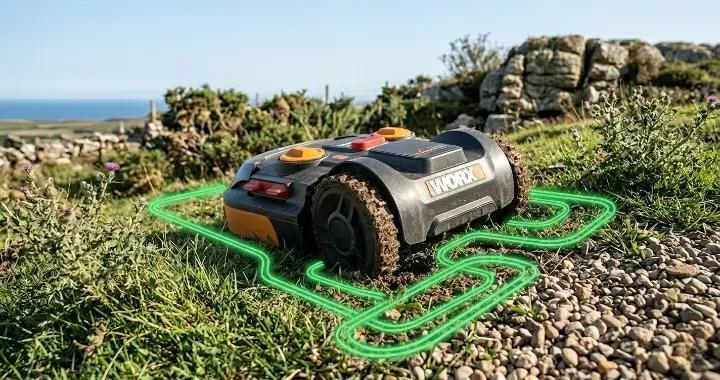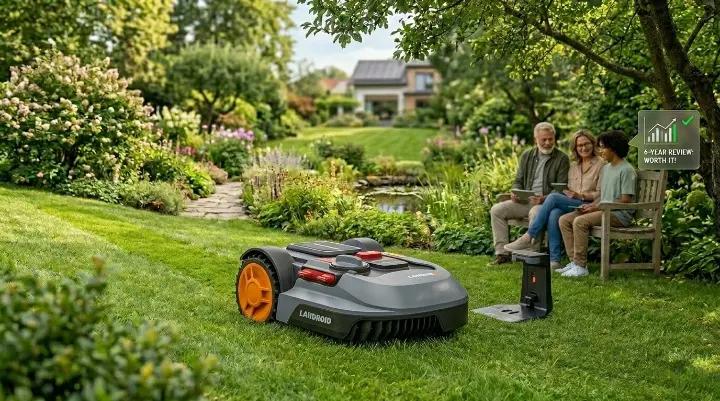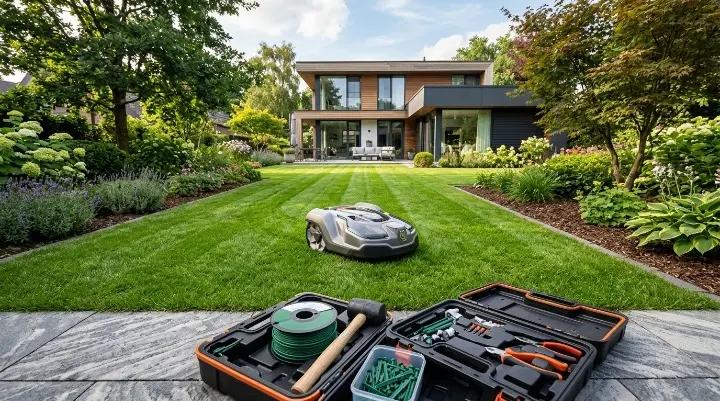

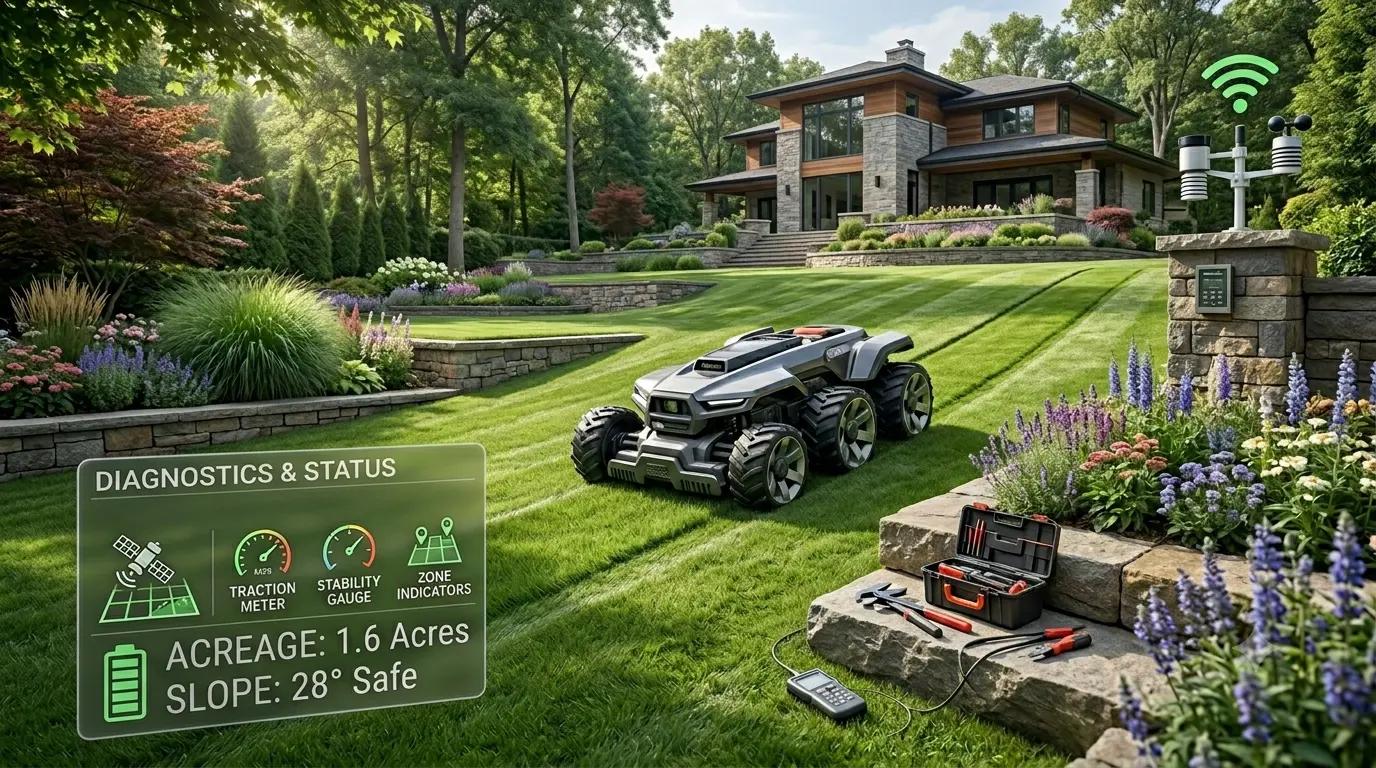
Maintaining a large lawn can be a full-time job. Hours spent pushing a traditional mower, navigating around trees and garden beds, and making sure every corner is evenly cut can quickly add up. That’s where robot mowers come in. These smart machines are designed to handle everything from half-acre yards to multi-acre properties with minimal effort from you.
For homeowners with large lawns, robot mowers aren’t just a convenience—they’re a game changer. Modern models like Husqvarna Automower and Navimow use GPS or vision navigation to cover complex layouts efficiently, automatically recharge when needed, and return to work without constant supervision. Real-world users report that with the right model, a 1–2 acre lawn can be managed with little more than a quick check and occasional maintenance.
Why Robot Mowers Are Useful for Large Lawns
Robot mowers offer several advantages for big properties:
- Save Time and Effort: A robot mower can handle mowing on a schedule, freeing you from hours of manual labor. One Reddit user shared that their Navimow handled a 1.2-acre lot automatically, allowing them to focus on other tasks.
- Consistent Grass Health: Frequent mowing keeps grass at an even height and promotes healthier growth. Instead of long, uneven cuts from occasional push mowing, a robot mower maintains a uniform look.
- Automatic Charging and Operation: Modern mowers return to their charging stations when the battery is low and resume mowing once charged. Users report that this feature is particularly helpful for lawns larger than an acre.
- Adaptable to Complex Yards: Trees, flower beds, and slopes can make mowing tricky. Robot mowers like Husqvarna Automower handle obstacles systematically, and vision-based systems such as Navimow reduce the need for manual boundary adjustments.
Even for very large properties, these machines reduce the stress and effort of maintaining a beautiful lawn.
How Large Lawns Are Measured
Before choosing a robot mower, it’s important to understand the size of your lawn. Many people assume the total property area is the same as the mowable lawn, but that’s not always the case. Trees, flower beds, patios, and slopes reduce the space the mower can actually cover.
- Total Property vs Mowable Lawn: Start by measuring only the grass area you want mowed. For example, a 2-acre property may only have 1.5 acres of actual mowable grass if you exclude garden beds, patios, and wooded areas.
- Obstacles and Layout: Note how many trees, flower beds, or other obstacles are scattered across your lawn. Complex layouts can slow down mowing and require extra passes. Some robot mowers handle obstacles better than others. A Reddit user shared that their 1.2-acre lot needed careful zoning so the mower didn’t miss corners near trees, and vision-based navigation reduced installation time compared with a traditional boundary wire setup.
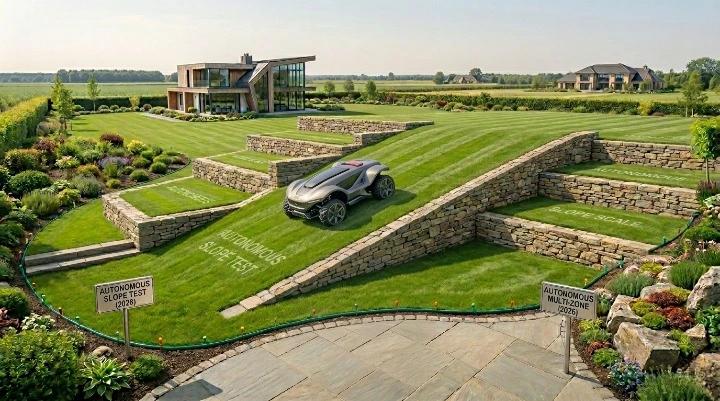
- Slopes and Hills: Large lawns aren’t always flat. Slopes reduce the effective coverage area because mowers slow down on inclines. AWD or 4WD models, like some Husqvarna Automower units, are better at handling hills, while standard models may struggle if the grade exceeds the recommended limit.
By measuring your mowable area accurately, considering obstacles and slopes, you can match the robot mower’s rated coverage to your lawn. This ensures you get efficient mowing without surprises, like missed spots or overworked batteries.
Key Features to Look For in a Robot Mower for Large Lawns
A robot mower for a small suburban yard is very different from one designed for a large property. Once you get into lawns over half an acre, battery life, navigation, and slope handling become much more important than flashy app features.
Battery Capacity and Daily Coverage
For large lawns, the most important number is not the “maximum lawn size” printed on the box. It’s how much grass the mower can realistically cut in a day.
A mower may claim it can handle 1 acre, but that assumes ideal conditions: flat terrain, few obstacles, and long mowing schedules. In real yards with trees, slopes, and garden beds, coverage drops.
Look for models with:
- Long battery runtime
- Fast recharge times
- High daily coverage ratings
Cutting Width and Mowing Speed
A wider cutting deck means fewer passes across the lawn. On a large property, that can save hours of mowing time each week.
Mowing speed also matters, but faster is not always better. Slower, more deliberate mowing often produces a cleaner result on large or complex lawns.
Slope Handling and AWD/4WD Performance
Large lawns often include hills, drainage slopes, or uneven terrain. Standard robot mowers can struggle on steep grades, especially when the grass is wet.
If your yard has noticeable slopes, look for:
- AWD or 4WD drive systems
- High slope ratings (often listed as a percentage)
- Good traction tires
This is one reason models like the Husqvarna Automower and Mammotion Luba 2 are popular for larger properties.
Navigation Type: Boundary Wire vs GPS/Vision
There are two main navigation systems:
Boundary wire systems
These use a wire buried around the lawn. They are reliable and precise, especially under trees or in areas with weak GPS signals.
GPS or vision-based systems
These use satellites, cameras, or RTK positioning. They are easier to install and modify, but performance can vary under heavy tree cover.
For large lawns, hybrid systems can be a smart choice. One Reddit user with about 8 acres of robotic mowing said they preferred a Husqvarna model that used both GPS and boundary wire support, because it handled tree-covered areas more reliably than GPS-only systems.
Anyone tried robotic mower for a big yard?
View DiscussionEasy Maintenance and Reliability
Large lawns mean the mower will run frequently, so maintenance should be simple.
Look for models that make it easy to:
- Swap blades
- Clean grass buildup underneath
- Wipe sensors and charging contacts
- Access replacement parts
Real-world users often mention that maintenance is lighter than expected. One owner running two Luba 2 mowers said they mainly cleaned the mower and changed blades twice a year, with only occasional checks for grass buildup.
Smart Features That Actually Matter
Apps, scheduling, and remote control are useful, but on large lawns the most valuable smart features are:
- Multi-zone management
- Reliable scheduling
- Automatic return-to-charge
- Remote monitoring when you’re away
If you travel often or maintain a second property, these features can make a huge difference.
Match Features to Your Lawn, Not Just the Price
The best robot mower for a large lawn depends on your property layout:
- Flat, open lawn: prioritize coverage and cutting width.
- Hilly yard: prioritize AWD and slope performance.
- Tree-heavy or irregular layout: prioritize reliable navigation and zoning features.
- Very large property (2+ acres): consider whether one mower is enough or if a multi-zone or multi-mower setup makes more sense.
Choosing the right features upfront will save you from the most common frustrations: missed patches, stuck mowers, and endless manual adjustments.
Best Robot Mowers for Large Yards (Recommended Brands)
There is no single "best" robot mower for every large lawn. The right choice depends on your lawn size, terrain, tree coverage, and whether you prefer a traditional boundary wire system or a newer GPS-based setup.
The brands below consistently appear in discussions among homeowners managing large properties, and each has strengths for different situations.
Husqvarna Automower Series
If reliability is your top priority, Husqvarna remains one of the safest choices for large lawns.
The company has been building robotic mowers for decades, and its Automower lineup is widely used on residential properties, sports fields, and commercial sites. Many large-lawn owners prefer Husqvarna because the navigation system is mature and proven over years of real-world use.
For properties with mature trees, narrow passages, and complex layouts, Husqvarna's wire-assisted navigation can still be an advantage. While newer GPS-only mowers are easier to install, boundary wires often provide more predictable performance in difficult environments.
A Reddit user managing roughly 8 acres with multiple robotic mowers reported that a Husqvarna model combining GPS navigation with boundary wire support performed more reliably under tree cover than GPS-only machines. Another commenter with more than 20 years in the outdoor power equipment industry described Husqvarna as the benchmark brand for robotic mowers, particularly when matched to the correct property size.
Anyone tried robotic mower for a big yard?
View DiscussionHusqvarna is usually a strong fit for:
- Lawns from 0.5 to 2+ acres
- Properties with significant tree cover
- Complex landscapes with multiple zones
- Homeowners prioritizing long-term reliability
Segway Navimow
Navimow has become one of the most popular wire-free robot mower brands in recent years.
Instead of relying on a perimeter wire, most Navimow models use RTK GPS and vision technology to navigate the lawn. This dramatically reduces installation time and makes future landscaping changes much easier.
For homeowners with large open yards, this can be a major benefit. You can create virtual boundaries through the app rather than digging or burying wire around the property.
Navimow is often a good choice for:
- Large open lawns
- Homeowners who dislike boundary wires
- Properties with minimal tree cover
- Users who want simple setup and app control
Mammotion Luba 2
The Mammotion Luba 2 has developed a strong reputation among owners of large and challenging lawns.
Unlike many robotic mowers that struggle on steep slopes, the Luba 2 uses an AWD system designed for rough terrain. This makes it especially attractive for properties with hills, uneven ground, and complicated layouts.
Large-property owners frequently mention the Luba 2 when discussing acreage mowing.
The Luba 2 is particularly well suited for:
- Hilly properties
- Lawns larger than 1 acre
- Properties with uneven terrain
- Owners looking for wire-free operation
Yarbo
Yarbo approaches lawn care differently from most robot mower brands.
Rather than focusing solely on mowing, the platform is designed around interchangeable attachments. Depending on the configuration, the machine can function as a mower, snow blower, or utility vehicle.
For very large properties, this versatility may be appealing because a single machine can potentially handle multiple outdoor maintenance tasks throughout the year.
However, homeowners should understand that the system is relatively new compared to brands like Husqvarna. Several users report positive experiences, but setup and tuning may require more effort than with more established platforms.
Yarbo may be worth considering if you:
- Maintain multiple acres
- Want year-round property maintenance equipment
- Value versatility over simplicity
Other Brands Worth Considering
Several other manufacturers are gaining attention in the large-lawn category.
Lymow has received positive feedback from owners maintaining more than an acre of grass. One user reported mowing approximately 1.7 acres in about 12 hours.
Teramow is another newer brand that occasionally appears in homeowner discussions, particularly among early adopters interested in GPS-based navigation systems.
While these brands may not yet have the long track records of Husqvarna or the visibility of Navimow and Mammotion, they show how quickly the robotic mower market is evolving.
Which Brand Is Best for Your Lawn?
Rather than focusing on brand names alone, start with your lawn conditions.
- Choose Husqvarna if reliability and complex-property performance matter most.
- Choose Navimow if you want a wire-free system for a relatively open yard.
- Choose Luba 2 if your lawn includes significant slopes or challenging terrain.
- Consider Yarbo if you want a machine that can do more than just mow.
The best robot mower is ultimately the one that matches your property's size, terrain, and layout—not necessarily the one with the longest feature list.
Tips to Maximize Coverage and Efficiency
Even the best robot mower can leave missed patches if the setup is not optimized. Large lawns often have irregular shapes, trees, flower beds, and changing grass conditions that can affect coverage.
Fortunately, a few small adjustments can make a noticeable difference in both mowing quality and efficiency.
Fine-Tune Mowing Patterns and Overlap Settings
Many robot mowers allow you to adjust overlap distance between mowing passes. While wider spacing may help the mower finish faster, it can sometimes leave narrow strips of uncut grass.
In a Facebook discussion about missed areas on a grid-pattern mower, an experienced owner suggested slightly increasing overlap and reducing mowing speed. The goal is to give the mower more time to cover difficult sections instead of rushing through them.
Recommendations for robot lawn mower for large area?
View PostIf you consistently notice missed patches, experiment with overlap settings before assuming there is a hardware problem.
Change the Mowing Direction Occasionally
Grass naturally leans in the direction it is cut. Over time, repeatedly mowing in the same pattern can make certain areas appear uneven.
Many modern GPS-guided mowers allow you to change mowing angles or patterns. Running the mower in a different direction every few weeks can improve overall lawn appearance and reduce visible tracks.
Some experienced robot mower owners alternate between parallel, diagonal, or cross-pattern mowing schedules to achieve more consistent coverage across large properties.
Create Zones for Complex Lawns
Large lawns are rarely one big open rectangle. They often include side yards, narrow passages, trees, gardens, and separate lawn sections.
If your mower supports zoning, take advantage of it.
Instead of allowing the mower to randomly find every area, you can assign specific zones and mowing schedules. This helps ensure that less-accessible sections receive enough attention throughout the week.
Zoning is especially useful on properties larger than 1 acre where certain areas may otherwise receive less coverage than others.
Keep the Grass Under Control
Robot mowers are designed to maintain grass, not reclaim an overgrown lawn.
If the grass becomes too tall after a vacation, heavy rain, or a period of inactivity, the mower may struggle to keep up. Tall grass can reduce cutting efficiency and may even be detected as an obstacle by some navigation systems.
A good practice is to start the season with a conventional mower if necessary, then allow the robot mower to maintain the lawn through frequent cutting cycles.
Maintain Blades and Sensors Regularly
Performance gradually declines when blades become dull or sensors become dirty.
Most manufacturers recommend checking blades regularly and replacing them when they show signs of wear. Dull blades tear grass instead of cutting it cleanly, which can affect lawn appearance and increase battery consumption.
Routine maintenance is simple and usually includes:
- Replacing blades as needed
- Removing grass buildup from the cutting deck
- Cleaning cameras, sensors, and charging contacts
- Checking wheels for debris
Several long-term robot mower owners report that spending just a few minutes on maintenance every month helps prevent many common performance issues.
Schedule Mowing Based on Lawn Growth
Many homeowners make the mistake of running their mower on the same schedule all year.
Grass grows much faster during spring than during midsummer droughts or cooler fall weather. Adjusting mowing frequency to match growth conditions improves efficiency and reduces unnecessary battery cycles.
During peak growing season, large lawns may benefit from daily mowing. During slower growth periods, mowing every few days is often sufficient.
A smarter schedule not only improves coverage but can also extend the life of blades, batteries, and other wear components.
When One Robot Mower Isn’t Enough
Many manufacturers advertise coverage ratings of 1, 2, or even 5 acres. While those numbers are technically possible, real-world conditions often tell a different story.
Trees, narrow passages, steep slopes, and complex lawn layouts can significantly reduce efficiency. In some cases, using a single mower to maintain a very large property becomes impractical.
If your lawn is approaching 2 acres or more, it's worth considering whether one mower is truly the best solution.
Use Multi-Zone Mowing Before Buying a Second Mower
A second mower should not be your first solution.
Many modern robot mowers allow you to create multiple work zones and assign different mowing schedules to each area. This feature can dramatically improve coverage on large properties with separate lawn sections.
For example, you might have:
- A front lawn
- A backyard
- A side yard
- Areas around gardens or trees
Instead of allowing the mower to decide where to spend its time, zoning ensures each section receives attention throughout the week.
In many cases, homeowners discover that proper zone management solves coverage problems without requiring additional equipment.
Consider a Second Mower for Properties Over 2 Acres
Once you move beyond roughly 2 acres of mowable grass, a single mower may spend most of its time cutting and charging.
At that point, adding a second mower can provide several benefits. Two machines can work simultaneously, reduce wear on individual batteries, and provide backup if one unit requires maintenance.
This approach is especially common on properties with separate lawn areas that are difficult for a single mower to reach efficiently.
Rather than forcing one machine to cover every corner of the property, each mower can focus on a dedicated section.
Large Properties Often Use Multiple Robots
Homeowners with very large properties frequently use more than one mower.
One Reddit user reported maintaining approximately 8 acres of lawn using four robotic mowers. While they noted that three units could probably handle the workload if the mowing areas were closer together, multiple machines provided more reliable coverage across the property.
Another owner used two robotic mowers on separate properties and found that both locations could be maintained with minimal effort. Instead of spending weekends mowing, the machines followed their schedules automatically while the owner was away.
These examples highlight an important point: robot mowers scale differently than traditional riding mowers. As lawn size increases, adding another mower is often more practical than expecting one machine to do everything.
Watch for Signs That Your Mower Is Overworked
You don't necessarily need to calculate acreage to know when a mower is struggling.
Common warning signs include:
- The mower runs almost constantly.
- Large sections of grass remain uncut.
- The lawn looks uneven before the next mowing cycle.
- The mower spends more time charging than mowing.
- Grass grows faster than the mower can maintain it.
If you notice several of these issues, increasing mowing hours may help temporarily. However, for very large properties, upgrading to a larger model or adding a second mower is usually the better long-term solution.
Think About Property Layout, Not Just Acreage
Two lawns with the same acreage can require completely different mowing solutions.
A flat 2-acre rectangle is relatively easy for a robot mower to manage. A 2-acre property filled with trees, slopes, fences, and narrow passages is much more challenging.
Before investing in a larger mower or a second unit, evaluate how complicated the lawn actually is. In many situations, improving zone management, adjusting schedules, or redesigning mowing areas can deliver better results than simply buying more equipment.
For the largest and most complex properties, however, a multi-mower setup is often the strategy that produces the most consistent results.
How to Choose the Right Mower for Your Lawn
Choosing a robot mower for a large lawn isn’t as simple as picking the one with the biggest number on the box. You want a mower that fits your property’s actual characteristics — the shape, obstacles, slope, and how you use the lawn. This section explains how to match your lawn to the mower that will work best.
Start With an Accurate Lawn Measurement
Begin by measuring only the parts of your property that need mowing — not the whole lot.
For example, you might have a 2-acre property, but if half of that is a garden, patio, or woods, then only 1 acre is mowable grass. Robot mower coverage estimates are almost always based on the mowable area, not total land size.
To measure your mowable area:
- Walk the perimeter with a phone map app or GPS tracker
- Break the lawn into zones if needed
- Add up the square footage (or acres)
Accurate measurement helps you avoid buying a mower that is underpowered for your actual lawn.
Compare Your Lawn to Mower Coverage Ratings
After measuring, compare your lawn size to the mower’s realistic daily coverage — not just the maximum rated acreage.
Manufacturers often list a “maximum lawn size,” but these figures assume:
- flat terrain
- minimal obstacles
- constant mowing schedules
In real yards with trees, flower beds, or slopes, effective coverage can be 20–30% lower than the rated number.
A good rule of thumb:
- Multiply your mowable lawn area by 1.2–1.3 to estimate real-world requirements
- If your mower is rated for 1 acre, it may only cover ~0.8 acre under complex conditions
Matching the mower’s practical capacity to your real lawn size will save you frustration later.
Factor in Terrain and Obstacles
Not all lawns are created equal. Two lawns with the same area can present very different challenges.
Areas to evaluate:
- Slope or hills – Steep sections slow down most mowers; models with AWD/4WD handle slopes better.
- Trees and gardens – Tight corners and obstacles reduce mowing efficiency; reliable navigation helps.
- Narrow passages – Some mowers struggle to enter or exit tight spaces.
If your lawn has significant slopes or irregular zones, you might choose a mower with stronger traction or advanced navigation rather than one focused solely on maximum acreage.
Think About Installation and Maintenance
Some robot mowers are easier to get running than others:
- Boundary wire systems require wire installation around the lawn perimeter
- GPS/vision models often need less setup but may struggle under heavy tree cover
- Hybrid systems use both wire and GPS for better accuracy
Maintenance should also fit your comfort level:
- Are blades easy to replace?
- Can you clean grass buildup without tools?
- How often do sensors or contacts need attention?
A mower that requires less time for setup and upkeep increases the chance that you’ll actually enjoy using it.
Look Ahead to Long-Term Use
Finally, think about how you’ll use the mower over the next few years.
Consider:
- Growth changes in your lawn — Will you add gardens or landscaping?
- Seasonal mowing needs — Do you need heavier duty in spring and fall?
- Technology upgrades — Some brands update features via apps
Choosing a robot mower that matches both your current lawn and future plans helps you get more value from your investment.
Choosing the right mower isn’t just about numbers printed on the box. By accurately measuring your lawn, understanding its layout, and matching those details to the mower’s real capabilities, you can avoid many common frustrations and enjoy a consistently well-maintained yard.
Conclusion
Robot mowers have come a long way in the past few years. What was once a niche product for small suburban yards can now maintain properties of 1 acre, 2 acres, or even larger with the right setup.
The key is choosing a mower that matches your lawn's actual conditions rather than focusing solely on advertised coverage ratings. Factors like slopes, trees, narrow passages, and mowing zones often have a bigger impact on performance than total acreage alone.
For homeowners who prioritize reliability, Husqvarna Automower models remain one of the safest choices. If you prefer a wire-free setup, brands like Navimow and Mammotion Luba 2 have made robotic mowing more accessible than ever for large properties.
Ultimately, the best robot mower is the one that fits your lawn's size, layout, and terrain. Take the time to measure your mowable area, evaluate obstacles, and plan your mowing strategy, and you'll be much more likely to enjoy a healthy lawn with far less work.