

Robot lawn mowers have changed a lot in the past few years. In 2026, two navigation systems are leading the market: RTK (Real-Time Kinematic) and Boundary Wire. Most buyers now face the same question: which one is actually better for a normal home lawn?
Here is the simple answer up front. RTK has not fully replaced Boundary Wire mowers. Instead, they solve different problems. RTK works best in open spaces with clear sky visibility, while Boundary Wire systems still perform better in complex yards with trees, obstacles, or changing layouts.
Both technologies are improving fast, and most “real-world” users care less about the tech itself and more about one thing: does the mower consistently finish the job without problems. That’s where the differences really matter.
Quick Comparison Overview
| Feature | RTK Robot Mowers | Boundary Wire Robot Mowers |
|---|---|---|
| Setup | No physical wire, uses RTK base station | Requires perimeter wire installation |
| Best For | Open, wide, simple lawns | Complex, shaded, obstacle-heavy yards |
| Accuracy | Very high in open sky conditions | Very stable and consistent |
| Flexibility | Easy to change mowing zones | Changes require wire adjustment |
| Long-term use | Depends on signal environment | Proven, stable long-term reliability |
In the next section, we’ll break down how these two systems actually work and why more brands are starting to move toward RTK—without completely abandoning boundary wire technology.
RTK vs Boundary Wire: What's the Difference?
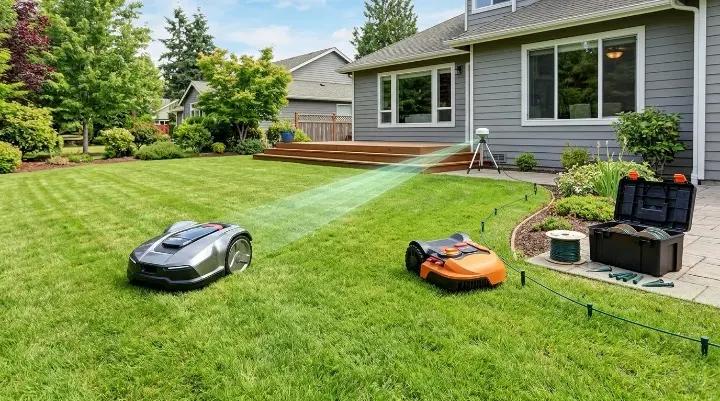
RTK and Boundary Wire mowers both help a robot stay inside your lawn, but they use completely different ways to do it. The result is the same—your lawn gets mowed—but the “thinking process” behind each system is not.
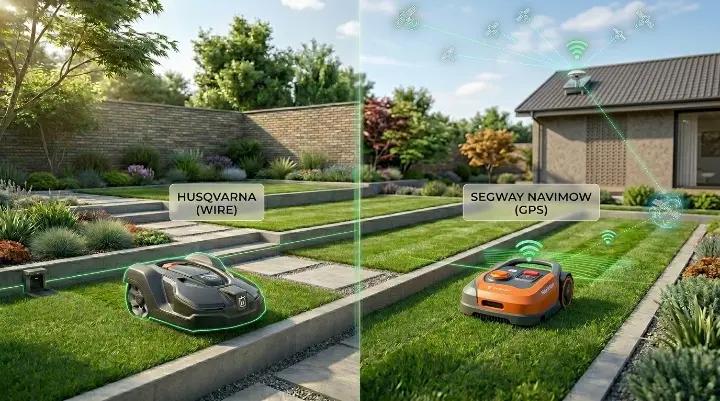
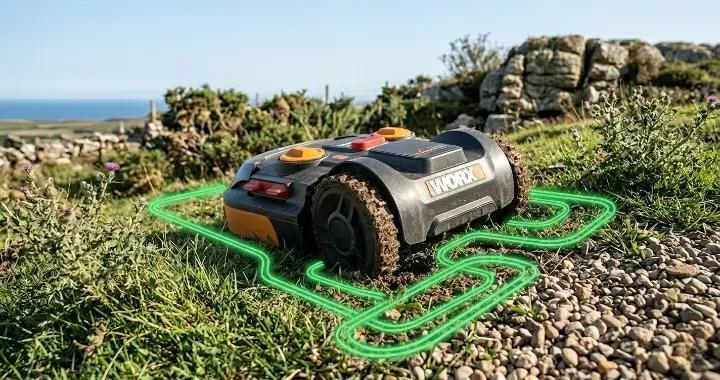
Boundary Wire mowers use a physical wire installed around the edge of your lawn. The robot reads the signal from this wire to understand where it should stop. In simple terms, the lawn boundary is “drawn” on the ground, and the mower follows that invisible fence.
RTK mowers work differently. Instead of a wire, they use satellite positioning combined with a reference station placed on your property. This allows the mower to know its location with high precision and move based on a digital map of your lawn.
Over the past few years, more brands have started shifting toward RTK systems because they reduce the need for manual installation. There is no wire to bury or repair, and setup can be faster once the system is calibrated correctly. However, RTK still depends heavily on signal quality and clear sky visibility, which means it does not perform equally well in every yard.
Boundary Wire systems, on the other hand, are more “old-school” but extremely stable. Once installed properly, they are less affected by trees, buildings, or weak satellite conditions.
In short, RTK is more about digital mapping and satellite precision, while Boundary Wire is about physical perimeter control. Both are effective, but they shine in different environments.
Installation and Setup: Which One Is Easier?
When it comes to installation, RTK and Boundary Wire mowers feel very different in real life. One requires physical work in your yard, while the other depends more on setup steps and signal conditions. Neither is “perfectly easy,” but the type of effort is not the same.
Installing a Boundary Wire Mower
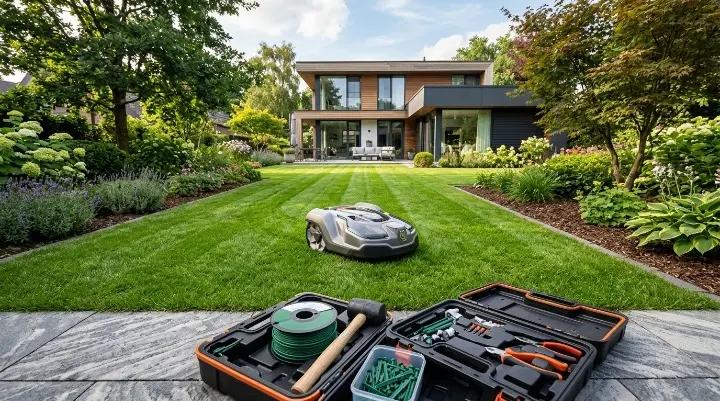
Boundary Wire systems take more physical work at the beginning. You need to plan the mowing area, lay the wire around the edges, and make sure it is placed correctly.
Typical setup steps include:
- Planning the mowing zones and obstacles
- Pegging the boundary wire along the lawn edge
- Burying the wire slightly or securing it on the surface
- Connecting the wire to the charging station
- Testing the mower to confirm it stays within limits
The process can take a few hours for a small yard, and even longer for complex layouts. However, once it is done correctly, the system is very stable and usually does not need frequent changes.
Installing an RTK Robot Mower
RTK setup is more “digital” and less physical, but it still requires careful preparation. You don’t install a boundary wire, but you do need a good environment for signal stability.
Key steps usually include:
- Placing the RTK reference station in an open area
- Ensuring strong satellite visibility (clear sky is important)
- Setting up the mower’s charging base
- Mapping the lawn using the app or manual driving mode
- Defining mowing zones and no-go areas digitally
Instead of digging or laying wire, you spend more time walking the lawn and creating a digital map. If the signal environment is good, this process can feel faster and cleaner than wire installation. But in shaded or complex yards, setup may require adjustments to improve positioning accuracy.
The Real-World Setup Winner
From a pure installation workload perspective, RTK is usually easier because there is no physical wire to install or repair later. This is why many newer users prefer it.
However, real-world feedback from users on forums like Reddit often shows a different angle. One common comment is that adjusting RTK mapping—like changing flower bed boundaries or no-go zones—can be done in seconds through the app, which feels much more flexible compared to reworking a boundary wire.
That said, Boundary Wire systems still win in predictability. Once installed correctly, they rarely need further setup changes, which many homeowners still value highly.
Accuracy and Mowing Efficiency
Accuracy and mowing efficiency are where the real differences between RTK and Boundary Wire systems start to show. This is not just about technology—it directly affects how your lawn looks after each cut and how long the job takes.
Why RTK Mowers Create Cleaner Mowing Patterns
RTK mowers are designed to follow structured, planned paths instead of moving randomly. Because they know their exact position on the lawn, they can mow in straight, organized lines.
This creates a few clear advantages:
- More systematic mowing patterns
- Cleaner, visible mowing stripes on the lawn
- Less overlap between passes
- More efficient coverage of large open areas
Many users describe the result as a “professional lawn look,” especially in wide, unobstructed yards.
However, real-world feedback from Reddit also shows a common observation. One user compared early robot mowers to RTK systems and said the difference feels like moving from a “random spiderweb pattern to straight, planned lines.” That captures the improvement in efficiency and visual consistency quite well.
How Boundary Wire Mowers Cover the Lawn
Boundary Wire mowers work differently. Instead of following precise GPS-style positioning, they rely on a simpler navigation logic within a defined area. Most models use randomized or semi-random movement patterns to ensure full coverage over time.
This approach may not look as “clean” as RTK, but it has strong advantages:
- Mature and proven navigation method
- Very reliable full-lawn coverage
- Less dependent on signal or external conditions
- Works consistently even in complex garden shapes
In practice, Boundary Wire mowers may take a less structured path, but they are designed to eventually cover every part of the lawn. For many homeowners, reliability matters more than pattern appearance.
Which Technology Finishes the Job Faster?
| Factor | RTK Robot Mowers | Boundary Wire Robot Mowers |
|---|---|---|
| Mowing Pattern | Structured, straight lines | Random or semi-random paths |
| Coverage Efficiency | Higher in open lawns | Consistent in all lawn types |
| Overlap | Low | Moderate |
| Best Environment | Large, open spaces | Complex or shaded yards |
| Visual Result | Cleaner stripes | More natural finish |
In general, RTK systems tend to finish faster in open areas because they avoid unnecessary overlap and follow optimized routes. Boundary Wire systems may take longer in some cases due to their navigation style, but they maintain steady performance across different lawn conditions.
Performance Under Trees, Buildings, and Narrow Passages
This is the part where RTK and Boundary Wire systems behave very differently in real-world yards. Many lawns are not wide open fields. They often have trees, fences, narrow side passages, or even parts of the house blocking the sky. These conditions matter more than people expect when choosing a robot mower.
Where RTK Can Struggle
RTK systems depend on strong satellite signals and a clear connection to the reference station. When the environment blocks or weakens that signal, performance can become less stable.
Common real-world issues include:
- Tree canopies blocking satellite visibility
- Narrow side yards with limited sky view
- Areas close to buildings or walls causing signal reflection
- Temporary positioning drift in complex layouts
Some users on Reddit describe this as the mower “getting confused under heavy trees” or needing re-calibration after moving into shaded zones. These issues don’t happen in every yard, but they are more likely in dense or built-up environments.
RTK still works well overall, but its accuracy depends heavily on how “open” the sky is.
Advantages of wired mowers over RTK operated ones
View DiscussionWhy Boundary Wire Still Works Well in Difficult Environments
Boundary Wire systems don’t rely on satellites, so they are not affected by trees, buildings, or signal reflections. The mower simply follows the physical boundary signal in the ground.
This makes it especially strong in:
- Tree-covered yards with heavy shade
- Gardens surrounded by walls or fences
- Narrow passages between houses
- Irregular or complex lawn shapes
Even when the environment is challenging, the wire remains consistent. That’s why many long-time users still trust boundary wire systems—they behave the same way in almost any condition.
There is also a common forum example where a homeowner with a mountain-side property and dense trees reported that only a boundary wire system could reliably finish the job without interruptions. While RTK systems improved a lot, terrain like this still exposes their limitations.
Hybrid Systems Are Becoming Popular
Because both systems have strengths and weaknesses, some manufacturers are now combining them. Hybrid setups, like those used in models such as the Husqvarna Automower NERA series, allow RTK navigation in open areas while using boundary wire in difficult zones.
This approach is gaining attention because it solves a common real-world problem: most lawns are mixed environments. They have both open spaces and signal-blocking areas.
Hybrid systems are not about replacing one technology completely—they are about making both work together more reliably.
Long-Term Maintenance: Wires vs Signals
Maintenance is where the “real ownership experience” of robot mowers becomes clear. At first, many people focus on installation or mowing quality, but over time, what matters most is how much effort it takes to keep the system running smoothly year after year.
RTK and Boundary Wire systems require very different types of long-term care.
The Reality of Boundary Wire Repairs
Boundary Wire systems are known for being stable, but they are not maintenance-free. The most common long-term issue is wire damage.
Typical situations include:
- Wire breaks caused by gardening tools or aeration
- Edge trimming accidentally cutting the perimeter wire
- Landscaping changes that move or disturb the original layout
- Weather or ground movement affecting buried sections
When a wire breaks, the mower usually stops working correctly or loses part of its coverage area. Users often need to locate the break point and repair it with connectors or patch kits.
On Reddit and lawn care forums, there are many cases where users mention spending time “hunting for a wire break” after seasonal yard work. While the system itself is reliable, physical damage is the main long-term weakness.
Advantages of wired mowers over RTK operated ones
View DiscussionRTK Maintenance Isn't Completely Hands-Free
RTK systems remove the need for physical wires, but they introduce a different kind of maintenance: signal and software management.
Common maintenance tasks include:
- Ensuring the RTK reference station stays in a clear, open position
- Adjusting antenna placement if trees or structures grow or change
- Updating firmware for navigation improvements
- Re-calibrating maps if the lawn layout changes significantly
- Monitoring signal stability in shaded or seasonal environments
While these tasks are less physical than repairing wires, they still require occasional attention. In some cases, users report that after heavy weather or seasonal changes, the mower may need a quick remapping or signal reset to maintain accuracy.
Which System Is More Reliable After Five Years?
Over a long period, reliability depends less on technology “newness” and more on environmental stability.
Boundary Wire systems tend to remain predictable over time. Once the wire is properly installed and protected, they often continue working the same way for years with only occasional repairs.
RTK systems, on the other hand, may improve through software updates, but their long-term performance is more dependent on the environment around your home. Trees growing, new structures, or signal changes can slowly affect consistency.
In simple terms: Boundary Wire systems are physically stable, while RTK systems are digitally flexible—but environment-sensitive.
Cost Comparison Beyond the Purchase Price
When people compare RTK and Boundary Wire robot mowers, they often focus only on the upfront price. But in reality, the total cost over time is more important. Installation, maintenance, and future upgrades can change the long-term value quite a bit.
The two systems differ not only in how they work, but also in what you continue to spend after the initial purchase.
Cost Breakdown: RTK vs Boundary Wire
| Cost Factor | RTK Robot Mowers | Boundary Wire Robot Mowers |
|---|---|---|
| Mower Price | Usually higher | Usually lower |
| Installation | Lower (no wire work) | Higher (manual wire setup) |
| Repairs | Mostly software/signal related | Physical wire repair possible |
| Upgrades | App, firmware, optional RTK base improvements | Limited, mostly hardware-based |
In general, RTK systems tend to cost more upfront because the technology is newer and often included in premium models. However, they can save time and labor during installation since there is no need to lay boundary wire.
Boundary Wire systems are usually cheaper to buy, but they may require more effort during setup and occasional repair costs if the wire is damaged over time. For many homeowners, this trade-off is acceptable because the system itself is very stable once installed.
Over the long run, the “cheaper” option depends heavily on your lawn environment. A simple yard may make Boundary Wire the most cost-efficient choice, while a complex or frequently changing yard may justify the higher cost of RTK due to easier adjustments and lower physical maintenance.
Which Technology Fits Your Lawn?
At this point, the better choice between RTK and Boundary Wire is less about technology and more about your lawn type. Both systems work well, but they are built for different real-world conditions. Choosing correctly here matters more than any spec comparison.
Small and Simple Lawns
For small, open lawns with clear edges and few obstacles, Boundary Wire is usually the better fit. It is simple, stable, and once installed, it just keeps working without much attention.
These lawns typically don’t benefit much from advanced positioning systems. A physical boundary is often more reliable and cost-effective for this type of space.
Large Open Properties
For larger, open lawns with good sky visibility, RTK becomes very attractive. It can map wide areas efficiently and follow structured mowing paths that reduce overlap and improve speed.
In these environments, the lack of physical wire installation also becomes a real advantage, especially when covering long distances or multiple open zones.
Lawns With Heavy Tree Cover
In shaded environments or yards surrounded by trees and buildings, Boundary Wire or hybrid systems are usually more dependable. RTK performance can drop when satellite signals are blocked or inconsistent.
This is where physical perimeter control still has a clear advantage in real-world use.
Frequently Changing Landscapes
If your yard layout changes often—new flower beds, seasonal landscaping, or flexible outdoor setups—RTK offers much more convenience. Digital mapping is easier to update than moving or re-installing boundary wire.
This flexibility is one of the biggest reasons newer users choose RTK systems.
Multi-Zone Properties
For homes with separate lawn sections, front and back yards, or disconnected areas, RTK systems handle zone switching more naturally. Once the map is created, the mower can move between zones without physical rework.
Boundary Wire systems can also handle multi-zone setups, but they require more planning and wiring complexity upfront.
In the end, the best system is the one that matches how your lawn behaves in real life—not just how it looks on paper.
Why Boundary Wire Mowers Are Not Obsolete Yet
With so much attention going to RTK systems in recent years, it is easy to assume that boundary wire mowers are becoming outdated. In reality, that is not what we see in real-world usage. Boundary wire technology is still widely used in 2026, and for many homeowners, it remains the more practical choice.
The key reason is simple: it works in almost any environment. While RTK depends on satellite signals and clear sky visibility, boundary wire systems rely on a physical perimeter. That makes them far less sensitive to weather, trees, or surrounding buildings.
Another important factor is stability. Once a boundary wire is installed correctly, it tends to stay consistent for years. There is no need to worry about signal drift, antenna placement, or remapping the lawn after environmental changes. Many long-time users prefer this “set it and forget it” experience.
Cost also plays a major role. Boundary wire mowers are generally more affordable, both in terms of the mower itself and the ecosystem around it. For homeowners who want a reliable solution without paying for newer positioning technology, this remains a strong advantage.
From discussions in lawn care forums, a common theme appears: users don’t always care about having the newest system. Instead, they care about whether the mower finishes its job every time. In many shaded or complex yards, boundary wire systems still outperform newer RTK setups in consistency.
Finally, it is worth noting that boundary wire technology has been refined for many years. It is not “old technology” in a negative sense—it is mature technology. That maturity is exactly why it continues to be trusted, especially in environments where newer systems can still struggle.
RTK may represent the future in many open landscapes, but boundary wire is far from disappearing. It remains a reliable backbone for robot mowing, especially where predictability matters more than innovation.
Best Robot Mowers for Each Technology
Choosing the right mower is not only about RTK or boundary wire technology. Real performance also depends on how well a specific model handles navigation, terrain, and long-term reliability in everyday use.
Best RTK Robot Mowers
RTK models are designed for users who want clean mowing patterns and minimal physical installation. They perform best in open or semi-open lawns where satellite signals are stable.
Lymow One
This model is often highlighted for combining RTK navigation with strong real-world mowing stability. It is designed for users who want structured mowing lines without dealing with boundary wires, especially in medium to large open lawns.
Mammotion LUBA 2 AWD
A more terrain-focused RTK option, known for handling slopes and uneven ground while still maintaining precise positioning and efficient coverage patterns.
These RTK models are generally best suited for open spaces where signal conditions are stable and consistent.
Best Boundary Wire Robot Mowers
Boundary wire systems remain the most proven and widely used approach. They are especially strong in complex environments where trees, walls, or narrow passages can affect satellite-based systems.
Husqvarna Automower 415X
A long-standing benchmark in the category, known for reliability, consistent coverage, and strong performance in challenging garden layouts.
Worx Landroid L
A popular choice for homeowners who want a balance of affordability and dependable boundary-wire navigation for everyday lawn maintenance.
These models continue to perform well in real-world conditions where stability and predictable coverage matter more than advanced mapping features.
Overall, RTK is pushing innovation forward, but boundary wire systems still hold a strong position thanks to their proven reliability and adaptability across different lawn types.
Final Verdict: RTK vs Boundary Wire
There is no single winner between RTK and Boundary Wire robot mowers in 2026. The better choice depends almost entirely on your lawn environment and how much stability you need in daily use.
If your lawn is open, simple, and has clear sky visibility, RTK is often the better long-term experience. It offers cleaner mowing patterns, easier digital adjustments, and no physical wire to install or repair. For many modern users, this feels faster and more flexible.
If your lawn is complex, shaded, or surrounded by trees and buildings, Boundary Wire is still the safer and more predictable option. It does not depend on satellite signals, so it keeps working even in difficult environments where RTK can become less consistent.
A simple way to think about it is this: RTK is built for open-space efficiency, while Boundary Wire is built for environmental reliability. Neither is outdated, and neither fully replaces the other.
For many homeowners, the real decision comes down to one question: do you want maximum flexibility in setup, or maximum stability in all conditions?